


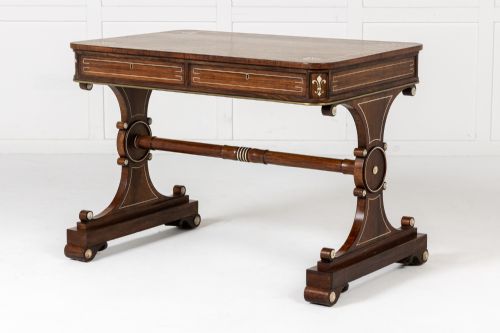


Antique English Sofa Table
When you search for an antique English sofa table, you step into a world of drop leaves, twin pedestals, and domestic refinement designed to sit comfortably before a fireplace.
Antique English Sofa Table
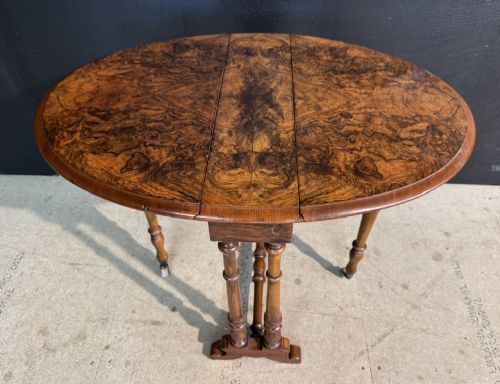
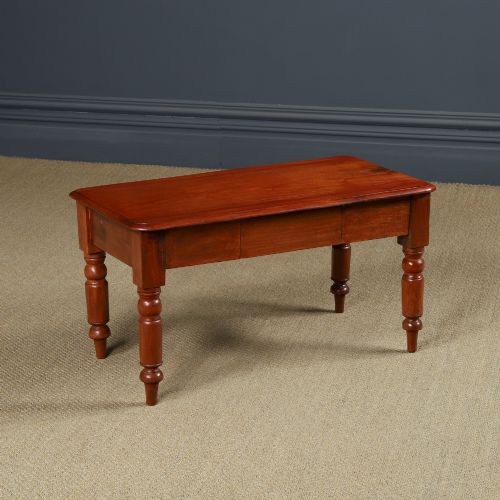
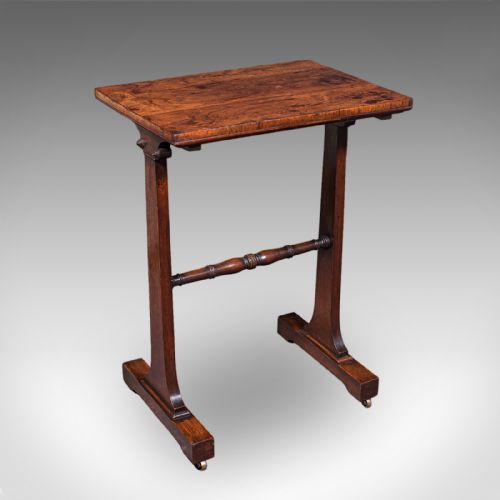
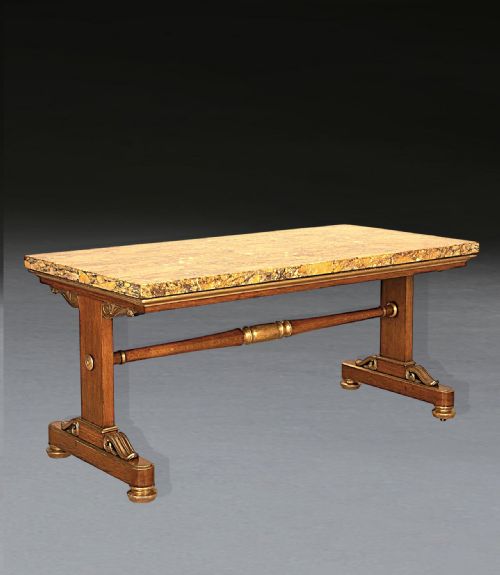
An antique English sofa table is a distinct form of small library or writing table traditionally manufactured with flanking drop leaves to sit behind a sofa or in the centre of a room. The pieces appearing in this category span the Regency, William IV, and Victorian periods, often taking the form of rectangular occasional tables with double drawers.
Makers designed these items for versatility, allowing the leaves to drop when space was tight or rise when writing materials were required. Alongside classic mahogany and rosewood examples from the early nineteenth century, you will also encounter later walnut and oak iterations suited to smaller drawing rooms.
How They Were Made
Cabinetmakers constructed these tables using dense hardwoods like mahogany, rosewood, and walnut, frequently selecting flame veneers or burr figures for the top surfaces. They relied on solid timber framing for stability, incorporating turned or pedestal bases often supported by brass castors.
Detailing often included fine brass stringing, boxwood and ebony inlay, or hand-carved stretcher supports. Drawers were dovetailed by hand, revealing meticulous interior construction designed to withstand daily use.
Several tables include hidden compartments designed for inkwells, sanders, and secret love letters.
What Varies in Quality
Quality rests upon the selection of timber figures and the crispness of the joinery rather than mere age. Tables displaying book-matched veneers, intricate marquetry, and original brass hardware stand apart from simpler utilitarian pieces.
Proportion and stability also dictate worth, as superior examples maintain elegance whether the leaves are raised or lowered. The execution of structural elements, such as the turnings on the pillar supports and the tightness of the drawer dovetails, reveals the standing of the workshop.
James Winter and Sons·Gillows of Lancaster and London
The Antique English Sofa Table Glossary
- Drop Leaf
- A hinged flap on either side of a table top that can be raised to extend the surface area or lowered when space is restricted. These flaps are supported by swing brackets or pivoting arms.
- Frieze Drawer
- A drawer built into the horizontal band beneath the tabletop. These compartments frequently store writing equipment or sewing accessories.
- Marquetry
- Decorative patterns formed by the insertion of pieces of wood, shell, or ivory into a veneer surface. This technique creates complex pictorial or geometric designs.
- Stretcher
- A horizontal wooden bar connecting the legs of a table to provide structural rigidity. In better pieces, the stretcher is shaped or carved to match the pedestal supports.
Antique English Sofa Table: Frequently Asked Questions
Where were sofa tables placed?
These pieces traditionally stood directly behind the drawing room sofa, serving as a convenient surface for books, lamps, and writing materials.
Because they are finished on all sides, they also functioned effectively as centre tables in the middle of a room when space permitted.
How do I date a sofa table?
Dating relies heavily on timber selection, leg style, and construction methods. Regency examples often feature rosewood, brass inlay, and saber legs, whereas Victorian versions tend toward heavier mahogany and walnut.
Examining the drawer construction, such as hand-cut dovetails and secondary woods, provides further clues to the decade of manufacture.
Can I use one as a desk?
Many examples were originally built with writing in mind, featuring shallow frieze drawers and stable platforms.
Raising the drop leaves provides sufficient workspace for a laptop or stationery while maintaining a compact footprint in a modern study.
What is pollard oak?
Pollard oak refers to timber taken from trees that were cut back close to the trunk to promote dense, clustered branch growth. This process creates a turbulent, highly figured grain pattern prized by nineteenth-century cabinetmakers.
Tables utilising this wood display striking mottled circular markings across the surface.