
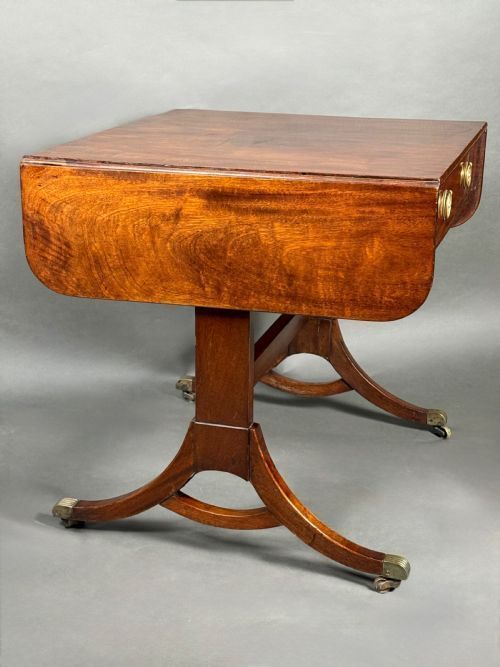
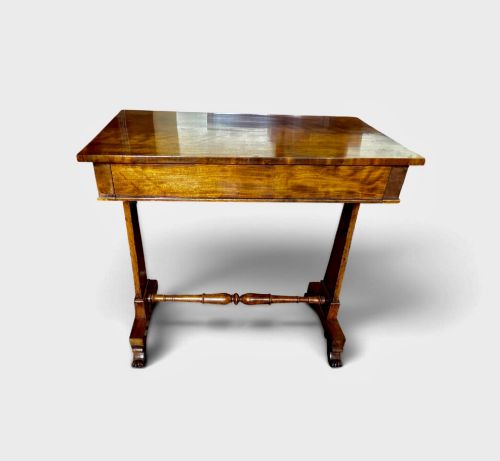
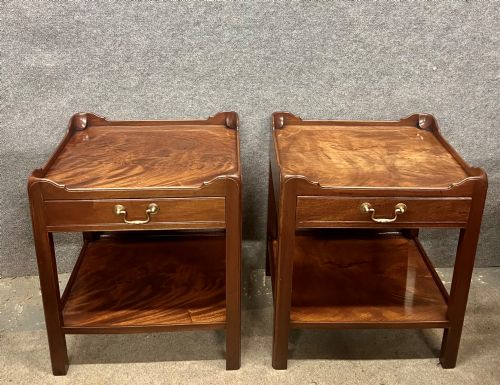
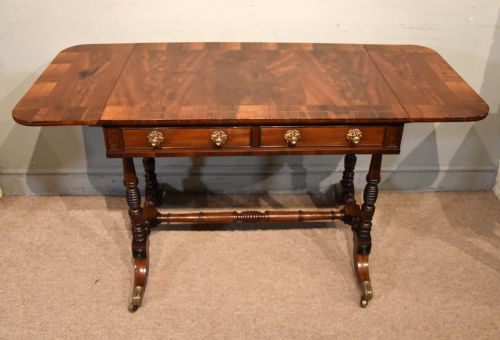
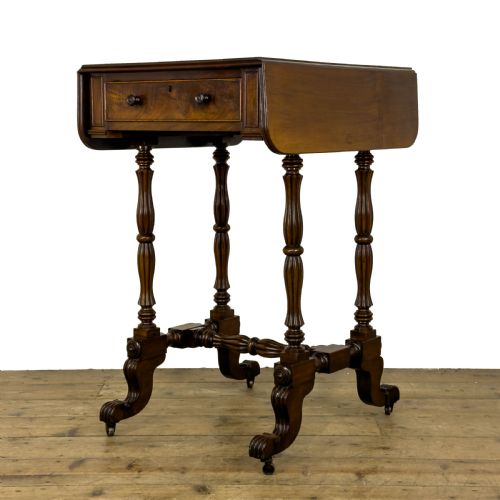

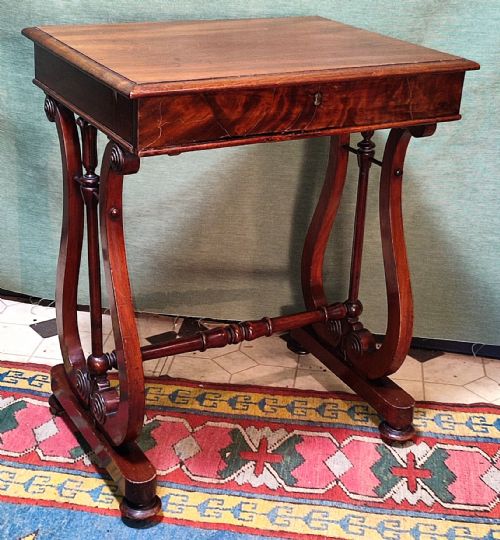


Flame Mahogany Sofa Table
A flame mahogany sofa table brings striking timber figures and practical drop leaves into a room, serving as a versatile centrepiece or writing surface.
Flame Mahogany Sofa Table
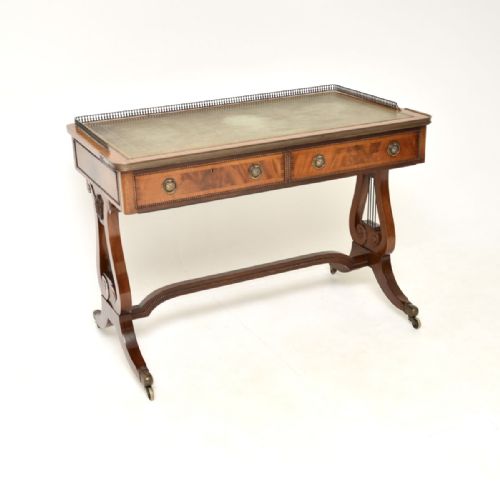
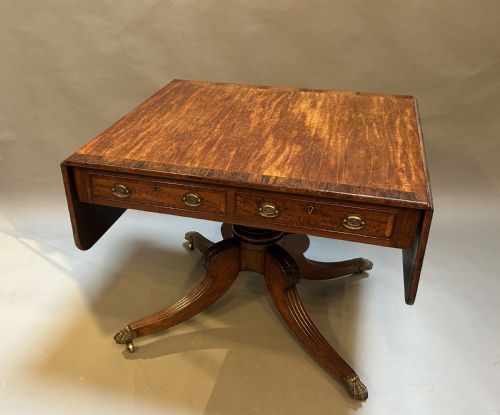
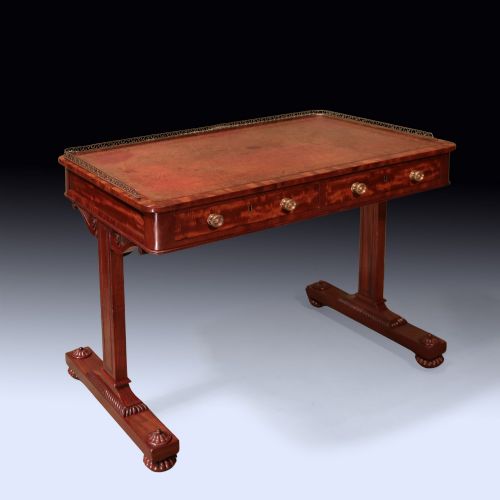
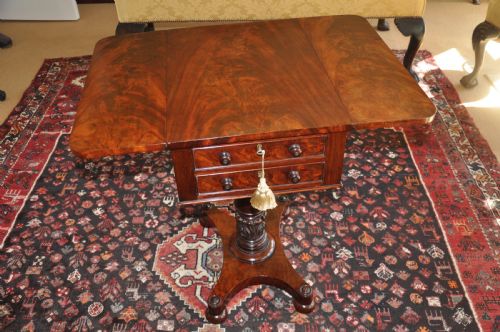
When you search for a flame mahogany sofa table, you look at a versatile library or writing piece designed with drop leaves on either side and often supported on double pedestals or trestle ends. These tables emerge primarily from the Regency, George IV, and William IV periods, alongside nineteenth century and later revival examples.
You will most frequently meet pieces featuring characteristic rectangular tops with figured timber veneers, sometimes housing opposing drawers fitted for writing or sewing. The form bridges the gap between a centre table and a small desk, originally intended to stand before a sofa or in the middle of a room.
The selection ranges from compact early nineteenth century forms to grander console and library interpretations. Regional workshops and later makers also produced similar drop leaf designs, drawing heavily upon Regency and Georgian conventions.
Materials and construction
Cabinet makers applied carefully selected flame mahogany veneer over stable secondary timbers to create the characteristic rippled, flickering grain patterns on table tops and drawer fronts. Solid mahogany formed the structural legs, pillars, and framing elements.
Makers integrated turned stretchers, brass castors, and occasionally brass stringing or marquetry inlay to finish the construction. Drop leaves required robust rule joints and hinges to support the hinged flaps when raised.
Flame Mahogany Sofa Table Retail Price Guide 2026
Typical asking prices for flame mahogany sofa table among the pieces listed under this phrase on Sellingantiques today, from the lower quarter to the upper quarter. They describe what is for sale here now, not the wider market.
Many nineteenth century drawers still conceal tiny wooden compartments once intended for sealing wax and ivory pens.
Assessing quality
The value and distinction of a piece rests principally upon the intensity and symmetry of the flame mahogany figuring across the top boards. Master craftsmen selected veneers that matched across the grain, creating a continuous rippling pattern when the leaves extended.
Proportion and structural harmony dictate the upper tier of examples, particularly those retaining original brass mounts, fitted drawer interiors, and stable undertrestles. Heavy-handed restoration or mismatched secondary timbers pull down the standing of a table.
The Flame Mahogany Sofa Table Glossary
- Flame mahogany
- A timber veneer displaying a rippling, flame-like grain pattern created by cutting across the burls or fork of the mahogany tree. Cabinet makers prized this figure for principal surfaces.
- Sofa table
- A narrow drop leaf table originally designed to stand directly behind a sofa. These pieces typically feature two small drawers and trestle or pedestal supports.
- Drop leaf
- A hinged table flap that folds down at the side of the main surface to save space. Brackets or fly legs swing out to support the leaf when raised.
- Regency
- A British design period spanning the early nineteenth century defined by classical restraint and revival motifs. Furniture from this era often incorporates bold mahogany veneers and brass detailing.
- Library table
- A large freestanding table used for reading or writing, often finished on all sides with drawers or dummy drawers. These share construction traits with sofa tables.
Flame Mahogany Sofa Table: Frequently Asked Questions
Where did sofa tables stand originally?
These tables originally stood directly behind a sofa or freestanding in the middle of a drawing room. Their finished backs allowed them to occupy central spaces rather than hugging walls.
Today, they adapt easily behind modern seating arrangements or function as compact writing desks against a wall.
How do I spot a Regency period table?
Regency tables display characteristic architectural proportions, classical pedestals, and often brass toe caps with castors. The timber selection typically favours rich mahogany with visible grain depth.
Later Victorian and Edwardian revival pieces often replicate these forms but employ heavier framing or different secondary woods beneath the veneer.
What were the drawers used for?
The small drawers housed writing materials, sewing tools, or small personal items. Many tables feature dummy drawers on the reverse side to maintain a symmetrical appearance.
Inside, you often find divided compartments or remnants of old green baize linings.
Can I use a sofa table as a desk?
These tables provide an ideal surface for laptop work or correspondence thanks to their height and knee clearance. The drop leaves allow you to expand the workspace when needed.
Ensure the rule joints and flap supports remain stable before placing heavy items on the extensions.