


Regency Sofa Table Brass Castors
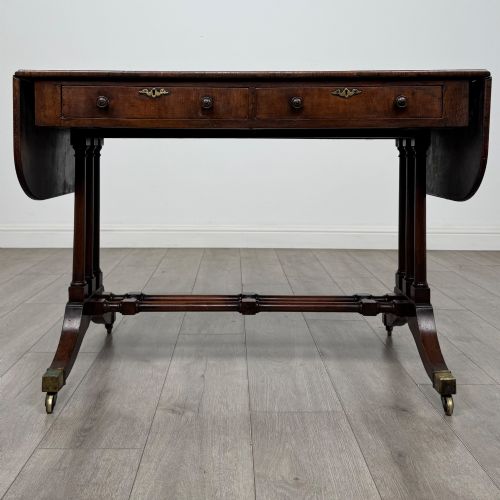
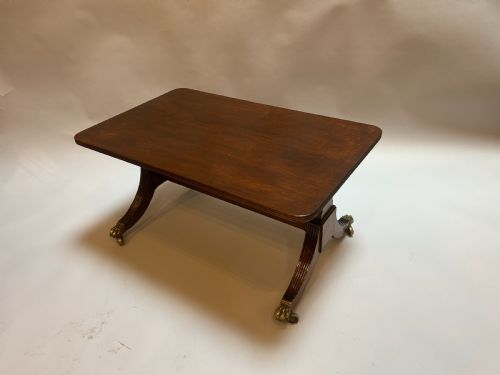
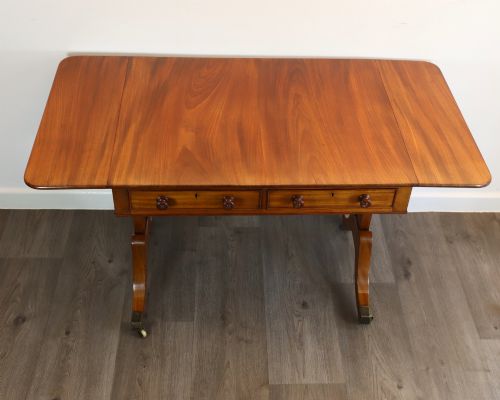
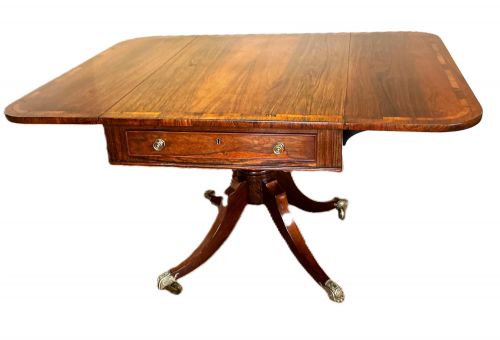
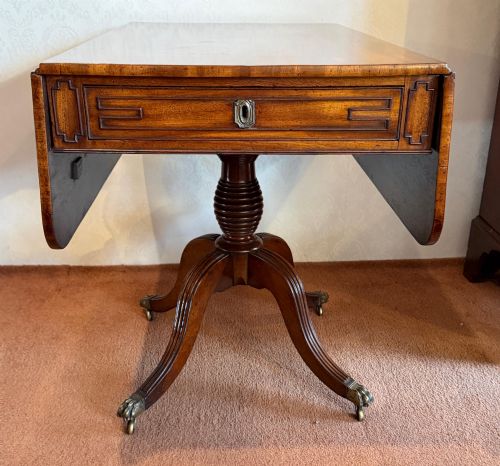
A regency sofa table brass castors pairing brings domestic elegance into a room, offering drop leaves and mobility via small wheels.
Regency Sofa Table Brass Castors
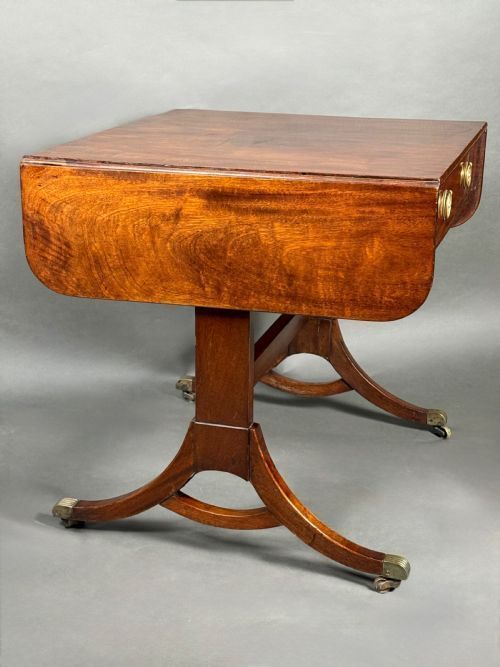
When searching for a regency sofa table brass castors, you encounter freestanding pieces designed to sit neatly behind a couch or serve as centre tables in a principal room. These tables feature drop flaps that extend the surface when needed, supported by sturdy legs resting upon small metal wheels.
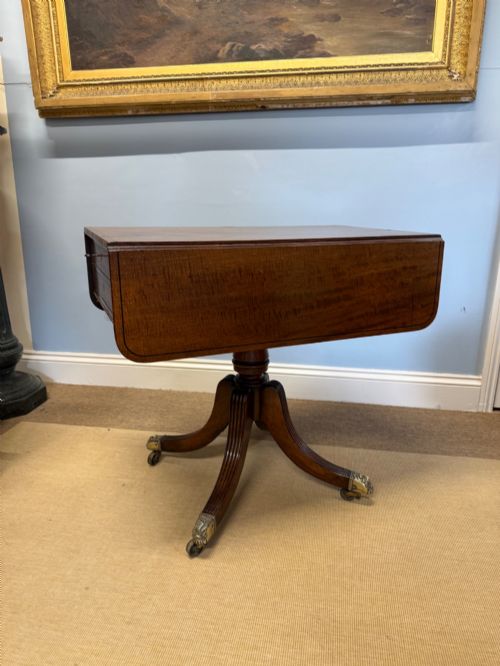
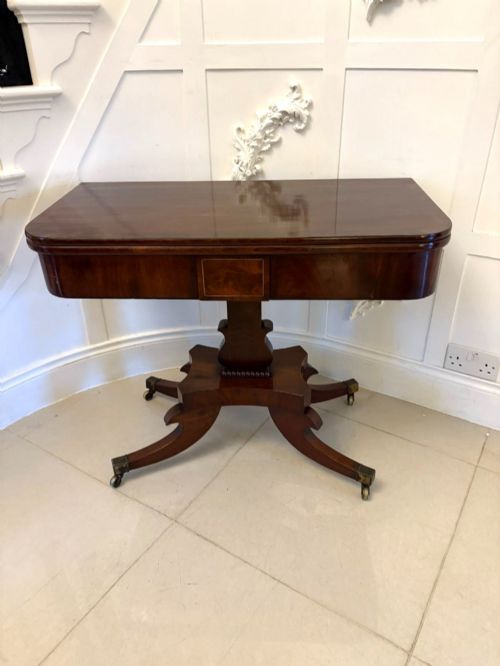
The majority of pieces on this page stem from the Regency and George III periods, executed in richly figured woods like mahogany and rosewood. Alongside standard sofa tables, you will notice related library tables, side tables, and Pembroke variants sharing similar proportions and mobility.
Most examples date from the early nineteenth century, displaying characteristic drop leaves and substantial timber construction. They provide versatile surfaces for writing or display while retaining the mobility demanded by period interiors.
Materials and construction methods
Cabinet makers utilised dense hardwoods, notably mahogany, flame mahogany, and rosewood, often embellished with satinwood banding or delicate wood inlay. These timbers were selected for their grain pattern and stability, allowing for wide drop-flap surfaces.
Metal components played a crucial structural and decorative role, with brass castors fitted to the base of each leg to permit smooth relocation across carpets and wooden floors. Joints were joined with traditional cabinetry techniques to support the folding flaps.
Listings span the Georgian, Regency, and Victorian eras, demonstrating a strong preference for mahogany and rosewood supported by brass castors.
Judging quality and proportion
The distinction between tiers rests upon timber selection and the crispness of detail in inlay work and carved elements. Superior examples display mirrored flame mahogany veneers or fine satinwood banding that follows the contour of the drop leaves.
Proportion and the integration of the brass castors dictate visual balance. Finer pieces maintain a harmonious relationship between the central column or pedestal supports and the extended leaves, whereas simpler iterations rely on straightforward rectangular forms.
The Regency Sofa Table Brass Castors Glossary
- Sofa Table
- A freestanding table with drop leaves on opposite sides, originally designed to stand in front of a sofa. These pieces typically incorporate small drawers.
- Castor
- A small wheel mounted on a swivel at the base of a table leg. They allowed heavy hardwood furniture to be repositioned easily.
- Pembroke Table
- A small table with hinged drop flaps on two opposite sides. They share similarities with sofa tables but often feature a more compact footprint.
- Satinwood
- A durable, yellowish timber native to India and Sri Lanka. Makers utilised it for contrasting stringing and decorative banded borders.
- Flame Mahogany
- A veneer cut from the fork of a mahogany tree where the branch meets the trunk. It yields a distinctive flickering flame pattern.
Regency Sofa Table Brass Castors: Frequently Asked Questions
What is a sofa table used for?
These tables served primarily as versatile surfaces in drawing rooms and libraries for writing, sewing, or holding lamps. Their drop leaves allowed them to expand for activities or contract to save space.
Today, they function well as console tables behind sofas, display surfaces in hallways, or compact desks in reception rooms.
Why do these tables have castors?
Castors were fitted to the feet of heavy wooden tables to permit effortless movement across rooms for cleaning or rearranging furniture. In the nineteenth century, rooms served multiple functions throughout the day.
Metal castors also protected delicate timber feet from direct contact with abrasive floor coverings and damp flagstones.
Can I use a sofa table as a desk?
Many examples include small drawers integrated into the frieze, making them suitable for light correspondence and writing tasks. The drop leaves provide additional space when extended.
Ensure the height and knee clearance accommodate a comfortable seating position if you intend to use it regularly for work.