

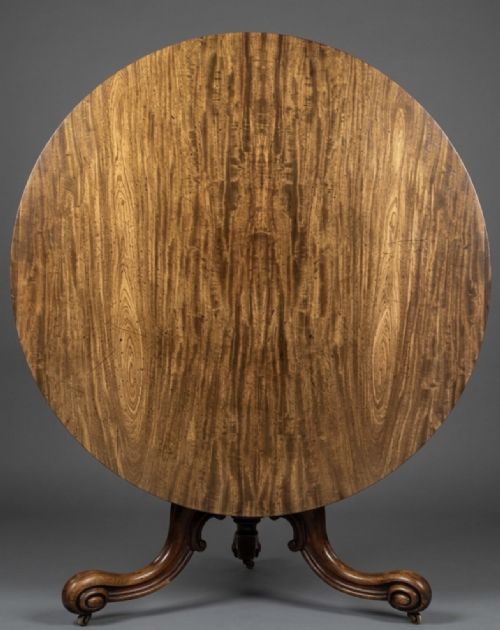
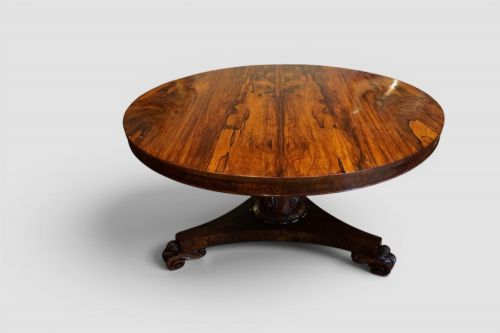
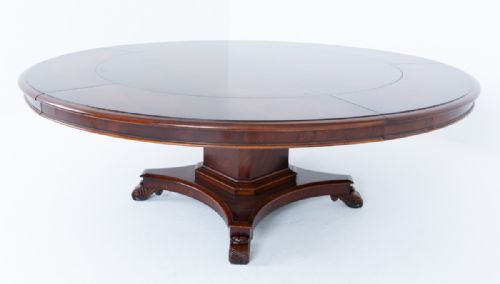
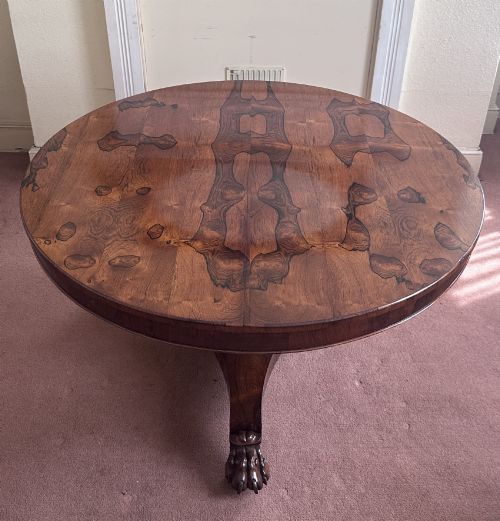


William IV Circular Dining Table
When you want a william iv circular dining table, you are choosing a heavy pedestal form built for grand rooms.
William IV Circular Dining Table
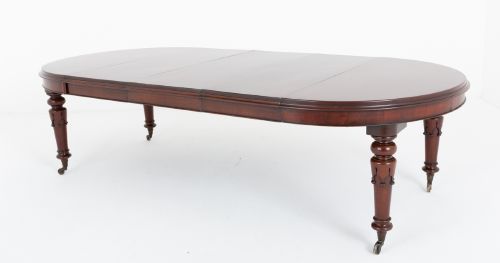
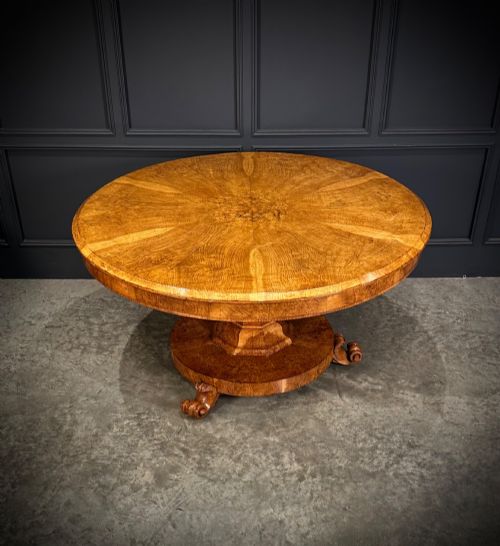
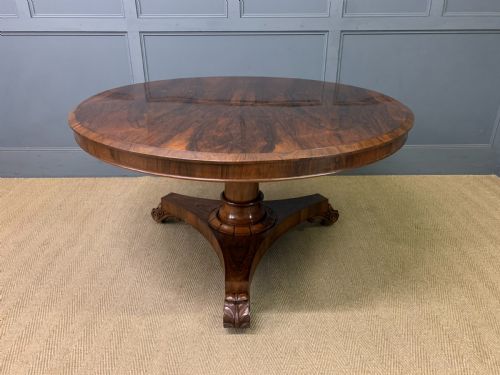
A william iv circular dining table brings nineteenth century weight and presence to a room, functioning as a centre table or breakfast table depending on its scale. Most examples encountered here rely on heavy timber pillars and circular tops, spanning styles from the 1830s through to later Victorian interpretations.
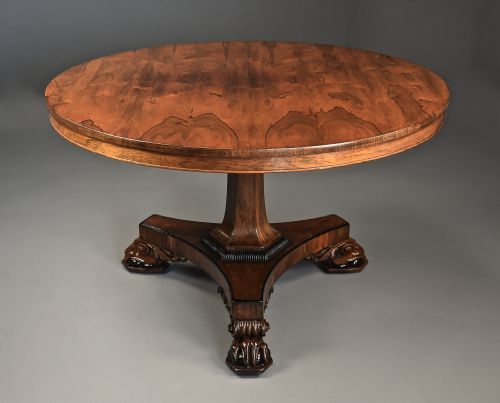
Makers and workshops of the period produced these pieces in mahogany and rosewood, often incorporating tilt mechanisms or extending leaves to serve multiple domestic purposes. The evidence shows a strong prevalence of rosewood and mahogany forms supported by triform or octagonal pedestals.
How they were made
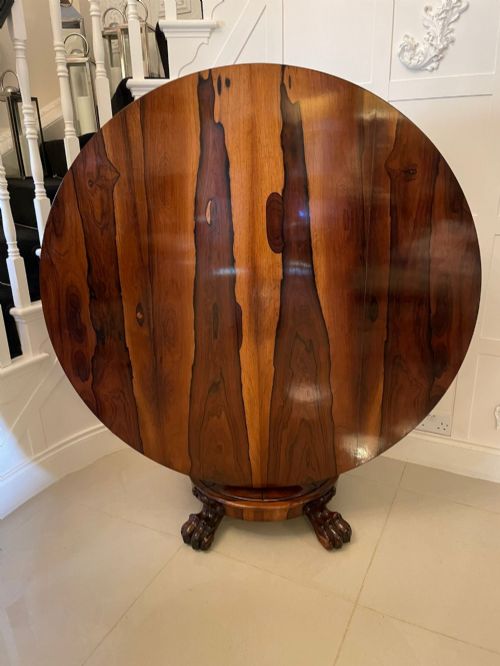
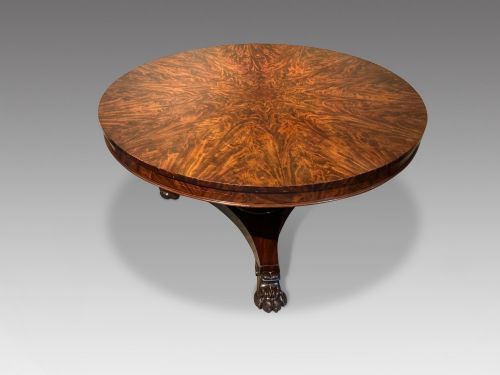
Cabinet makers utilised dense timbers like rosewood, mahogany, and pollard oak, frequently applying finely figured veneers over solid cores to create rich surfaces. Many tops feature radial veneer layouts or segmented grain patterns that demand precise carpentry to remain stable over time.
The heavy central pillars often stand on triangular or plinth bases, sometimes fitted with brass castors to allow movement despite the substantial weight of the timber. Tilt mechanisms on breakfast tables required sturdy brass catches and hinges to secure the heavy top in a horizontal position.
Listings feature rosewood, mahogany, oak, and coromandel timbers across nineteenth century and Victorian periods.
What varies in quality
The distinction between ordinary and superior pieces rests on the choice of timber and the complexity of the grain figures, such as flame mahogany or richly grained rosewood. Finer examples display meticulous attention in the turning of the octagonal or carved pillar and the precise alignment of radial veneers.
Attribution to known makers or documented workshops elevates a piece, as seen in items associated with Gillows or James Winter. The structural integrity of the central pedestal base and the smooth operation of tilt mechanisms or extending leaves further separate standard production from master craftsmanship.
Gillows·James Winter·M.Willson
The William IV Circular Dining Table Glossary
- Tilt top
- A table top hinged to the central pillar so it can be tipped vertically when not in use. This clever mechanism allowed large tables to be stored against walls to save floor space.
- Triform base
- A three-sided pedestal support resting on the floor. It provides stable weight distribution for heavy circular tables.
- Centre table
- A freestanding table designed to be viewed from all sides rather than pushed against a wall. They frequently occupied the middle of large nineteenth century rooms.
William IV Circular Dining Table: Frequently Asked Questions
How do I use a tilt top table?
Release the brass catch beneath the surface to unlock the top and tilt it into a vertical position for storage.
Lock the mechanism securely back into place before placing any items on the surface.
Are these tables good for daily dining?
Many examples are designed with pedestal bases that offer plenty of legroom around the circular top.
Extending versions provide extra flexibility when hosting larger gatherings.
What is a breakfast table?
A breakfast table is a nineteenth century term for a pedestal table traditionally used for morning meals or as a general centre table.
They often feature tilt tops and smaller diameters than main dining tables.