

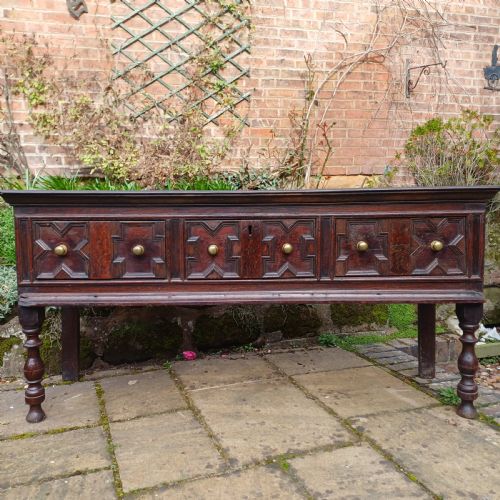


William and Mary Dresser
A William and Mary dresser brings seventeenth-century timber and honest proportion into a modern room.
What these pieces are
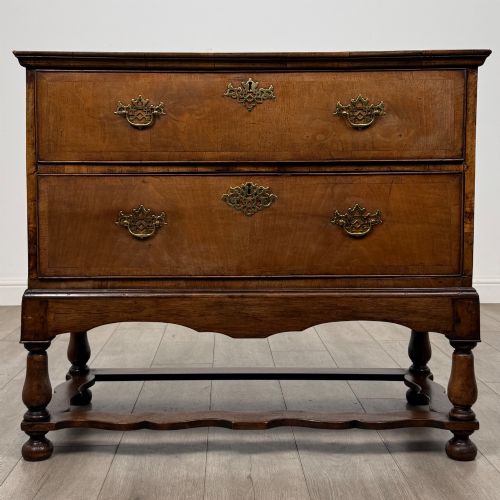
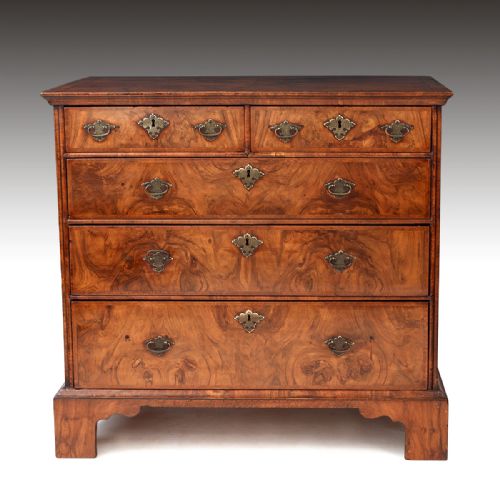
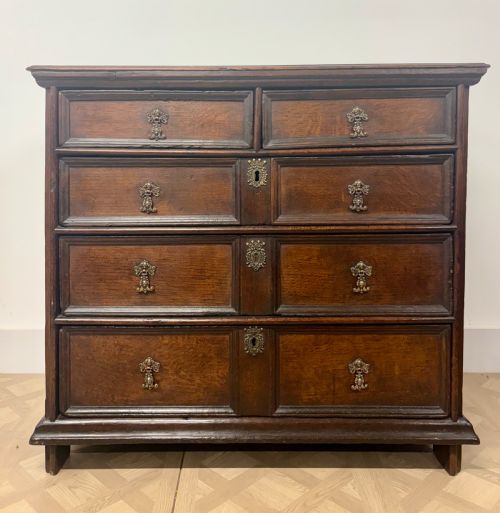
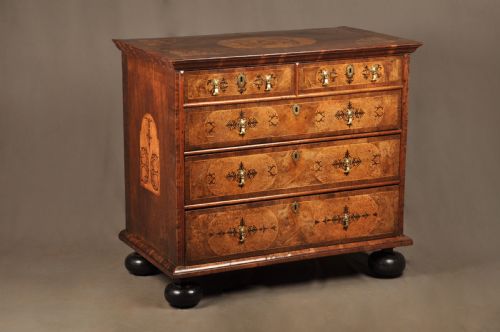
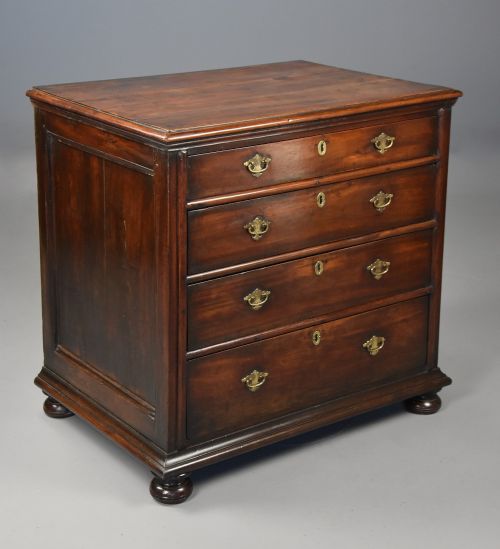
When you search for a William and Mary dresser, you look for seventeenth-century forms that anchor a room with architectural presence. These pieces emerge from the distinct era spanning the late seventeenth century, presenting sturdy utility through chests of drawers and dresser bases. You meet examples shaped in solid oak and figured walnut, carrying the marks of an age when cabinet-making shifted toward decorative surface patterns.
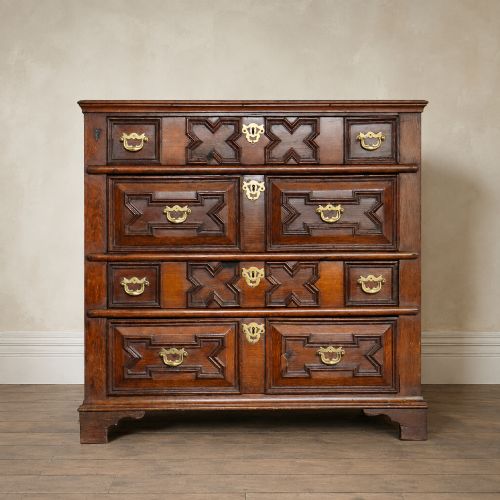
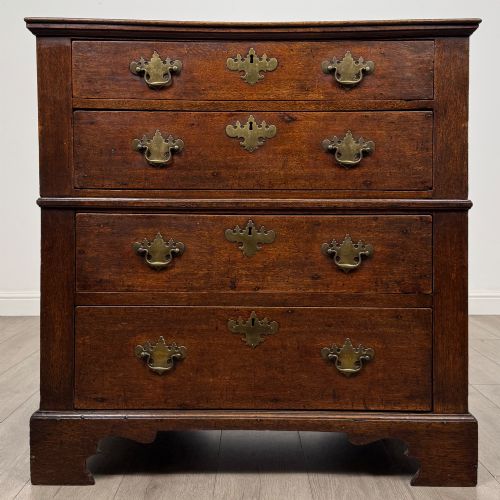
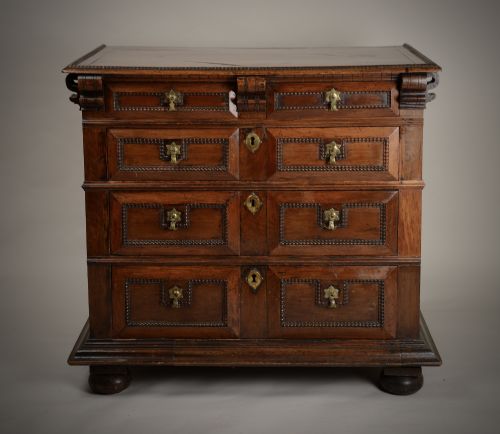
On this page, you most frequently encounter oak and walnut chests of drawers alongside late seventeenth-century dresser bases. The selection captures both plain timber surfaces and elaborate decorative treatments from the period. Every piece reflects the structural traditions of seventeenth-century joinery, offering deep drawers and bold moulding.
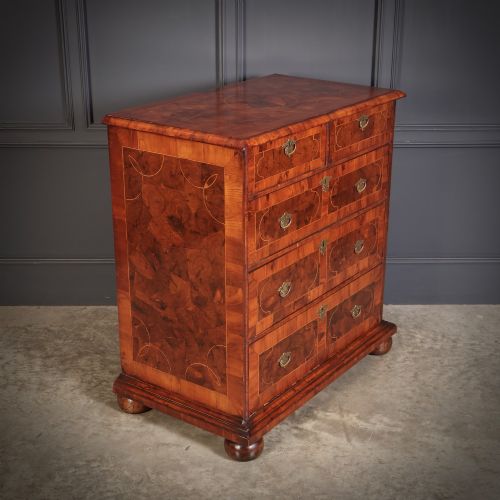
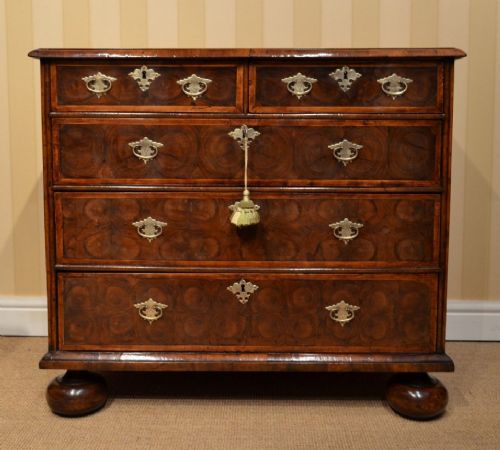
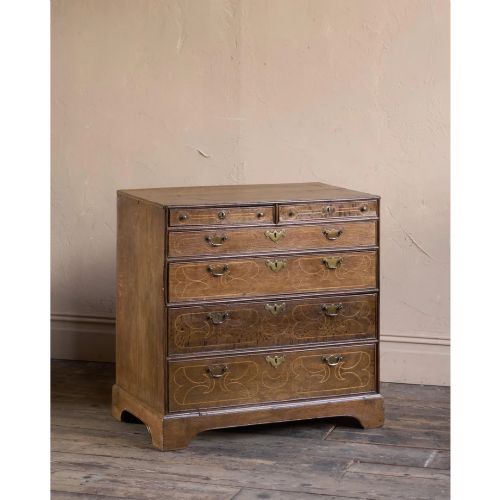
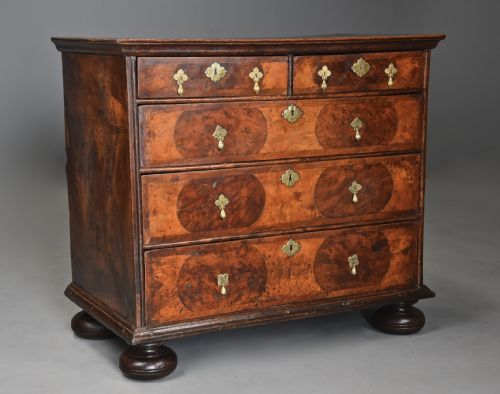
The regional variety ranges from austere oak construction to intricate fruitwood inlay and oyster laburnum veneers. Walnut versions introduce warm, figured tones that distinguish them from simpler country workshop pieces. Buyers find both tall drawer chests and low dresser bases suited to contemporary domestic spaces.
How they were made
Cabinet-makers of the period constructed these carcases using thick planks of native oak and walnut, joined with pegged mortise and tenon framing. Drawer linings and internal dividers relied on secondary woods, ensuring rigid stability for heavy daily use. Hand-cut dovetails secure the drawer corners, showing the steady progression of manual joinery.
Surface decoration involved sophisticated timber manipulation, including fruitwood inlay and oyster laburnum veneers sliced across small branches to create concentric circular patterns. Craftsmen applied these veneers to carcase fronts using animal glue, smoothing the contrasting grain to catch the light. Brass hardware, such as drop handles and escutcheons, was pinned directly to the drawer faces to complete the design.
Retail Price Guide 2026
Typical UK retail prices for william and mary dresser, calculated from the Sellingantiques database of over a million retail prices indexed since 2003. This retail price guide relies exclusively on Sellingantiques data; no external sources or auction records are used, so the figures do not describe the wider market.
Listings span the seventeenth century, utilising oak, walnut, fruitwood inlay, laburnum, and brass across chests of drawers and dresser bases.
What varies in quality
The distinction between standard workshop output and superior cabinet-making rests entirely on the selection and execution of timber surfaces. Grain matching across oyster laburnum veneers and precise fruitwood inlay elevate a piece far above plain boarded construction. Artisans who spent hours aligning concentric rings created visual depth that lesser workshops simply did not attempt.
Proportion and the preservation of original mouldings dictate the standing of any surviving seventeenth-century example. Crisp edges on moulded drawer fronts and untouched brass hardware hold greater visual integrity than worn or heavily restored surfaces. The honesty of the timber grain ultimately determines the character of each piece.
The William and Mary Dresser Glossary
- Oyster veneer
- Sliced cross-sections of small branches or roots arranged to form an interlocking pattern resembling oyster shells. This technique flourished during the late seventeenth century on walnut and laburnum surfaces.
- Fruitwood inlay
- Contrasting light and dark timber inserts set flush into the primary wood of the carcase. This decorative method creates geometric or floral borders on drawer fronts.
- Dresser base
- A low utilitarian table fitted with drawers beneath the top board, designed for storage and food preparation in seventeenth-century interiors. These pieces lack the upper plate rack of a full dresser.
- Moulded front
- A drawer face or door edged with shaped wooden profiles that project to create shadow and depth. These decorative profiles define the architectural styling of the period.
- Joinery
- The traditional method of constructing wooden furniture using fitted joints secured with wooden pegs rather than modern steel fasteners. This structural approach defines seventeenth-century cabinet-making.
Frequently Asked Questions
How do I care for an antique oak or walnut surface?
Feed the timber periodically with traditional beeswax to nourish the dry grain and maintain a soft, protective sheen. Avoid placing seventeenth-century furniture near direct heat sources or in fluctuating humidity to prevent timber splitting.
Keep polishing cloths soft and free from synthetic chemical sprays that can lift historic finishes. Gentle dusting preserves the natural patina accumulated over centuries of use.
Were these pieces used in kitchens or living rooms?
Seventeenth-century dresser bases and chests served utilitarian storage roles in the primary rooms of large and middling houses. They held household linens, dry goods, and domestic utensils before migrating into reception rooms as decorative furniture.
Today, their generous proportions and deep drawers make them practical for modern dining rooms and hallways. They function effectively as sideboards or storage chests while retaining their historic character.
How can I distinguish oak pieces from walnut examples?
Oak furniture displays an open, coarse grain with distinct medullary rays that appear as short silver flecks across the timber. It yields a heavy, pale brown surface that darkens naturally over centuries.
Walnut presents a smoother, darker surface with rich figure patterns and subtle colour variations. Walnut and laburnum were typically reserved for high-status furniture with decorative veneers.
What defines the William and Mary style?
The style emerged in the late seventeenth century, bringing Dutch influences, geometric veneers, and architectural mouldings to British furniture design. It replaced heavy Elizabethan and Jacobean forms with lighter, more refined carcases.
Pieces from this period frequently feature oyster veneers, walnut surfaces, and geometric drawer framing. The aesthetic emphasises surface pattern and structured proportion over heavy carved ornamentation.