
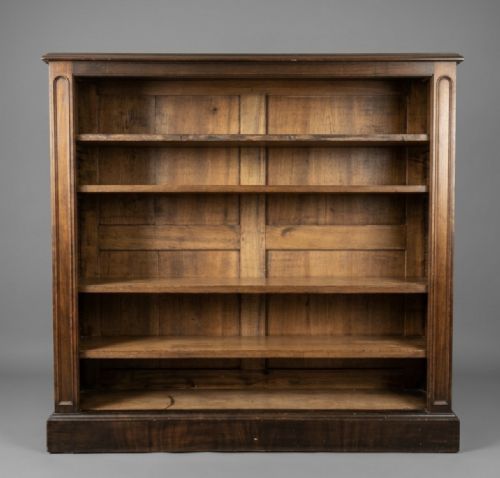
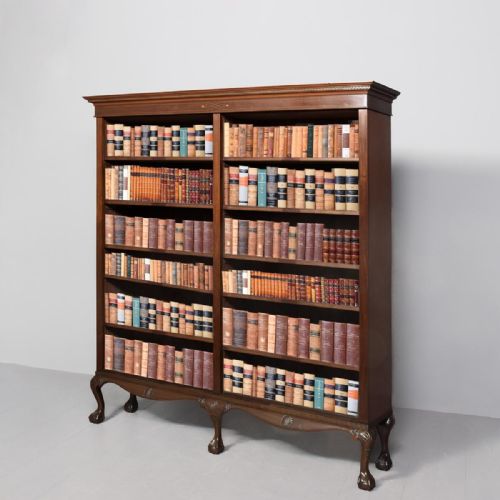


Wide Mahogany Bookcase
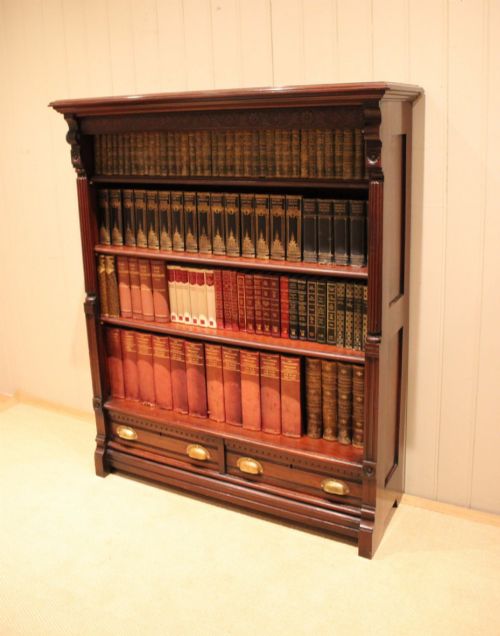
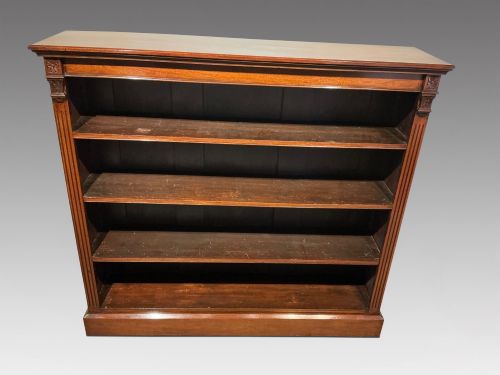
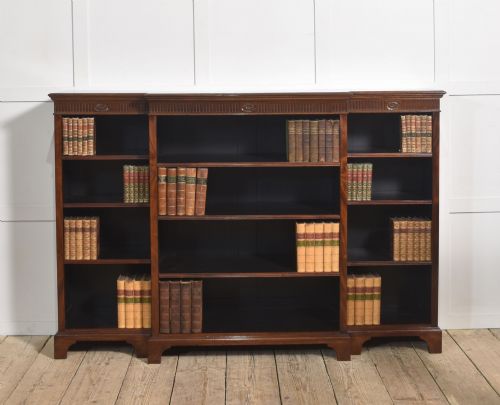
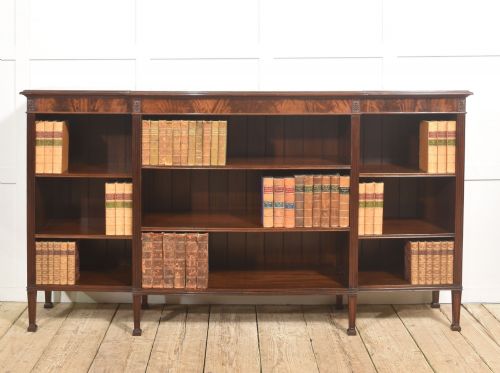
These wide mahogany bookcase examples offer substantial timber presence and flexible shelf storage for serious libraries and living spaces.
Wide Mahogany Bookcase
A wide mahogany bookcase provides expansive shelving capacity across generous horizontal spans, typically encountered in large Victorian, Edwardian, and nineteenth-century formats. These substantial furniture pieces accommodate extensive collections of volumes while anchoring a room with formal timber grain.
The pieces listed on this page span open front formats, breakfront library configurations, and glazed cabinet designs. Buyers frequently discover tall two-part constructions alongside architectural breakfronts with adjustable shelving.
How they were made
Cabinet makers utilised solid mahogany and flame mahogany veneers over secondary timbers such as pine, building robust carcasses designed to support heavy book collections. Selected grain patterns on the primary display surfaces create natural decorative contrast.
Joinery techniques incorporate adjustable shelving systems, brass hardware fittings, and intricate wood inlay work. Glazed doors utilise astragal glazing bars to secure glass panes within the timber framework.
The listings combine solid mahogany and flame mahogany constructions across Victorian, Edwardian, and nineteenth-century periods.
What varies in quality
The refinement of the timber selection dictates the visual impact, ranging from plain mahogany boards to highly figured flame mahogany veneers. Superior examples display careful bookmatching on large surfaces and precise execution of wood inlay.
Structural complexity separates standard open shelving from architectural breakfront libraries with fitted cupboards or multi-part carcasses. Cabinet proportions and the integration of functional adjustable shelf mechanisms reflect the original maker's ambition.
Lamb of Manchester
The Wide Mahogany Bookcase Glossary
- Breakfront
- A cabinet design where the central section projects forward from the flanking wings. This configuration adds architectural depth to large library furniture.
- Flame mahogany
- A veneer figure resembling flickering flames, cut from the fork of the mahogany tree. It provides a highly decorative surface on primary display areas.
- Astral glaze
- Glazing bars dividing glass panels into smaller geometric panes within cabinet doors. This technique secures the glass while maintaining outward visibility.
- Adjustable shelves
- Shelving supported by moveable pins or racks allowing variable vertical spacing. This mechanism accommodates books of differing heights.
Wide Mahogany Bookcase: Frequently Asked Questions
Where should a wide mahogany bookcase go?
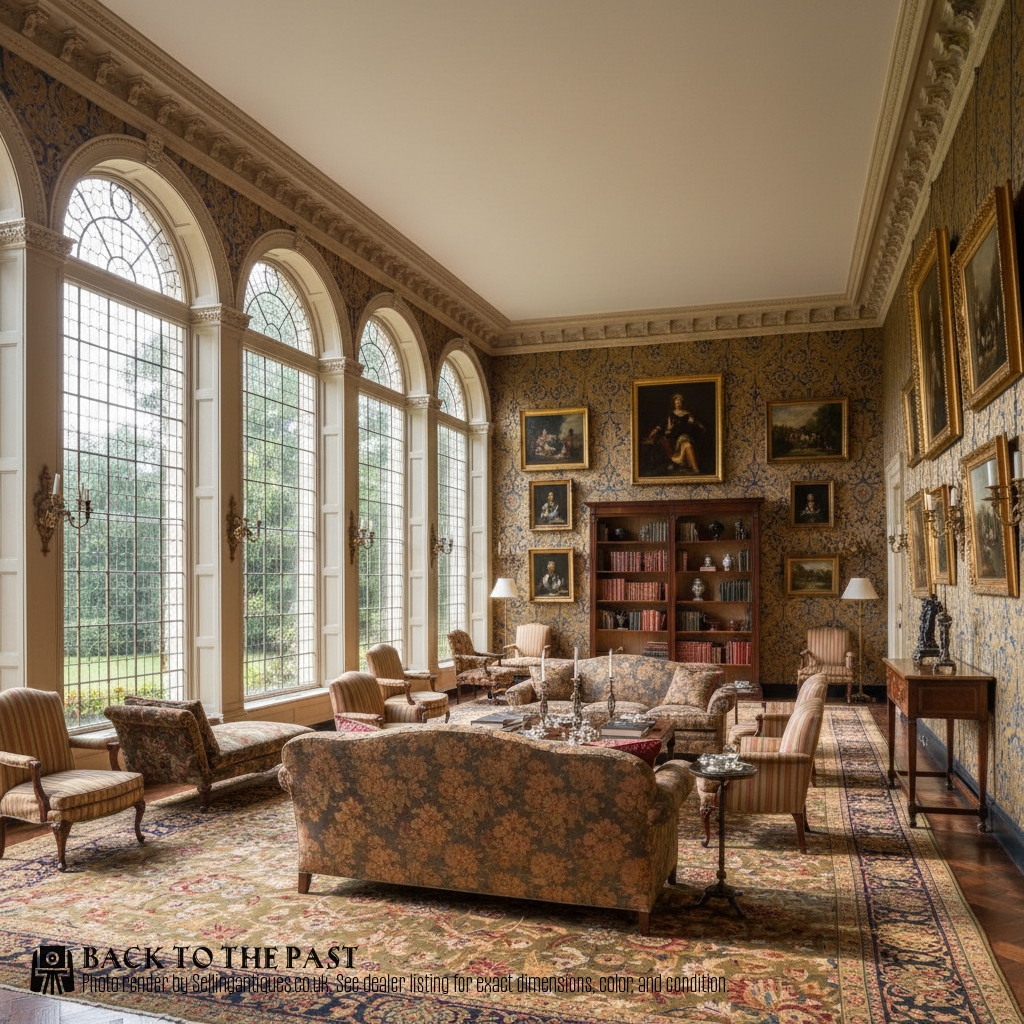
These large timber pieces require substantial wall space and stable environmental conditions away from direct heat sources. Placing them in studies, libraries, or spacious reception rooms allows the wide mahogany facade to balance the room.
Ensure the floor structure supports heavy loads, as packed bookshelves add significant weight to the room. Positioning them out of direct sunlight protects the timber polish and veneer from fading over time.
How do I adjust the shelves?
Most period library pieces utilise wooden support strips, brass studs, or shelf racks built into the interior carcass sides. Lifting the shelf slightly allows the support brackets to disengage from their slots for repositioning.
Take care when moving heavy shelves within older mahogany interiors to avoid scratching the polished timber sides. Align each support evenly to prevent shelving from rocking under heavy book collections.
How do I care for the mahogany?
Maintain the timber surface by dusting regularly with a soft, dry cloth along the grain direction. Avoid silicone-based polishes and excessive moisture which can degrade traditional wax or french polish finishes.
Applying a traditional beeswax polish occasionally nourishes the mahogany and preserves the depth of the grain. Keep room humidity stable to prevent timber shrinkage or veneer lifting across wide panels.
Are these bookcases modular?
Period library furniture was constructed as fixed single units, multi-part sectional carcasses, or breakfront assemblies. Tall Victorian examples often separate into upper and lower sections to facilitate transport and placement.
While individual sections stack together securely, they do not offer modular reconfiguration beyond adjusting internal shelf heights. Professional installation is recommended for large multi-part breakfront libraries.