


White Tin Glaze Jug
A white tin glaze jug carries centuries of European ceramic history, offering collectors tangible connections to early earthenware traditions.
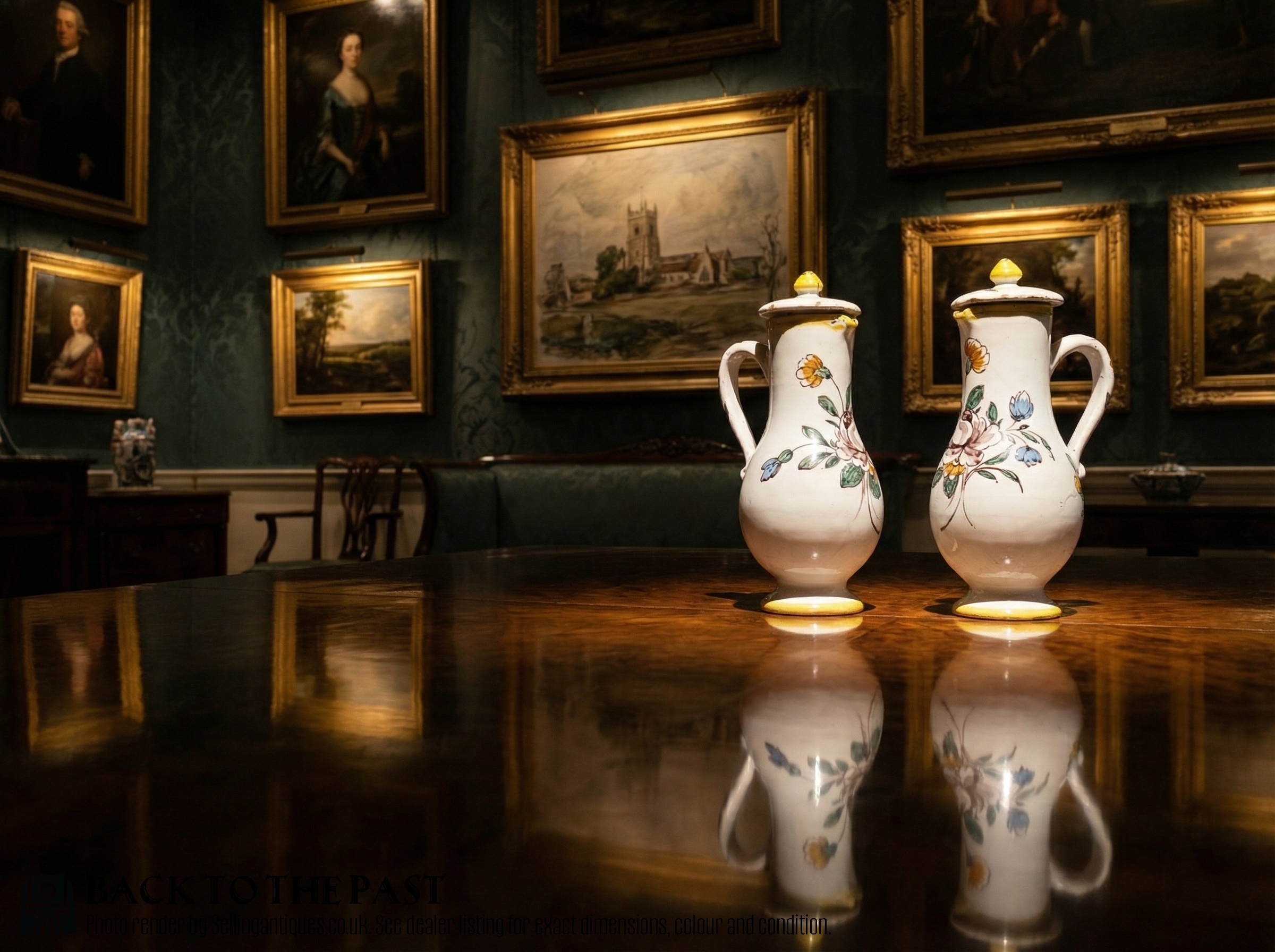
White Tin Glaze Jug
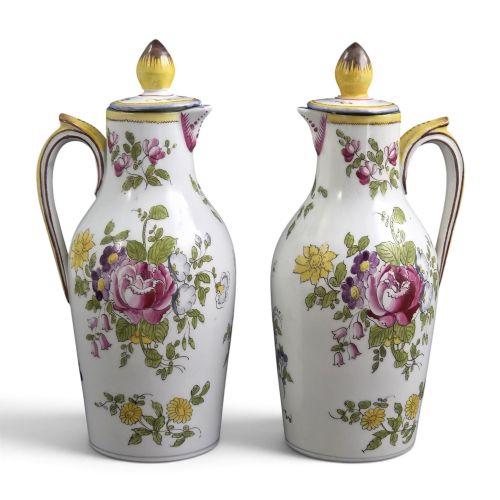
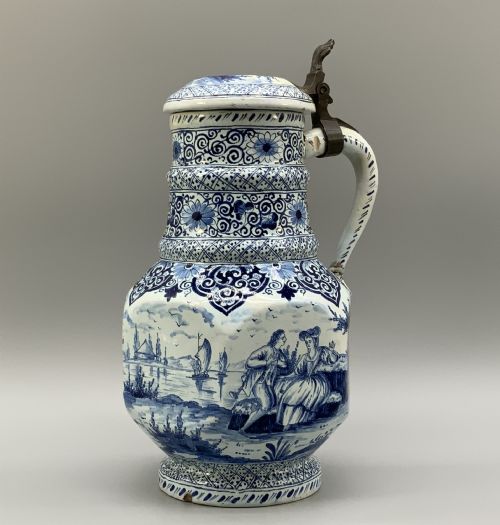
A white tin glaze jug encompasses a diverse range of historic earthenware vessels, from Dutch Delftware to Italian Majolica and English Delftware. Buyers searching this phrase typically encounter pitchers, ewers, puzzle jugs, and pharmacy jars spanning the seventeenth to the nineteenth centuries.
The forms vary from utilitarian coffee pots and wet drug jars to decorative vessels and figural Toby jugs. These pieces originate predominantly from European workshops employing tin-glazing techniques, often featuring blue and white or polychrome decoration.
How they were made
Makers shaped earthenware bodies before applying an opaque tin-oxide glaze that provided a smooth white surface suitable for painting. Artisans then brushed cobalt pigment and other coloured minerals directly onto the unfired glaze.
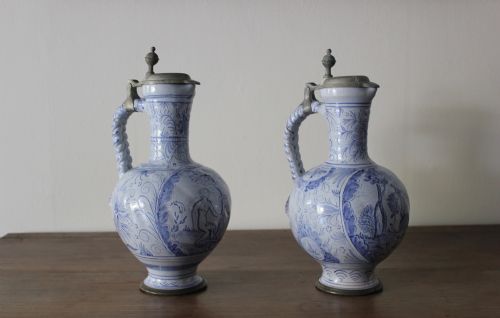
Some examples incorporate applied pewter lids or spouts, combining ceramic work with metal components. The firing process bonded the metallic oxides with the tin glaze to produce characteristic gloss and colour depth.
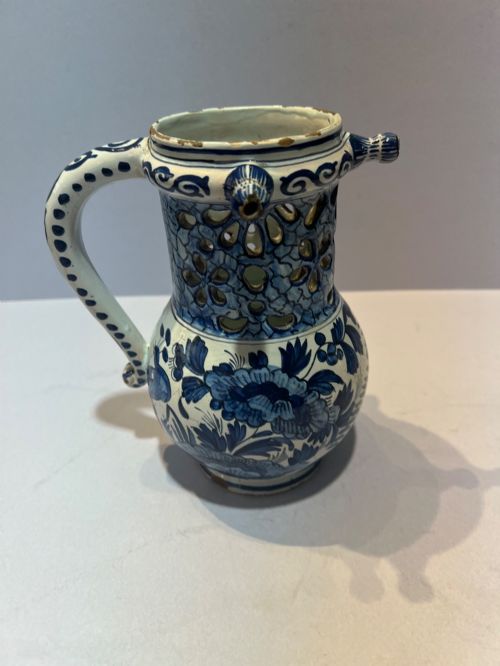
Several vessels disguise their function as drinking puzzles, challenging guests to work out the secret path of the hollow rim.
What varies in quality
The refinement of the painted decoration dictates much of the visual merit, distinguishing freely rendered floral or Chinoiserie motifs from stiffer work. Precision in the potting and the consistency of the white tin glaze surface also separate simpler items from finer examples.
Preservation of the glaze and the integrity of any original metal fittings influence the overall character of an individual piece. The complexity of the vessel form, such as puzzle construction or mask spouts, points to higher ambition in the workshop.
Pieter Verburg
The White Tin Glaze Jug Glossary
- Tin glaze
- An opaque white ceramic glaze containing tin oxide that creates a smooth surface for hand-painted decoration.
- Delftware
- Earthenware produced in the Netherlands and England featuring a tin glaze, commonly decorated in blue and white.
- Majolica
- Italian tin-glazed earthenware typically characterised by colourful polychrome painting.
- Faience
- European tin-glazed pottery, encompassing French, German, and Dutch traditions.
- Polychrome
- Decoration employing multiple distinct colours rather than a single pigment like cobalt blue.
White Tin Glaze Jug: Frequently Asked Questions
How were old tin glaze jugs used?
These vessels served practical domestic and medicinal roles, holding liquids such as water, wine, coffee, or pharmaceutical syrups.
Some specialised forms like puzzle jugs functioned as social drinking devices requiring the user to solve a trick to drink without spilling.
How do I clean a ceramic jug?
Historic earthenware requires gentle care, relying on dry dusting or very careful cleaning with a soft cloth.
Immersion in water or harsh cleaning agents can damage porous ceramic bodies and historic glazes.
How can I tell Dutch from Italian pieces?
Dutch examples frequently utilise cobalt blue pigment in Chinoiserie or floral designs reflecting Delftware traditions.
Italian pieces often display polychrome palettes and styles associated with Majolica or apothecary wares.
What does tin-glazed earthenware mean?
It refers to a pottery body covered in a glaze laced with tin oxide to yield an opaque white background.
This technique originated in the Middle East before spreading through Europe via Italy, the Netherlands, and England.