
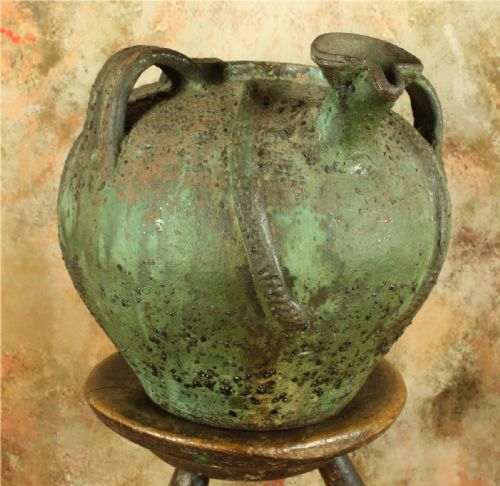
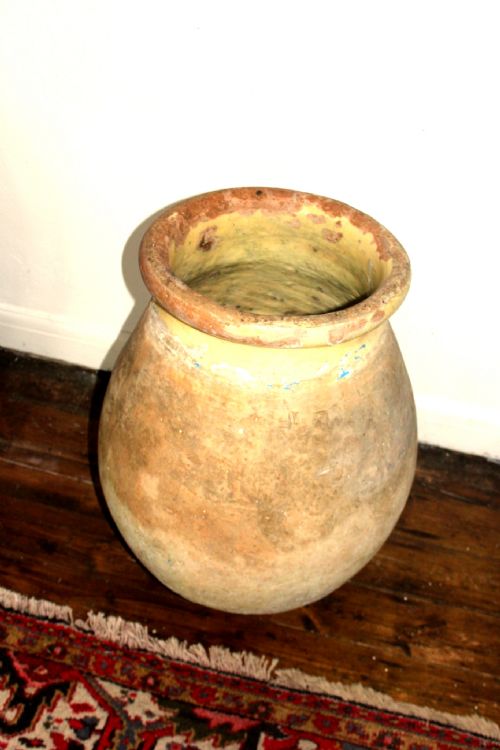


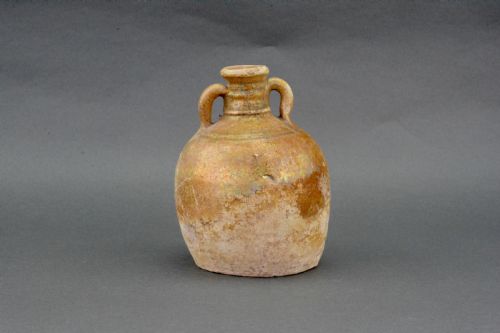
Antique Ceramic Oil Jars
Antique ceramic oil jars are heavy, utilitarian vessels shaped by centuries of storage and transport, offering texture and presence to modern spaces.
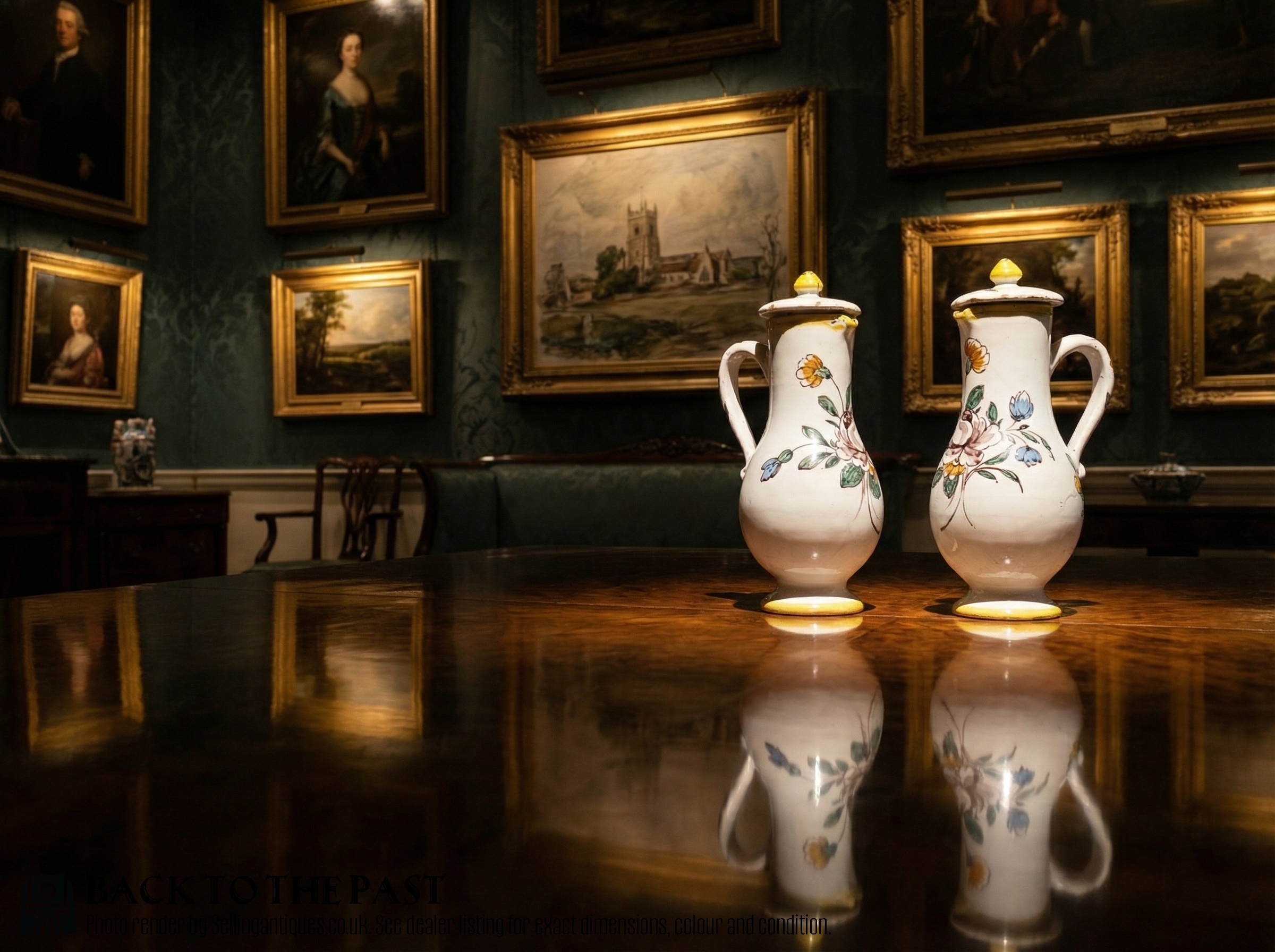
Antique Ceramic Oil Jars
When you search for antique ceramic oil jars, you encounter robust storage vessels designed for olive oil, walnut oil, and agricultural goods across the Mediterranean and France. The selections span from eighteenth-century French walnut pots and nineteenth-century Biot jars to earlier Mediterranean amphorae and rustic terracotta vessels.
Most examples on this page date from the nineteenth century, alongside eighteenth-century olive jugs and occasional pre-sixteenth-century Roman flasks. Forms range from large floor-standing planters and handled storage jars to painted pottery vessels and glazed amphorae.
Originating primarily from French country and Mediterranean traditions, these pieces bring rustic folk art and provincial utility into contemporary interiors and gardens. They appear as standalone decorative vessels, mounted on stands, or utilised as garden planters.
How they were made
Potters built these vessels using terracotta, earthenware, and heavy clay, shaped by hand or wheel to withstand the pressures of agricultural storage. Many incorporate functional elements such as wrought iron mounts or multiple handles for lifting and tipping.
Surfaces display the physical history of their use, featuring aged patinas, lime wash, decorative paint, and partial tin glazes. Some amphorae and jugs carry a simple glaze to seal the porous clay against oil seepage.
Several jars retain multiple handles designed for the awkward two-person lift required when sloshing with heavy walnut oil.
What varies in quality
Quality rests in the integrity of the clay body, the balance of the thrown form, and the character of the surface wear. Vessels with intact handles, original painted surfaces, or undisturbed lime wash hold greater visual weight.
Age alters the material, distinguishing simple utilitarian pots from finer eighteenth-century walnut oil jugs or early Roman flasks. The harmony between the vessel and its wrought iron stand or secondary glaze adds distinct separation at the top of the range.
The Antique Ceramic Oil Jars Glossary
- Terracotta
- A porous, unglazed or slip-coated fired clay ranging in colour from pale buff to deep reddish brown. It forms the primary body of most Mediterranean oil jars.
- Amphora
- A two-handled ancient storage vessel with a pointed or rounded base designed for shipping and storing liquids. These appear in glazed and unglazed ceramic variants.
- Biot Jar
- A heavy terracotta storage jar traditionally produced in the Provençal town of Biot. These jars often feature characteristic handles and aged earthen patinas.
- Tin Glaze
- An opaque white or coloured glaze made by adding tin oxide to a lead glaze base. It provides a smooth surface for polychrome painted decoration.
- Lime Wash
- A traditional coating of slaked lime applied to exterior surfaces for protection and sanitation. Traces of this white finish frequently survive on rustic Mediterranean vessels.
Antique Ceramic Oil Jars: Frequently Asked Questions
Can antique oil jars live outside?
Terracotta and earthenware vessels designed for agricultural use are naturally robust, but historic clay requires care in freezing temperatures. Unglazed terracotta can absorb moisture that expands when frozen, risking cracks.
Positioning them in sheltered garden spots or bringing them indoors during winter protects the aged patina and structural integrity of older pieces.
How do I date an antique oil jar?
Dating relies on examining the potting technique, clay composition, handle placement, and surface treatments like lime wash or paint. Eighteenth-century French walnut pots often show distinct rim profiles and handle configurations compared to nineteenth-century Biot jars.
Pre-sixteenth-century Roman flasks and amphorae display entirely different vessel proportions and burial patinas that separate them from later folk pottery.
Are these jars waterproof?
Many antique oil jars feature porous terracotta bodies that will slowly seep water unless lined or treated. Jars described with internal or external glaze or tin glaze held liquids more effectively during their working life.
If you plan to use a vessel for fresh flowers or indoor planting, check the interior condition and consider placing a discreet liner inside.