
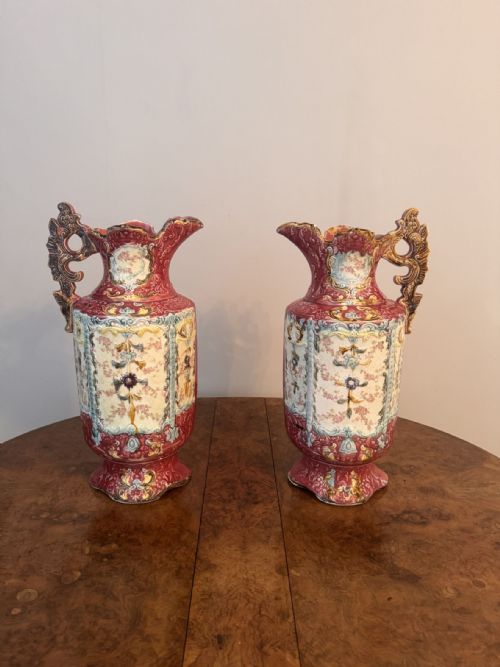
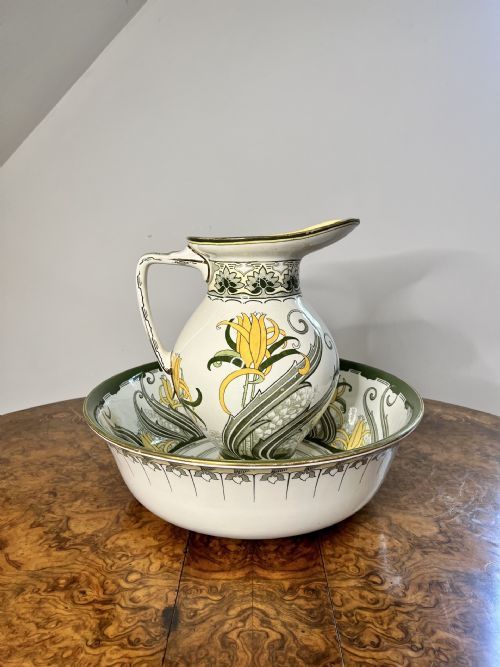
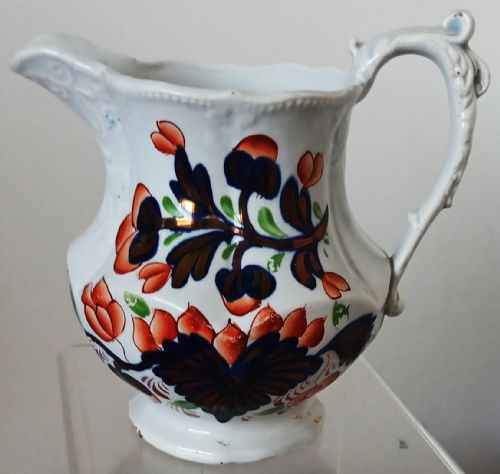
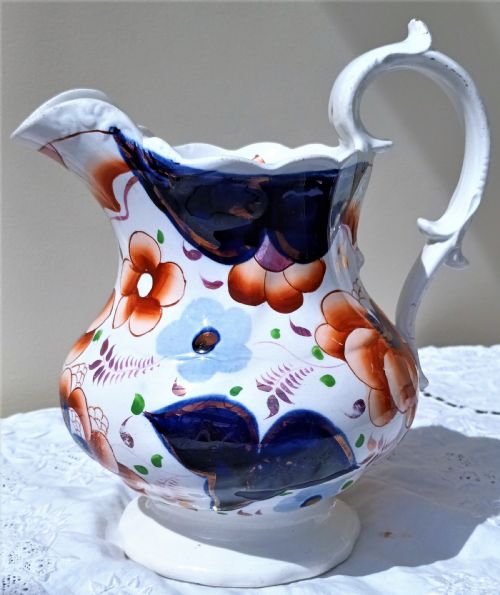
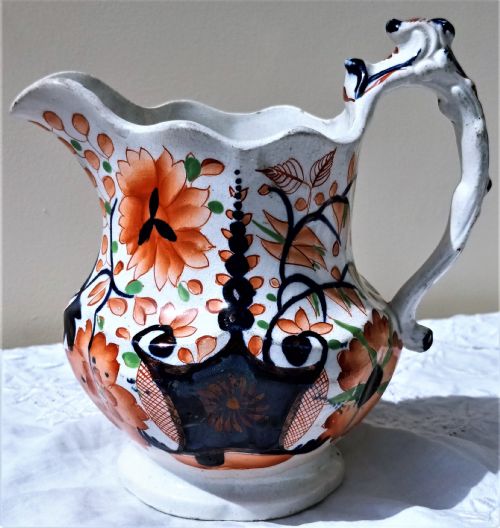
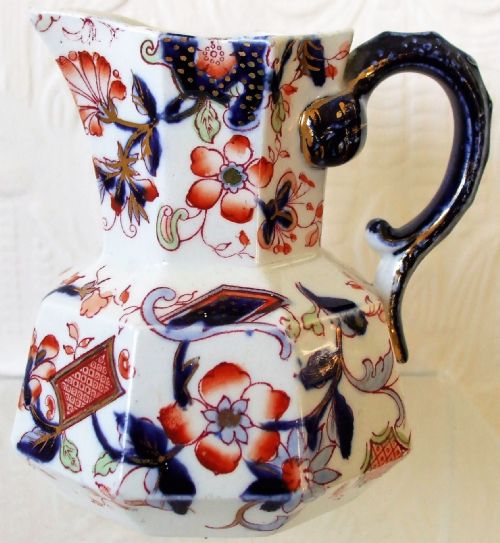
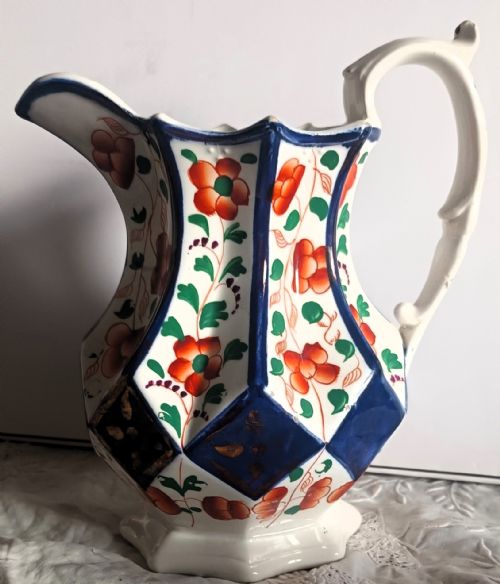
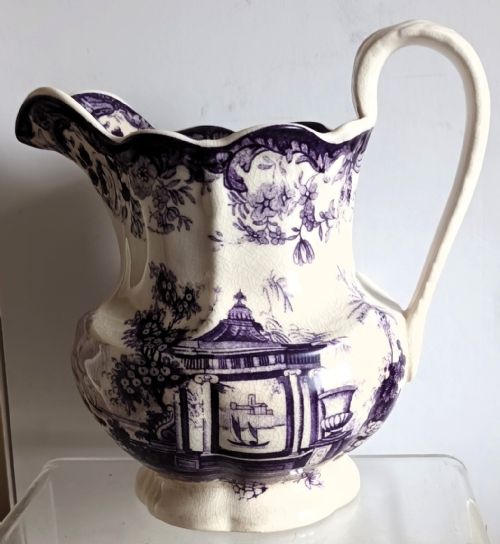
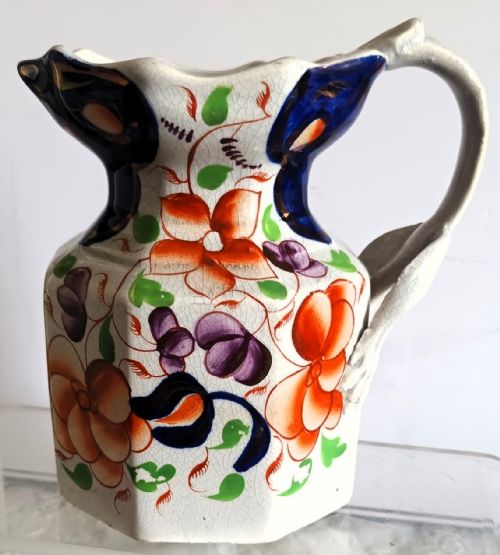
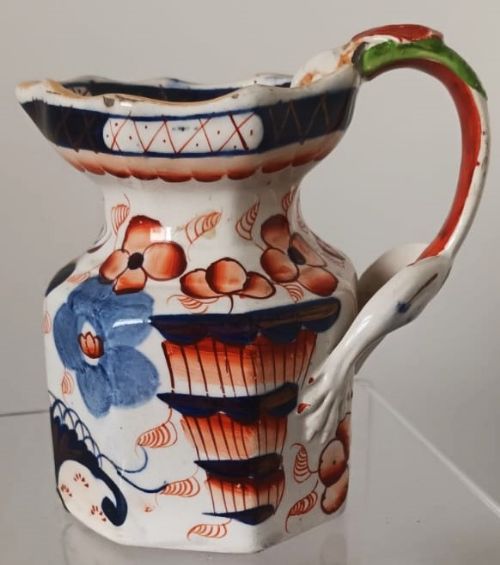
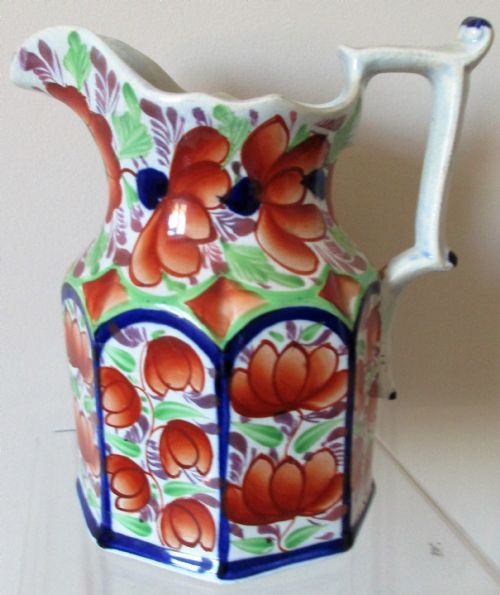
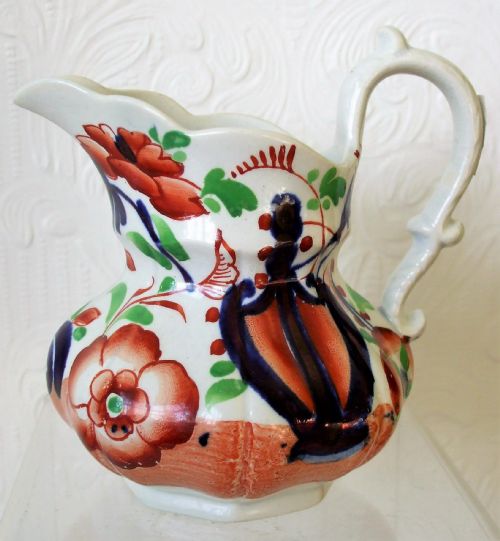


Earthenware Floral Pitcher
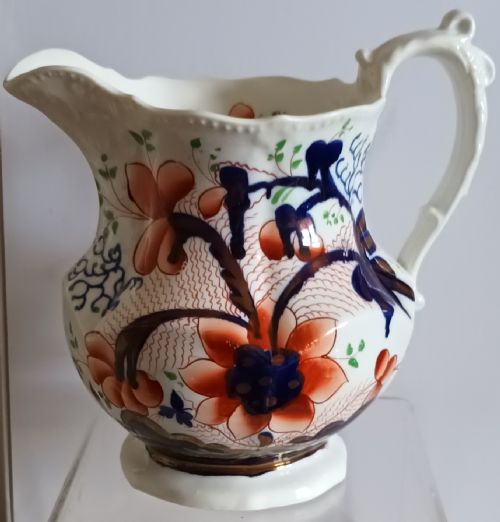
An earthenware floral pitcher brings domestic history to life through hand-painted botanical motifs and robust ceramic forms.
Earthenware Floral Pitcher
An earthenware floral pitcher represents a functional pouring vessel shaped from porous clay and finished with botanical decoration. Buyers selecting an earthenware floral pitcher encounter domestic water jugs, wash sets, and display pieces originating from Georgian, Victorian, Edwardian, and later periods.
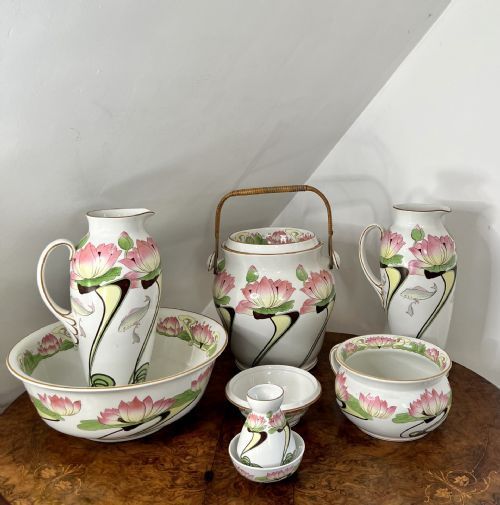
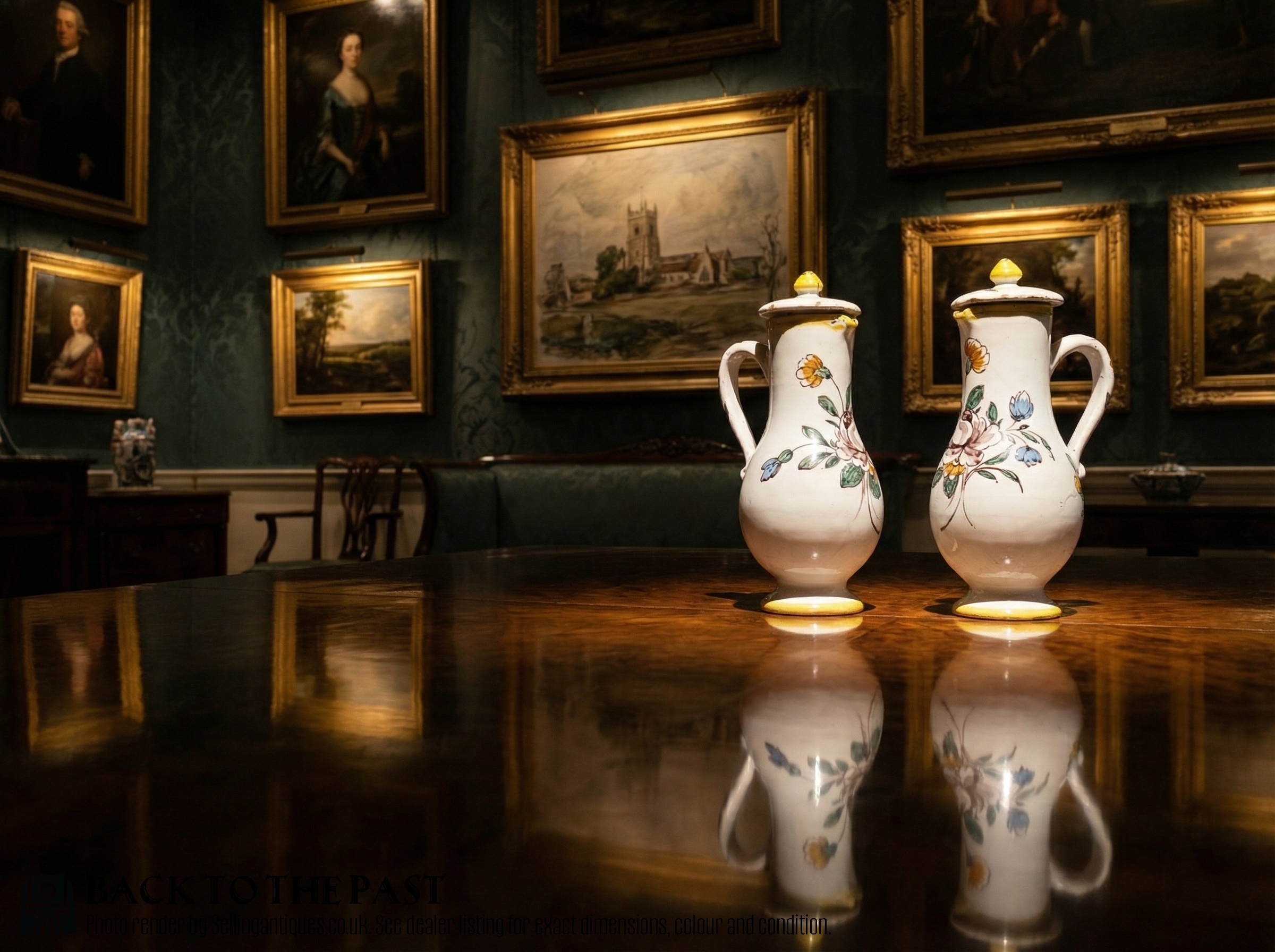
The inventory on this page spans from eighteenth-century tin-glazed delftware and pearlware to nineteenth-century Gaudy Welsh pottery and twentieth-century art pottery. Forms range from individual jugs to large bathroom sets and ewers.
Makers and potteries utilise traditional shapes decorated with painted or transfer-printed floral patterns. These vessels served practical everyday functions in households before transitioning into decorative display items.
How They Were Made
Potters shaped earthenware bodies on the wheel or pressed clay into moulds, creating forms such as cabbage leaf mouldings and mask spouts. Artisans applied glazes including tin glaze, copper lustre, and enamel to seal the porous ceramic substrate.
Decoration relied on hand-painted botanical motifs, transfer printing in magenta or blue, and occasionally gold leaf accents. Firing in kilns set the glazes and fixed the pigments into the surface of the clay body.
Listings feature earthenware, ceramic, and glaze materials across Victorian, Edwardian, Georgian, and Art Nouveau styles.
What Varies in Quality
The standard of an earthenware floral pitcher depends on the crispness of the moulded relief and the precision of the hand-painted or transfer-printed botanical decoration. Early examples exhibit fine potting techniques and carefully controlled glaze application that enhance the floral patterns.
Artistry in the brushwork and the complexity of the pattern, such as multi-coloured Gaudy Welsh designs or detailed delftware painting, separate standard utilitarian items from exceptional studio and factory productions.
Keeling And Co·Sir Edmund Elton·Charlotte Rhead·Mark Jones And Sons·Mountford Staffordshire
The Earthenware Floral Pitcher Glossary
- Earthenware
- Porous pottery fired at lower temperatures than stoneware or porcelain. It requires a glaze to become impermeable to liquids.
- Pearlware
- A refined earthenware developed in the late eighteenth century featuring a subtle bluish glaze that pooled in recesses to mimic Chinese porcelain.
- Delftware
- Tin-glazed earthenware produced in England and the Netherlands, typically decorated with blue and white floral designs.
- Gaudy Welsh
- Staffordshire pottery decorated with bright cobalt blue, copper lustre, and enamel colours, frequently featuring floral patterns.
- Ewer
- A large pitcher with a flared spout and an ornate handle, historically used alongside a basin for washing.
Earthenware Floral Pitcher: Frequently Asked Questions
How do I date an earthenware floral pitcher?
Dating relies on stylistic markers, clay types, and glaze characteristics recorded across different periods. Eighteenth-century pieces often utilise tin-glazed earthenware or pearlware bodies, whereas nineteenth-century items frequently display Gaudy Welsh patterns or transfer printing.
Makers' marks, where present on the base, provide specific attribution to potteries active during the Victorian, Edwardian, or later eras. Examining the manufacturing technique helps distinguish earlier hand-thrown items from later mass-produced wares.
Were these pitchers used for daily dining?
Many pitchers served practical domestic roles carrying water, milk, or beer at the table. Larger examples functioned as part of wash sets alongside bowls for personal hygiene in bedrooms.
Over time, decorative earthenware jugs shifted from utilitarian kitchen and bedroom items to ornamental display pieces valued for their floral designs.
How should I clean my antique pitcher?
Clean antique earthenware gently using warm water and a mild, non-abrasive soap. Avoid harsh scrubbing or soaking, as older glazes and enamel decorations can be fragile.
Dry the piece thoroughly with a soft cloth to protect the ceramic body and any delicate surface details from moisture damage.
What is the difference between pearlware and delftware?
Pearlware is a refined earthenware developed in the late eighteenth century with a thin, clear glaze over a whitish body that gives a pale blue tint. Delftware utilises an opaque tin glaze that creates a smooth white surface suited for painted blue and white decoration.
Both materials appear in antique pitcher production but represent different eras and technological developments in ceramic history.