


Polychrome Earthenware Pitchers
Polychrome earthenware pitchers bring bright pigments and robust clay forms into a room, offering both decorative presence and historical utility.
Polychrome Earthenware Pitchers
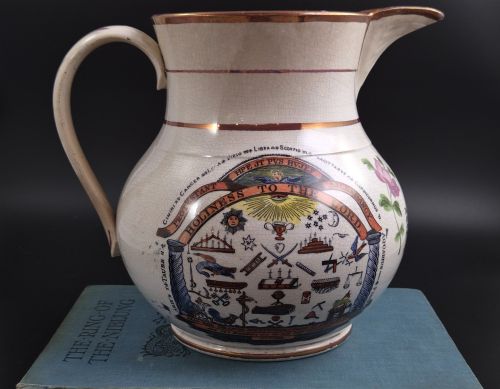
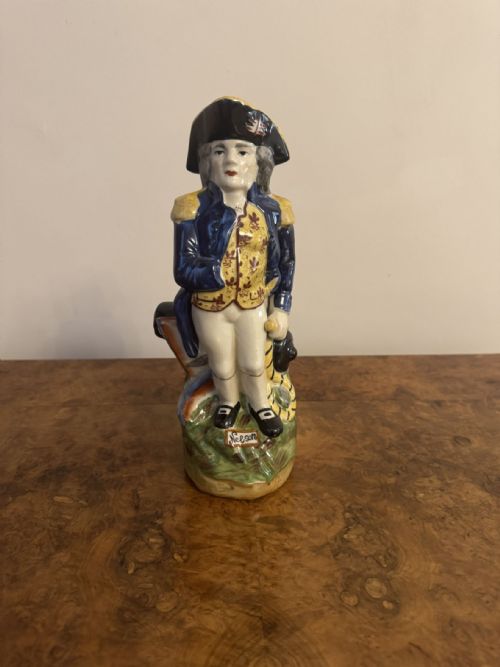
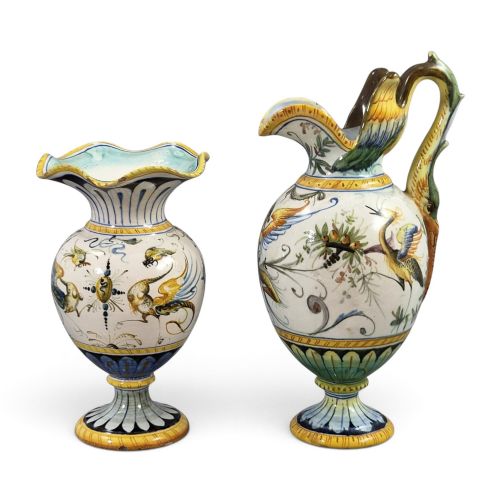
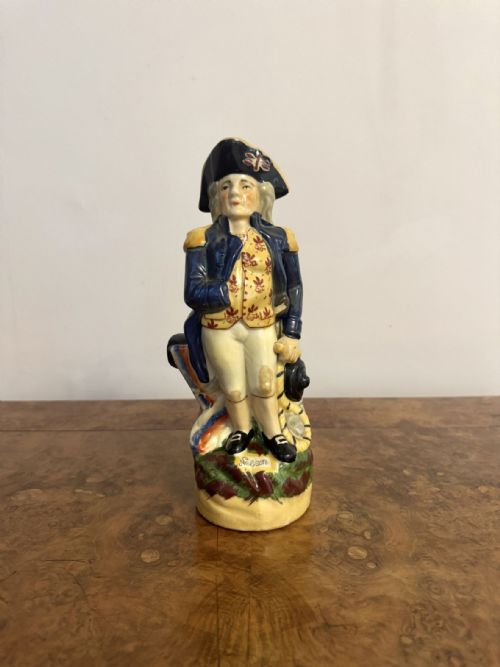
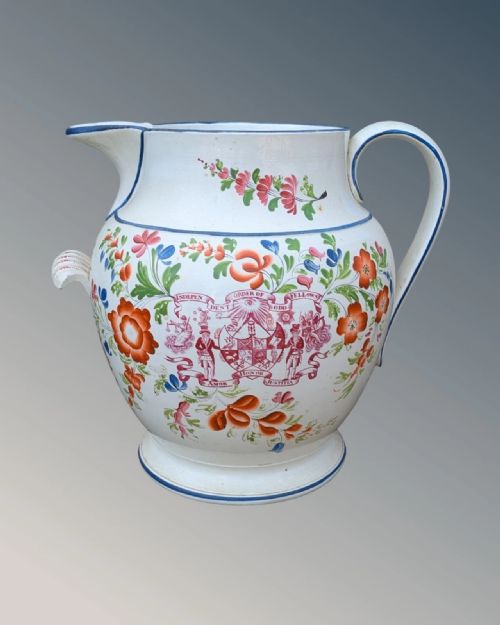
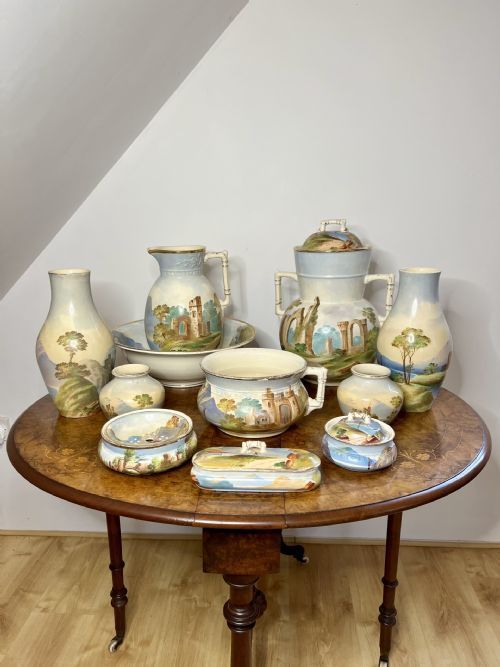
When you search for polychrome earthenware pitchers, you are looking at utilitarian ceramic vessels decorated in multiple colours, spanning periods from the eighteenth century through to the Edwardian era. These pieces encompass standard jugs, wash sets, and characterful figural forms such as Toby jugs.
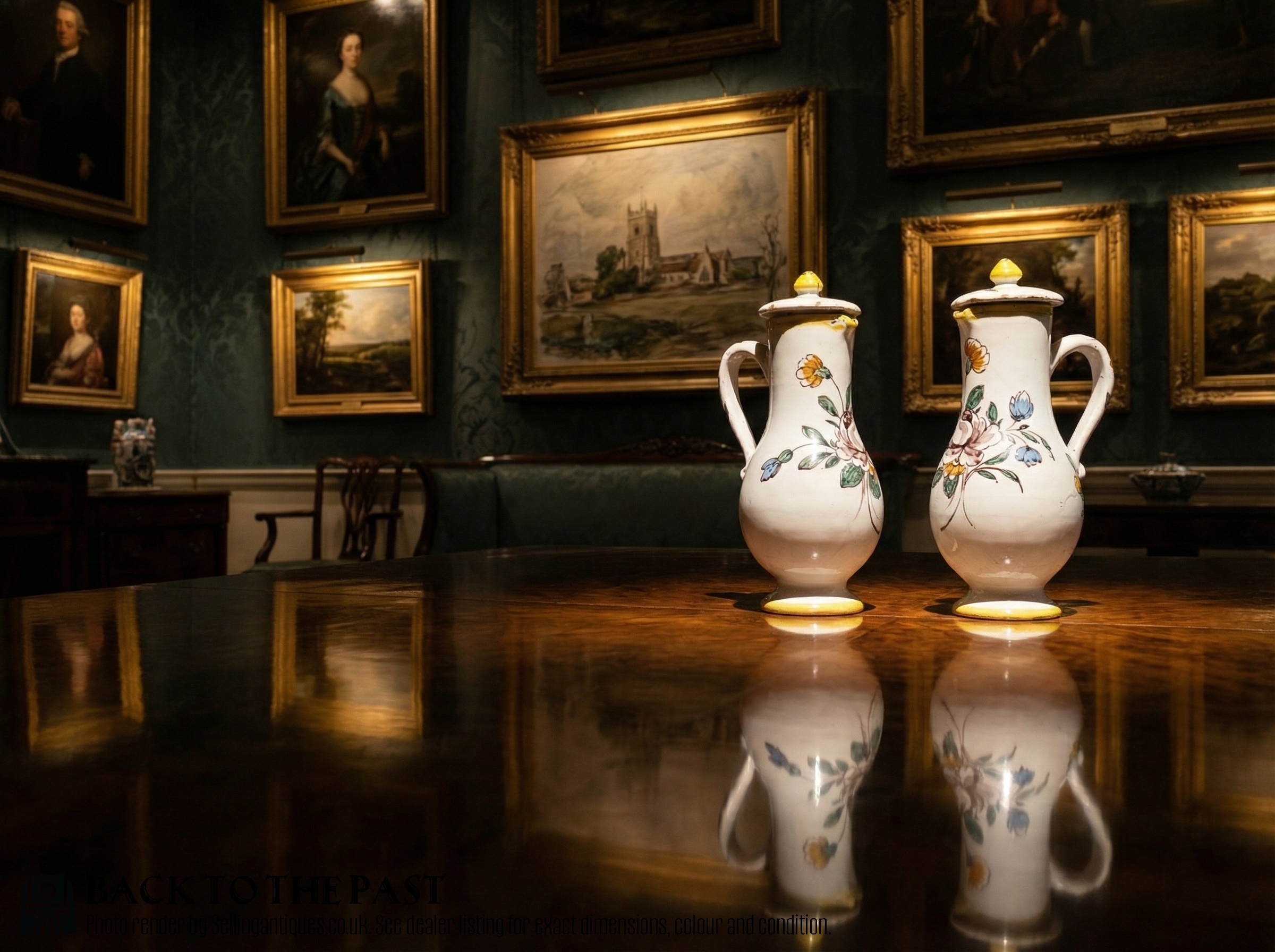
The versions most commonly met on this page include nineteenth century Staffordshire earthenwares and Dutch Delft faience examples. Makers utilised tin glazes and enamel painting to render spirited scenes, armorials, and commemorative subjects across the surface.
Materials and construction methods
Potters shaped these vessels from local clays, firing the body before applying tin glazes or clear ceramic glazes to seal the porous earthenware. Metallic lustre glazes also appear on specific nineteenth-century iterations to catch the light.
Artisans hand-painted the polychrome designs directly onto the surface using mineral pigments, sometimes fixing the colours with a second kiln firing. Forms range from wheel-thrown bodies to complex mould-pressed figures with applied mask spouts.
Assessing quality in earthenware pitchers
Quality rests upon the crispness of the moulded details and the confidence of the hand-painted brushwork. Superior pieces exhibit precise facial expressions on figural jugs and clean, vibrant enamel application that remains crisp against the glaze.
Cantagalli Florence·Staffordshire Pottery
The Polychrome Earthenware Pitchers Glossary
- Earthenware
- A porous ceramic body fired at lower temperatures than stoneware or porcelain. It requires a glaze to become watertight and forms the structural base for most traditional pitchers.
- Tin Glaze
- An opaque white glaze containing tin oxide, providing a smooth canvas for painted polychrome decoration. It is characteristic of Delftware and faience productions.
- Polychrome
- Decoration executed in multiple distinct colours. On these pitchers, this typically involves hand-painted enamels applied over a fired glaze ground.
- Toby Jug
- A pottery jug modelled in the form of a stout, jovial person usually seated and holding a mug of beer or a pipe. They frequently depict named historical figures or satirical characters.
Polychrome Earthenware Pitchers: Frequently Asked Questions
How do I date these pitchers?
Dating relies on stylistic clues, glaze characteristics, and the nature of the ceramic body. Pearlware bodies typically point towards the Georgian period, while brighter transfer prints and certain enamels indicate the nineteenth century.
Form also guides the eye, as distinct styles like Renaissance Revival or Victorian commemorative themes carry the visual language of their specific decades of manufacture.
What is a Toby jug?
A Toby jug is a pottery vessel shaped as a seated, full-length figure, usually a cheerful, stout man wearing eighteenth-century attire. These figures often hold a mug of ale or a jug of beer, combining humorous portraiture with practical service.
Potters used them extensively in the Georgian and Victorian eras, depicting figures like Lord Nelson or local character types such as Mr Snuff.
Are these pitchers waterproof?
Most of these pitchers are glazed earthenware and were originally intended for holding liquids or water as part of a wash set. However, age can create microscopic crazing in the glaze layer.
It is generally wiser to treat antique earthenware as decorative or to use a glass liner inside if holding fresh flowers, preventing moisture from seeping into the historic clay body.
What is the difference between faience and earthenware?
Faience is a specific type of tin-glazed earthenware originating in Europe, often featuring painted tin-enamel decoration over a buff or cream-coloured body. The term usually covers Dutch and continental European wares.
Standard earthenware covers a broader category of fired clay vessels that may use clear lead glazes or simple slips rather than the opaque white tin glaze typical of faience.