


White Stem Glass
These white stem glass pieces include eighteenth century wine glasses and nineteenth century candlesticks, bringing tactile historical weight to any room.
White Stem Glass
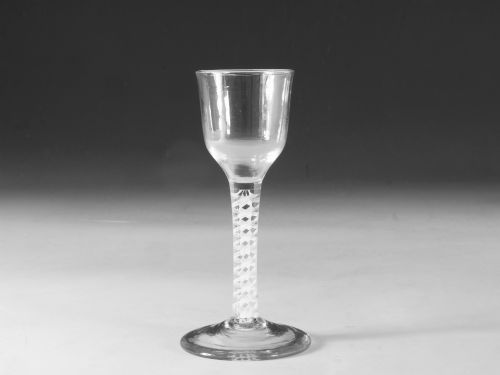
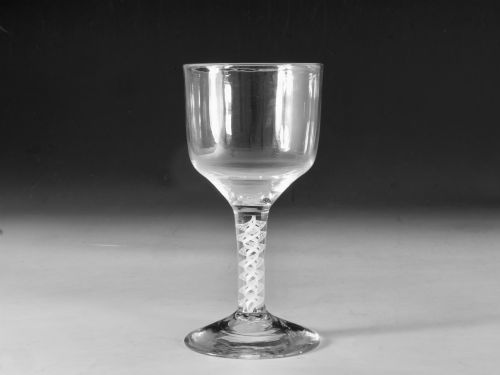
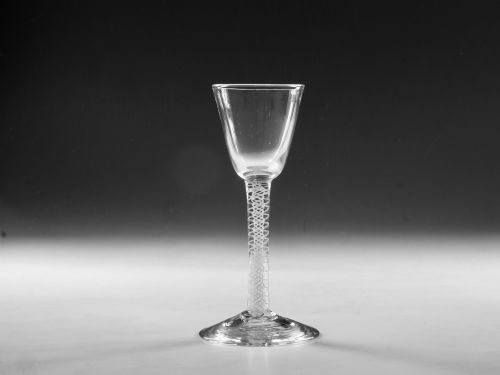
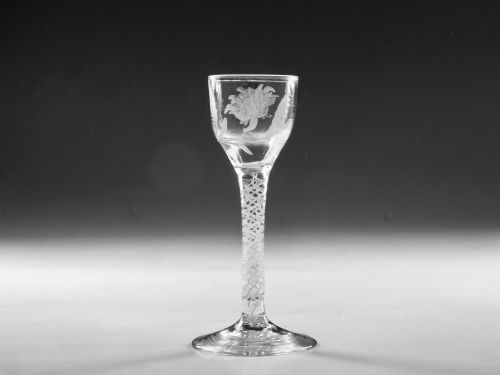
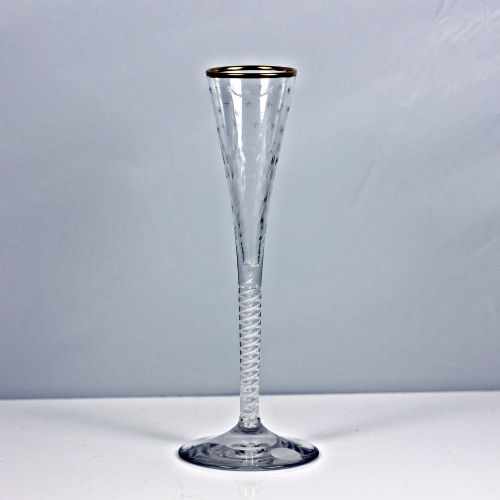
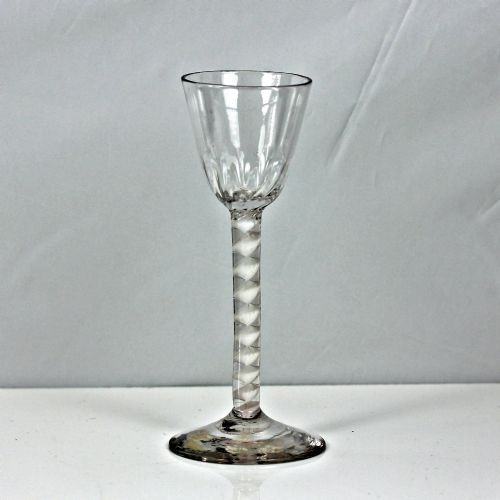
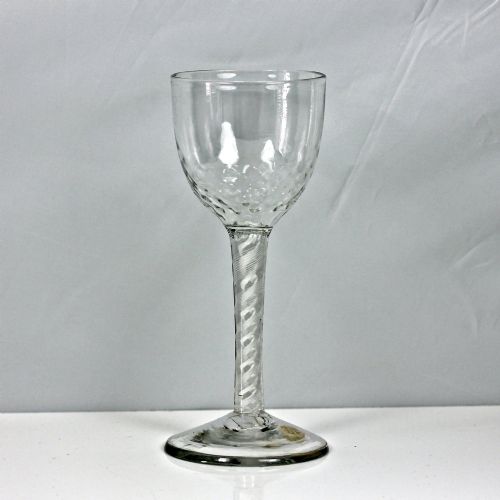
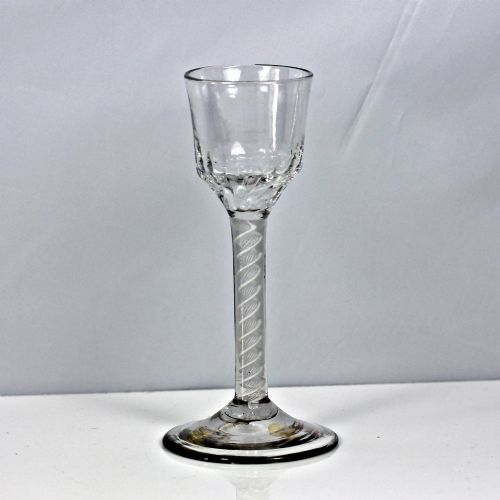
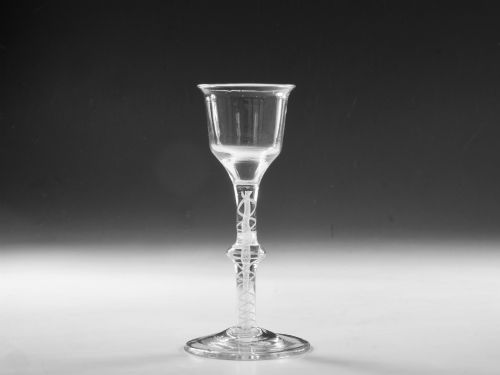
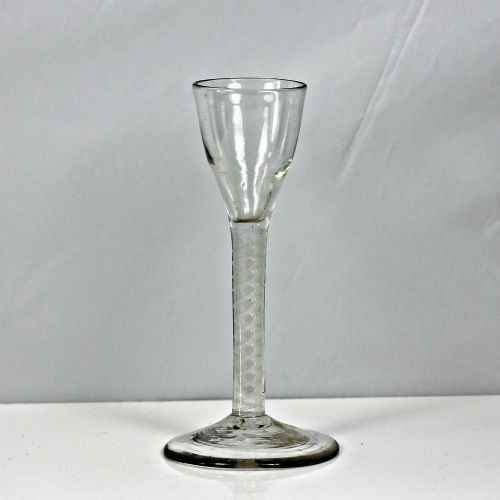
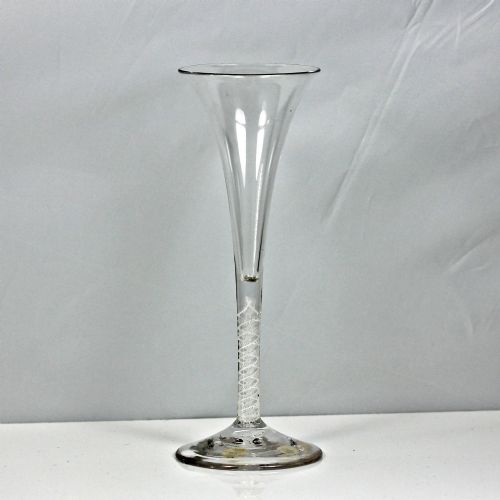
A white stem glass primarily encompasses eighteenth century drinking vessels from the Georgian period, featuring distinctive opaque white enamel twists enclosed within clear lead glass. These pieces take the form of wine glasses, cordials, ales, ratafias, and sweetmeat glasses alongside larger goblets. Beyond drinking vessels, the selection occasionally stretches into nineteenth century Victorian candlesticks and twentieth century lighting.
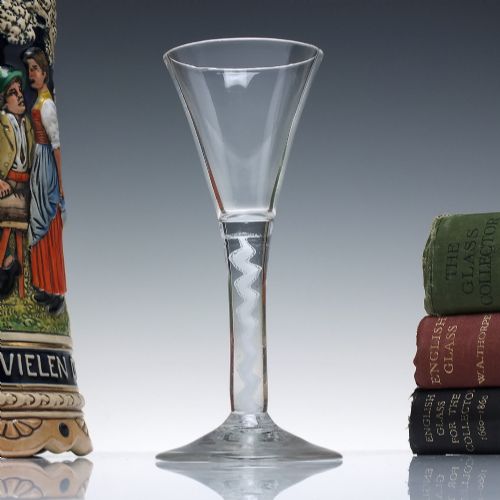
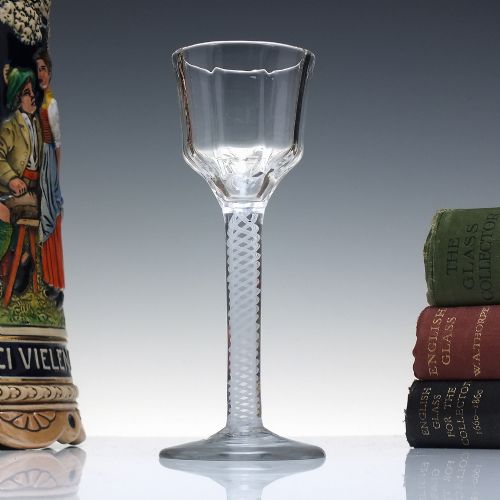
The dominant form on this page is the Georgian wine glass, originating around the middle of the eighteenth century. Makers produced these with varied bowl shapes including ogee, rounded funnel, trumpet, and fluted moulds. Stems feature single series, double series, and multi-spiral opaque white enamel threads, supported by conical feet.
How they were made
Craftsmen utilised lead glass and clear flint glass to form the bowls and feet of these drinking vessels. The defining white stems were created by incorporating white enamel twists inside the molten glass before drawing and twisting the stem to achieve single or double series patterns.
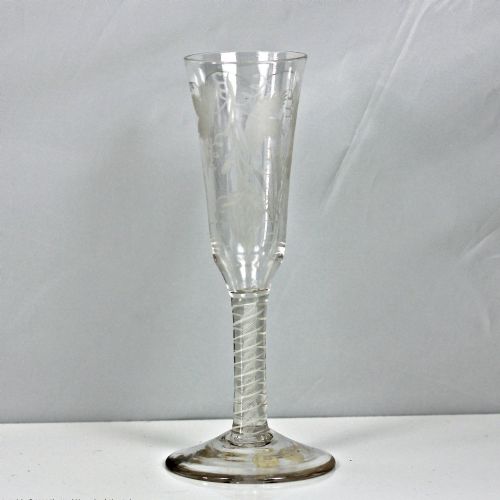
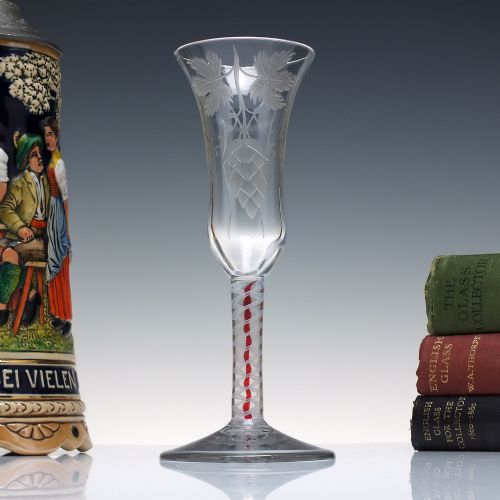
Engraving and gilding were frequently applied to the bowls of drinking vessels, depicting motifs such as hops and barley. Later lighting forms combined chrome and brass with glass elements like opaline and frosted glass.
White Stem Glass Retail Price Guide 2026
Typical asking prices for white stem glass among the pieces listed under this phrase on Sellingantiques today, from the lower quarter to the upper quarter. They describe what is for sale here now, not the wider market.
An anonymous eighteenth century glassmaker accidentally dropped white enamel into clear metal, spawning a nation of collectors peering intently at tiny internal threads.
What varies in quality
The complexity of the internal twist dictates much of the visual sophistication within these drinking vessels, moving from simple single series threads to intricate double series and triple twists. Additional craftsmanship appears in knopped stems, corkscrew configurations, and flute-moulded bowls.
Surface ornamentation creates further distinction, particularly when glass bears detailed wheel engraving or delicate gilding on the bowl. The structural integrity of the metalwork in associated lighting pieces also influences the overall standard of the object.
The White Stem Glass Glossary
- Opaque twist
- A glass stem containing white enamel threads enclosed within clear glass. This technique gained popularity in England during the mid eighteenth century.
- Double series twist
- An opaque white stem combining an outer cable of enamel threads around an inner core of spiral strands. This creates a denser, more complex visual pattern inside the glass.
- Ogee bowl
- A bell-shaped drinking vessel bowl with an 'S' shaped profile, curving out at the rim and in towards the base. This form appears frequently on eighteenth century wine glasses.
- Ratafia glass
- A tall, narrow drinking vessel designed for sweet fruit liqueurs. These pieces often feature engraved decoration on the bowl.
White Stem Glass: Frequently Asked Questions
What is an opaque twist?
An opaque twist is a decorative glass stem containing threads of white enamel enclosed within clear lead glass. Craftsmen manipulated these enamel rods while the metal was hot to form intricate internal spirals.
These stems replaced earlier baluster forms and appeared on drinking vessels throughout the Georgian period.
How do you date eighteenth century wine glasses?
Dating relies on observing the combination of bowl shape, stem construction, and foot form. Earlier examples from the mid eighteenth century often feature simple trumpet bowls and heavy feet.
Characteristics evolved through the period towards lighter forms with ogee bowls and complex multi-spiral stems.
What were cordial glasses used for?
Cordial glasses served strong, sweet alcoholic liqueurs and spirits following meals. Their smaller bowls restricted the volume consumed compared to standard wine glasses.
These vessels often featured thick conical feet and narrow bowls to support potent drinks.
What is an ale glass?
An ale glass is a tall drinking vessel specifically manufactured for consuming beer. Eighteenth century examples frequently display engraved hop and barley motifs upon the bowl.
These pieces utilised sturdy stems, including opaque twists, to withstand regular use.