
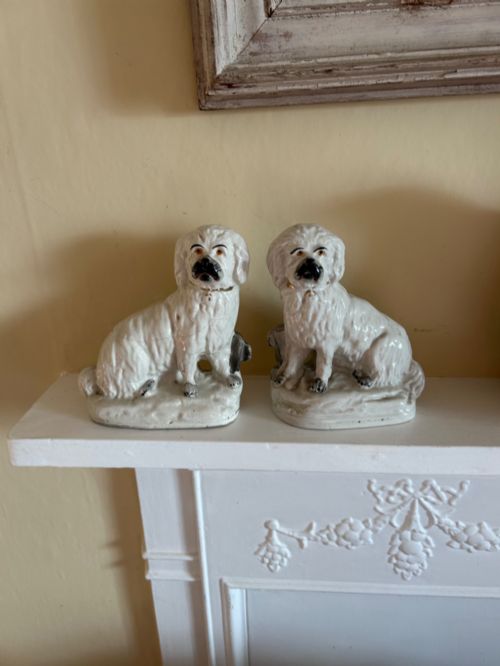


White Staffordshire Spaniels
White staffordshire spaniels are classic ceramic figures that bring traditional charm to a mantelpiece, prized by collectors for their historic pairing and cheerful character.
White Staffordshire Spaniels
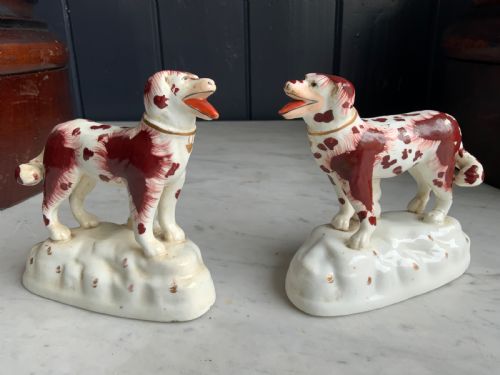
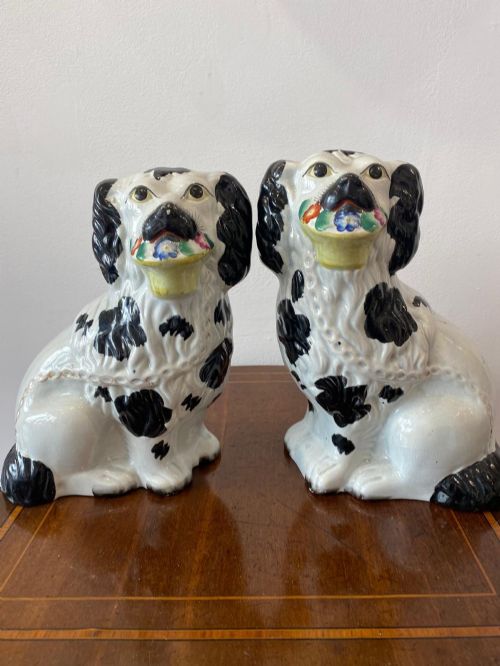
White staffordshire spaniels are ceramic figures of dogs, most frequently encountered in matching pairs designed to sit at either end of a mantelpiece. These mantle ornaments represent popular breeds such as spaniels, poodles, terriers, and pugs from the nineteenth century.
The pieces on this page span the Victorian era, with dates stretching from the Regency period into the twentieth century. Alongside standard seated figures, collectors find money boxes, quill holders, clock groups, and Toby jugs shaped like the familiar dogs.
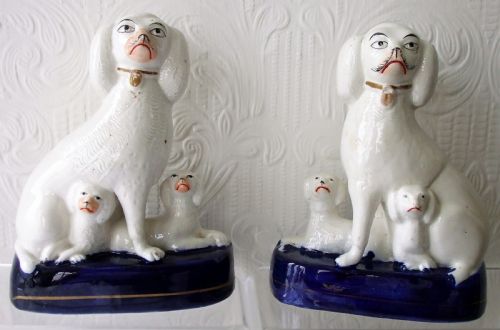
Most examples appear as standing or seated animals, sometimes accompanied by puppies or resting on modelled cushions. They originate from English potteries, capturing domestic canine subjects that served as comforting fireside companions in Victorian homes.
How they were made
Potters shaped these figures using earthenware clay, forming the dogs through pressing into moulds before firing. Artisans then applied glazes to create the glossy surface finish typical of the pottery.
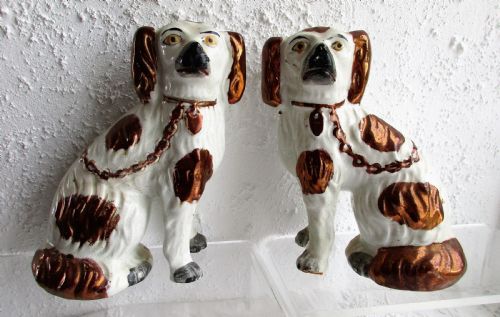
Decoration relied on hand painting with enamel colours and metallic touches such as gilt or gold leaf. Many pieces incorporate simple black and white pigments or subtle copper lustre details over a lead glaze base.
Some spaniels wear gilded padlocks on chains around their necks, guarding secrets only Victorian mantelpieces know.
What varies in quality
Quality rests primarily in the crispness of the modelling and the sensitivity of the hand painting on the face and coat. Superior examples show clear definition in the eyes, muzzle, and fur rather than hurried, heavy brushstrokes.
The application of gilt and enamel detailing distinguishes finer specimens from standard production pieces. Well-preserved glaze surfaces and matching pairs with balanced proportions command stronger appreciation among collectors.
Royal Doulton·Beswick
The White Staffordshire Spaniels Glossary
- Earthenware
- A porous pottery body fired at lower temperatures, requiring a glaze to render it waterproof. Most traditional figures use this clay base.
- Lead glaze
- A glossy coating containing lead oxide applied to pottery before firing. It gives these ceramic surfaces their characteristic shiny sheen.
- Enamel
- Opaque glass-like paint applied over the fired glaze to add colour to the eyes, collars, and markings. Artisans fired the pieces again to set these pigments.
- Wally dog
- A traditional colloquial term used in Scotland and northern England for these ceramic spaniels. People often placed them on cottage windowsills to watch over the street.
White Staffordshire Spaniels: Frequently Asked Questions
Why are white staffordshire spaniels always found in pairs?
Potters manufactured these dogs to face one another so they could sit symmetrically at either end of a fireplace mantel. This paired arrangement matched the formal interior styling of Victorian homes.
Separated specimens do turn up, but collectors generally prefer to keep matching pairs together as originally displayed.
How were these ceramic dogs used in Victorian homes?
Families placed them on mantelpieces, often framing the central clock or ornaments in the main living rooms. They served purely as decorative figures to bring warmth and a sense of home to the parlour.
Some specialised pieces doubled as money boxes, quill holders, or inkwells, combining domestic display with everyday utility.
How can I tell a nineteenth century piece from a later copy?
Nineteenth century figures generally feature heavier earthenware bodies, crazing within the glaze, and hand-painted details that show slight individual variations. Later reproductions often feel lighter, display more uniform machine painting, and lack genuine age in the ceramic surface.
Examining the underside for vent holes and wear patterns helps confirm the period of manufacture.
What do different markings on the dogs signify?
Many early Staffordshire figures carry no maker marks at all because they were produced by numerous small potteries in the region. Painted highlights, gilt chains, and facial expressions serve as the primary indicators of origin rather than factory stamps.
Marked pieces from later potteries do appear, but unmarked examples remain standard for the nineteenth century.