


Staffordshire Chimney Dogs
Staffordshire chimney dogs are charming Victorian earthenware figures that bring traditional British character and mantelpiece symmetry to any room.
Staffordshire Chimney Dogs
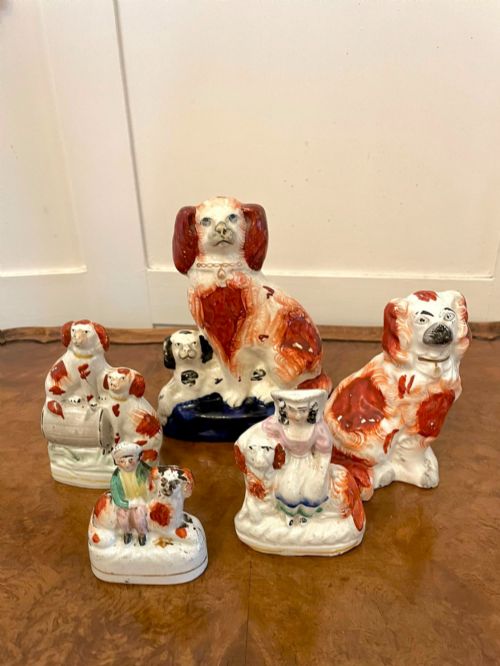
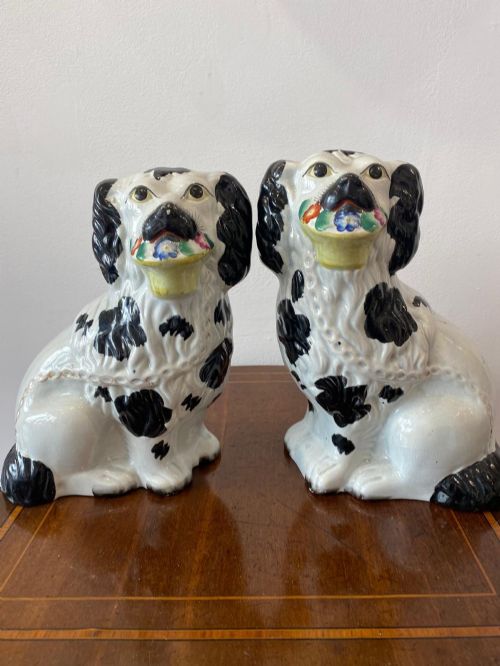
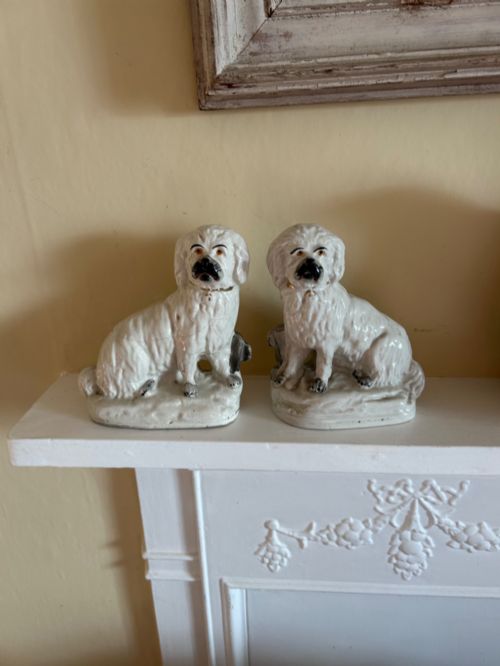
Staffordshire chimney dogs are decorative pottery figurines shaped as popular canine breeds that typically sat upon hearth mantels in nineteenth century homes. These ceramic pieces come as paired items meant to face one another across a fireplace centre. The selections here include spaniels, pugs, poodles with pups, Maltese terriers, and black and white variants.
Victorian examples dominate the listings, originating across the later decades of the nineteenth century from around eighteen sixty to nineteen hundred. These decorative objects take the form of ceramic and earthenware figures finished with glaze and enamel details. Buyers encounter various sizes, from large pairs to smaller groupings featuring accompanying puppies.
Makers shaped these pottery figures during the Victorian era to satisfy middle-class domestic tastes for animal ornamentation. The objects served a purely decorative function on mantelpieces while signalling respectability and comfort in British households. Surviving pairs display the distinct sculptural conventions of Staffordshire potteries from the period.
Materials and methods
Potters shaped these earthenware figures using local ceramic clay before applying a protective glaze coat. Artisans then painted surface details by hand using enamel colours, sometimes adding gold leaf or gilt highlights to collars, chains and lockets. This combination of ceramic body and hand-painted enamel defined the standard production method in Staffordshire potteries.
The firing process bonded the glaze to the clay body to create a hard-wearing ceramic surface suitable for domestic mantelpieces. Enamel paints were applied over or under the glaze depending on the desired finish and fired again to fix the pigment. This technique allowed workshops to produce uniform canine silhouettes while varying the surface coat and painted markings.
Listings on this site feature earthenware and ceramic materials finished with glaze and enamel, predominantly originating in the nineteenth century Victorian period.
Factors of quality
The retention of original enamel and gold leaf without excessive fading indicates better preservation and higher initial craftsmanship. Sculptural proportion and the lifelike rendering of specific breeds, such as pugs, poodles and spaniels, separate standard decorative items from more accomplished works. Pairs that retain their accompanying puppies or unusual colourways show greater sculptural ambition.
The Staffordshire Chimney Dogs Glossary
- Earthenware
- Porous ceramic fired at a lower temperature than stoneware or porcelain, forming the primary body for these figures. Potters glazed the fired clay to ensure a sealed, smooth surface.
- Gilt
- A thin layer of gold or gold-coloured leaf applied to surface details such as padlocks, chains and collars. This metallic accent provided a decorative contrast against the white or coloured glaze.
- Figurine
- A small carved, moulded or sculpted three-dimensional figure representing a human or animal. These pottery pieces served as decorative ornaments in nineteenth century interiors.
- Victorian
- Pertaining to the reign of Queen Victoria from eighteen thirty-seven to nineteen hundred and one, encompassing the primary period of manufacture for these canine figures.
Staffordshire Chimney Dogs: Frequently Asked Questions
What are Staffordshire chimney dogs?
Staffordshire chimney dogs are ceramic figurines shaped as dogs, most commonly spaniels, produced in English potteries during the nineteenth century. Victorian households placed them on mantelpieces, often arranged as facing pairs.
These earthenware objects feature glazed surfaces and hand-painted enamel details depicting collars, lockets and distinct coat patterns. They remain popular decorative items for traditional interiors.
Why did people display them on mantelpieces?
Victorian homeowners placed these pottery figures on mantelpieces to display domestic comfort and respectability. The paired dogs sat at either end of the hearth for decorative symmetry.
Placing them on the mantel also kept them visible as central ornaments in the main living space of the home. This tradition established their enduring association with British hearths.
How do I tell different breeds apart?
Potters shaped these figures to represent specific nineteenth century canine breeds through distinct facial structures and body forms. Spaniels feature drooping ears and solemn expressions, while pugs display shorter snouts and curled tails.
Poodles appear with moulded textured curls and often include smaller pups beside them, and Maltese terriers show elongated body proportions. Examining the silhouette and painted markings clarifies the intended breed.
Are these figures always found in pairs?
Many examples survive as matching pairs intended to face one another upon a mantelpiece. Workshops manufactured them together to maintain symmetry when placed on either side of a fireplace.
Collectors still seek these matching sets, though single figures and larger groupings with puppies also occur. The pairing remains a defining characteristic of traditional chimney ornaments.
What materials were used to make them?
Potters constructed these figures from local earthenware clay moulded into canine shapes and fired in kilns. A protective ceramic glaze was applied to the fired body to create a smooth, shiny finish.
Artisans then added surface colour using hand-painted enamel pigments and sometimes gold leaf or gilt highlights. This combination of materials created durable and decorative household ornaments.