
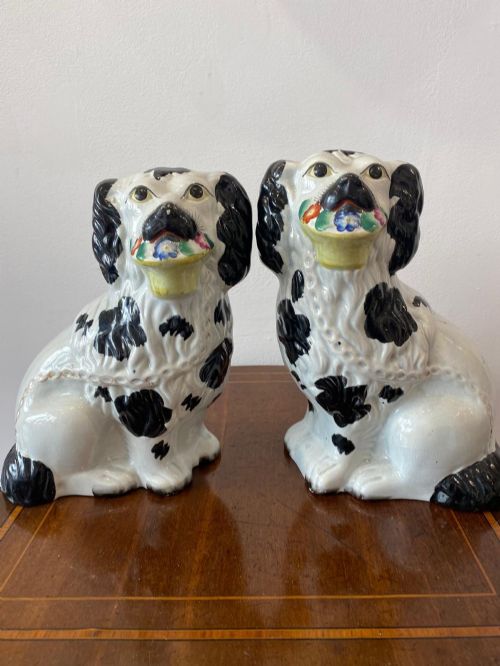


Victorian Wally Dugs
Victorian wally dugs are traditional ceramic spaniel figures that sit proudly on cottage mantelpieces.
Victorian Wally Dugs
When buyers search for Victorian wally dugs, they are looking at decorative earthenware spaniel figures made during the nineteenth century. These ceramic dogs were staple ornaments in British homes, usually displayed as matching pairs on either side of a fireplace.
The versions most commonly met on this page are pairs of Staffordshire pottery spaniels dated between eighteen-sixty and nineteen hundred. They take the form of seated or standing dogs, occasionally rendered in white, copper lustre, or with hand-painted details.
Makers such as Beswick also appear among these nineteenth-century pieces, representing the enduring popularity of English traditional pottery dog figures. Collectors find them in configurations ranging from individual pairs to collections of four or five figures.
How they were made
Certain pieces incorporate applied gilt or copper lustre finishes to create metallic sheens across the ceramic surface. Later nineteenth-century variations occasionally feature inserted glass eyes to add realism to the pottery spaniels.
Listings span the nineteenth century, with dates concentrated around eighteen-sixty, eighteen-eighty, eighteen-ninety, and nineteen hundred.
What varies in quality
The presence of original glass eyes and matching pairs with balanced proportions elevates certain nineteenth-century earthenware spaniels above standard production pieces.
Beswick
The Victorian Wally Dugs Glossary
- Earthenware
- A porous type of ceramic fired at lower temperatures, commonly used for nineteenth-century Staffordshire pottery figures. It requires a protective glaze to hold water and display surface decoration.
- Copper lustre
- A metallic glaze technique producing a reflective copper-coloured sheen across the ceramic surface. Potters used this to decorate nineteenth-century figures with gleaming collars and spots.
- Enamel paint
- Opaque glass-based pigments applied over the fired ceramic glaze and fixed with a secondary low-temperature firing. This technique provided the rich colours found on traditional spaniel figures.
- Comforter spaniels
- A traditional term for Staffordshire pottery dogs placed on mantelpieces to watch over the household. These decorative spaniels often came in matched left and right-facing pairs.
Victorian Wally Dugs: Frequently Asked Questions
What are wally dugs?
Wally dugs are ceramic mantelpiece spaniels made in nineteenth-century Britain. The term specifically refers to earthenware pottery figures produced in Staffordshire.
They usually appear as matched pairs facing one another. Victorian households placed them on hearths and mantelpieces as domestic ornaments.
How were they displayed?
These ceramic spaniels sat on either end of a fireplace mantelpiece facing inward toward the hearth. Families often arranged pairs on cottage sideboards and display shelves.
Their primary purpose was domestic decoration rather than practical use. They became enduring symbols of Victorian hearthside comfort.
Are they all pottery?
Most examples consist of moulded earthenware finished with surface glazes and hand-painted details. Some variations incorporate metallic lustre finishes or applied gold leaf.
Specific nineteenth-century versions also feature inserted glass eyes. The underlying body remains traditional ceramic throughout.
How do I date them?
Dating relies on stylistic clues, manufacturing techniques, and specific materials recorded across the nineteenth century. Glaze types and painting styles shifted between eighteen-sixty and nineteen hundred.
Marked pieces or attribution to factories like Beswick help narrow the production period. Most surviving examples date from the Victorian era.