


Ceramic Mantelpiece Dogs
Ceramic mantelpiece dogs are steadfast hearthside companions that bring character and a touch of Victorian domestic tradition to any room.
Ceramic Mantelpiece Dogs
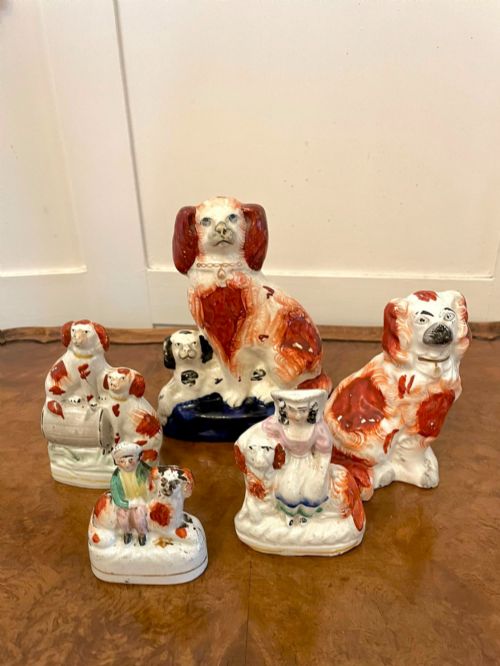
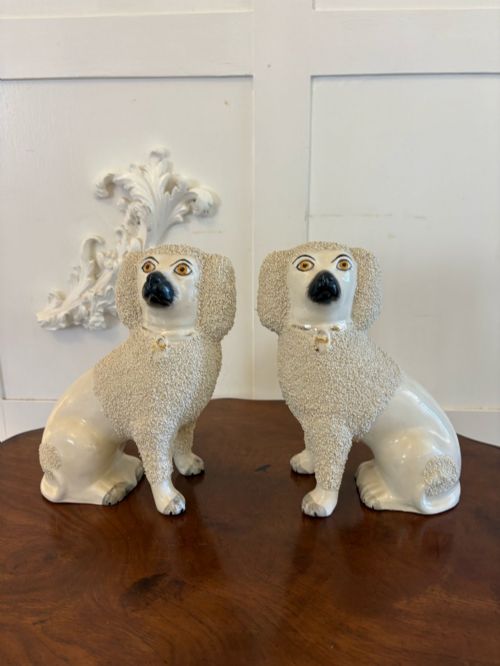
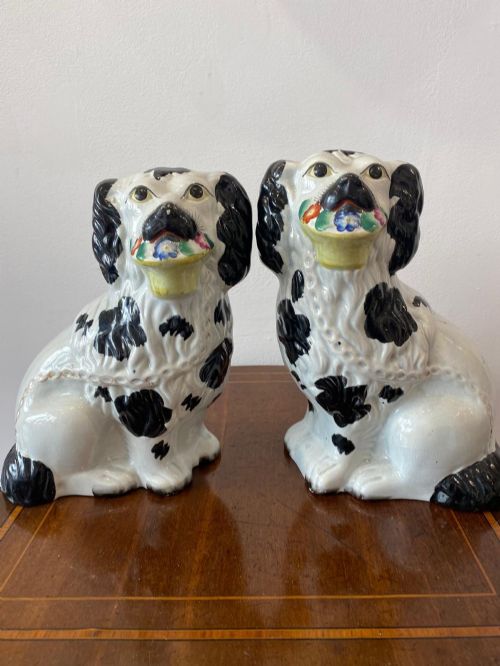
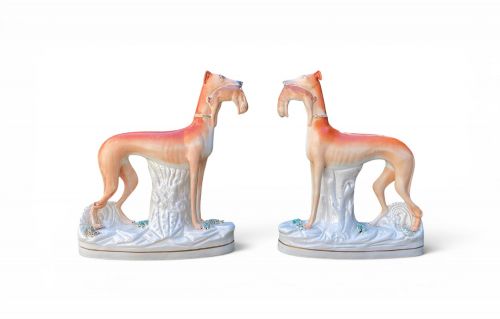
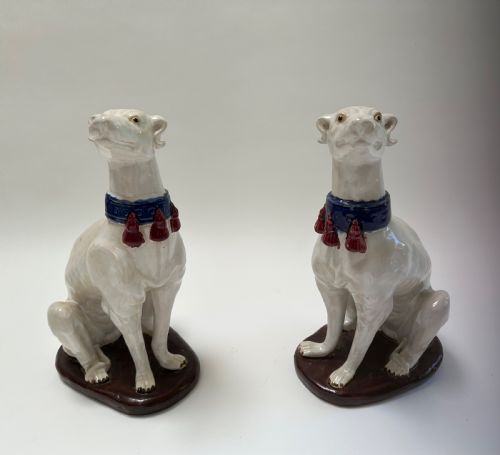
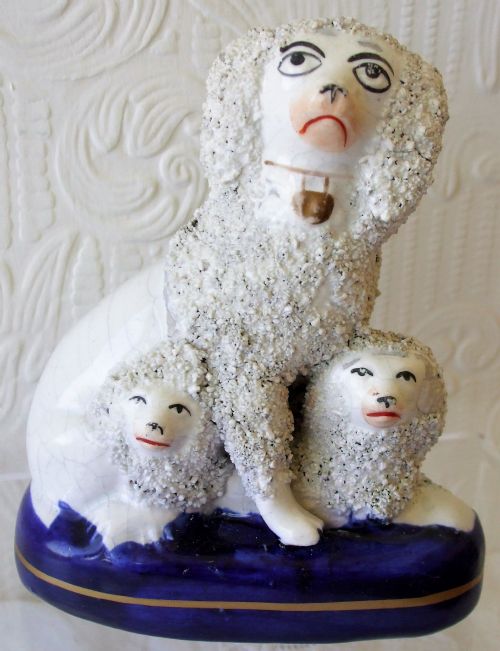
When you search for ceramic mantelpiece dogs, you encounter a range of earthenware and pottery figures designed to sit in pairs upon a fireplace. The pieces on this page are predominantly Victorian Staffordshire spaniels and poodles, alongside greyhounds, setters and Italian majolica examples.
The tradition spans the nineteenth century, taking the form of seated spaniels, poodles with pups, and decorative figure groups. Makers produced these ornaments in matched pairs to flank the centre of a mantel, creating a symmetrical display that defined period interiors.
Materials and construction
Makers formed many of these decorative objects using ceramic moulds before hand painting the final surface. This combination of mass moulding and individual brushwork explains the distinct personality found in each pair.
Several poodles wear elaborate moulded fur coats that required potters to apply clay curls by hand.
Judging the work
The presence of copper lustre finishes or unusual variants such as poodles with pups elevates certain pieces. Condition and the retention of original gilding also divide ordinary figures from finer collectors' examples.
James Dudson·Royal Capodimonte Factory·Royal Doulton·Beswick
The Ceramic Mantelpiece Dogs Glossary
- Earthenware
- A porous pottery body fired at lower temperatures, commonly used for nineteenth-century figures. It requires a glaze to hold liquids and achieve a finished sheen.
- Staffordshire
- A generic regional term for pottery produced in the English county famous for figure production. These pieces form the vast majority of mantelpiece dogs.
- Majolica
- A type of earthenware coated in an opaque tin glaze and painted with metallic oxides. Italian examples bring a distinct Mediterranean palette to the mantel.
- Enamel paint
- A hard, glossy paint applied over the glaze to colour coats, eyes and facial markings. Artisans used it to bring life to otherwise plain white pottery.
- Garniture
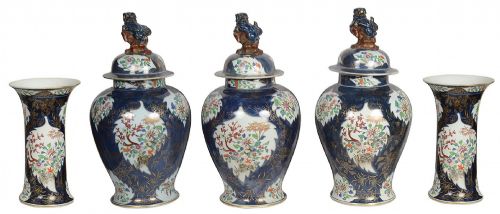
- A set of ornamental vases or figures designed to be displayed together on a mantelpiece or sideboard. They typically comprise matching pairs flanking a central larger piece.
Ceramic Mantelpiece Dogs: Frequently Asked Questions
Where should I place mantelpiece dogs?
These figures traditionally sit in mirrored pairs upon a fireplace mantel, facing inward toward each other. Their symmetrical nature makes them equally suitable for dressing a bookshelf or sideboard.
Position them where gentle ambient light catches any gold leaf details or enamel paintwork without exposing the pottery to direct, harsh heat.
How do I clean ceramic dogs?
Dust these glazed earthenware figures gently with a dry, soft brush to prevent accumulation in the crevices of the modelling. Avoid harsh chemical cleaners or soaking in water, which can damage old enamel paint.
If grime persists, wipe the surface lightly with a damp cloth and dry immediately with a soft lint-free towel.
Are these dogs always found in pairs?
While the majority of these decorative objects were produced as matched pairs to flank a fireplace, collectors also encounter individual figures or larger groups. Sets sometimes include puppies or incorporate children alongside the animals.
Matching pairs command stronger interest, as symmetry was the primary goal for Victorian mantel displays.
How can I tell the period?
Dating relies on observing the style of modelling, the type of glaze, and the character of the enamel paint. Victorian Staffordshire pieces often feature distinct copper lustre accents or gold chain markings.
Comparing the weight of the ceramic and the finish of the base helps distinguish nineteenth-century earthenware from later twentieth-century revivals.