



White Pottery Dog Figure
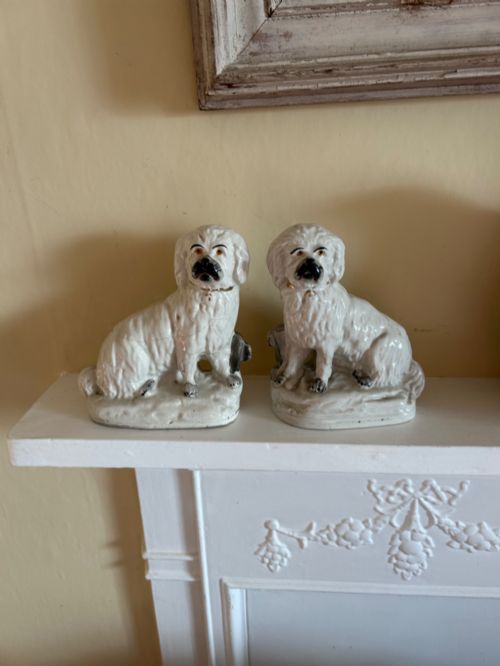
A white pottery dog figure sits on the mantelpiece to offer steady company, shaped by nineteenth-century potters who mastered domestic charm.

White Pottery Dog Figure
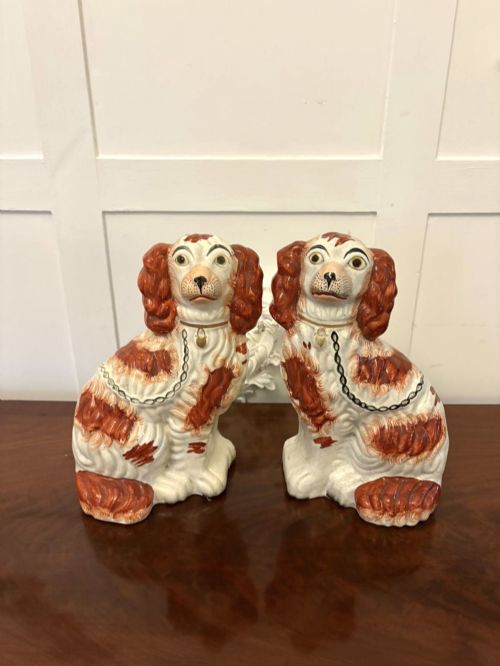
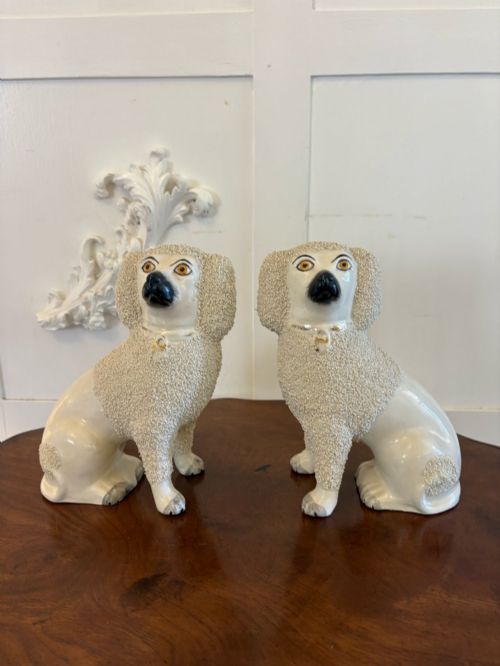
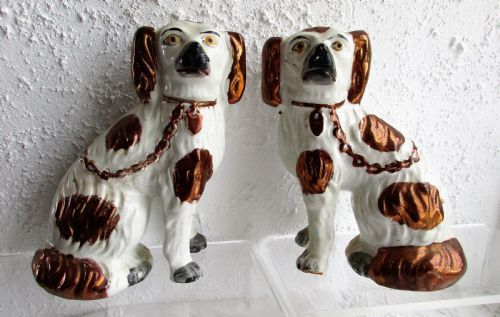
A white pottery dog figure typically takes the form of a Staffordshire spaniel, poodle, greyhound, or dalmatian, frequently modelled as a symmetrical pair to sit on either side of a fireplace. These domestic ornaments draw on nineteenth-century Victorian styles, often produced as flat-backed figures designed to stand against a wall.
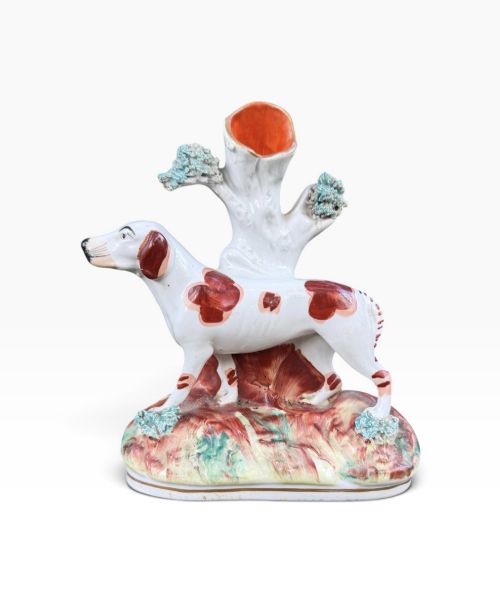
Beyond simple mantel ornaments, these ceramic figures served functional roles in homes, appearing as money boxes, inkwells, clock groups, or quill holders with baskets. The selection ranges from miniature poodles to large seated spaniels, embodying the Victorian affection for animal subjects.
English traditional workshops and Italian majolica traditions both contributed to this category, creating decorative figurines that capture specific breeds like Maltese terriers and setters. Buyers encounter these pieces primarily as earthenware ceramics shaped during the Victorian era and the later nineteenth century.
How these figures were shaped and glazed
Hand painting brought individual character to each piece, adding copper spots to dalmatians or golden curls to poodles after the initial firing. The application of white glaze provided the uniform background typical of these ceramic dogs, while secondary enamel colours defined eyes, noses, and bases.
White Pottery Dog Figure Retail Price Guide 2026
Typical asking prices for white pottery dog figure among the pieces listed under this phrase on Sellingantiques today, from the lower quarter to the upper quarter. They describe what is for sale here now, not the wider market.
Listings in this category span earthenware and ceramic bodies finished with lead glazes, enamel colours, and gold leaf highlights.
What distinguishes the finer examples
Completeness and originality define the upper tier of these objects, particularly when pairs remain together with matching glaze tones and intact gold leaf highlights. The presence of functional additions, such as inkwells or quill holders, combined with clear potting execution elevates certain figures above basic decorative ornaments.
Thomas Parr·Enoch Wood factory·James Dudson
The White Pottery Dog Figure Glossary
- Earthenware
- A porous pottery body fired at lower temperatures, commonly used for nineteenth-century figures and glazed with lead compounds.
- Lead Glaze
- A glossy coating containing lead oxide applied to ceramics before firing, producing a smooth and reflective surface.
- Enamel
- Opaque coloured glass fused to the ceramic surface during a secondary low-temperature firing to provide surface decoration.
- Quill Holder
- A ceramic desk accessory featuring small receptacles or loops designed to hold writing feathers.
- Copper Lustre
- A metallic glaze finish producing a coppery sheen, frequently applied to nineteenth-century Staffordshire pottery.
White Pottery Dog Figure: Frequently Asked Questions
Where were white pottery dog figures displayed?
These ceramic figures traditionally sat in pairs on mantelpieces in Victorian homes, placed symmetrically on either side of the fireplace.
Owners also positioned them on side tables and desks, particularly when the pieces incorporated functional elements like inkwells or quill holders.
How do you identify a Victorian spaniel figure?
Victorian spaniel figures generally feature seated dogs with floppy ears, often decorated with copper spots or gold lockets around their necks.
Most examples from this period are earthenware with a white glaze background and possess a flat back intended for placement against a wall.
What dog breeds appear in these ceramics?
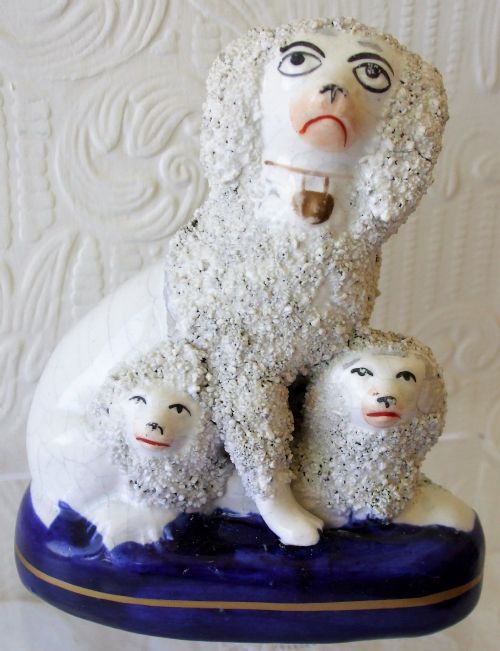
Potters most frequently modelled spaniels, poodles with textured curly coats, dalmatians with distinctive spots, and greyhounds.
Less common breeds in the evidence include Maltese terriers, setters, and pugs, sometimes shown alongside children or accessories.
Did these figures serve any practical use?
While many acted purely as decorative mantel ornaments, several examples incorporated practical functions into their design.
Potters produced dog figures configured as money boxes with coin slots, inkwells with small ceramic inserts, and quill holders featuring attached baskets.