

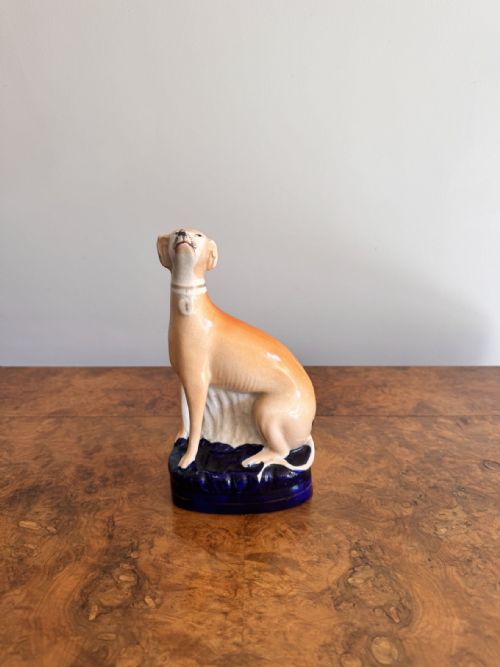
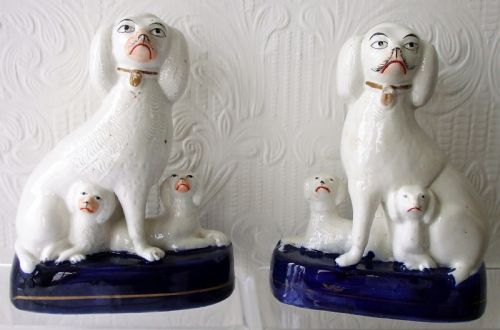
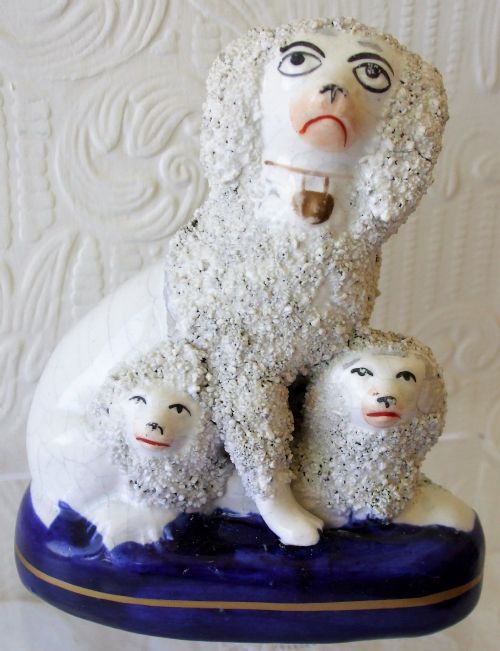


Cobalt Base Staffordshire Dog
A cobalt base staffordshire dog brings unmistakable Victorian character to a mantelpiece, combining rich blue plinths with charming ceramic animal figures.

Cobalt Base Staffordshire Dog
A cobalt base staffordshire dog search leads straight to Victorian earthenware figures and inkwells set upon characteristic deep blue plinths. The pieces appearing here span the nineteenth century, including specific dates from eighteen-sixty onwards alongside broader Victorian eras.
Most examples encountered on this page take the form of poodles, spaniels, dalmatians, and greyhounds, often modelled alongside puppies or perched upon blue cushions. Buyers meet pairs as well as individual figures, decorative groups, and functional inkwells.
These ceramic figures reflect the domestic tastes of the late Victorian period, originating primarily from English potteries. They serve as quintessential mantel ornaments that capture nineteenth-century animal portraiture in clay.
How they were made
Makers often applied encrusting techniques to texture the surfaces, particularly on cushions and fur details, before firing the pieces in kilns. The distinctive blue plinths received a rich cobalt glaze that grounds the colourful figures above.
Cobalt Base Staffordshire Dog Retail Price Guide 2026
Typical asking prices for cobalt base staffordshire dog among the pieces listed under this phrase on Sellingantiques today, from the lower quarter to the upper quarter. They describe what is for sale here now, not the wider market.
Listings here span the nineteenth century, featuring earthenware and porcelain bodies finished with lead glaze, enamel, and gold leaf.
What varies in quality
The application of the cobalt glaze and the richness of the gilt or gold leaf accentuation also separate finer pieces from simpler domestic wares. Purity in the ceramic body and the careful execution of encrusted details elevate a group above standard production.
The Cobalt Base Staffordshire Dog Glossary
- Cobalt
- A deep blue mineral oxide used to create the intense colour on the bases and plinths of these figures. It provides a striking contrast against the white and coloured glazes of the dogs.
- Earthenware
- A porous pottery body fired at lower temperatures, commonly used for nineteenth-century Staffordshire figures. It requires a glaze to become impermeable to liquids.
- Encrusting
- A decorative technique where small clay fragments or slip are applied to the surface to simulate texture, such as curly hair or textured cushions. It demands skilled handwork during the manufacturing process.
- Inkwell
- A small desk accessory featuring a receptacle for liquid ink, sometimes incorporated into figural ceramic groups. These combined utility with the popular ornamental dog motifs of the period.
Cobalt Base Staffordshire Dog: Frequently Asked Questions
What are cobalt base staffordshire dogs?
These pieces are nineteenth-century ceramic figures and inkwells depicting dogs such as poodles, spaniels, and dalmatians mounted on distinctive blue-glazed bases.
Potters created them during the Victorian era as decorative mantel ornaments for British homes, often modelling them in pairs or with small puppies.
How do I date a staffordshire dog?
Dating relies on stylistic markers, materials like earthenware or porcelain, and recorded production periods spanning the nineteenth century.
Many pieces point specifically to the eighteen-sixties or the broader late Victorian era through their modelling techniques and glaze characteristics.
Where should I display these figures?
Collectors traditionally place them on mantelpieces, bookshelves, or side tables where their bright enamels and cobalt bases can be easily seen.
Pairs look particularly striking when arranged symmetrically on either side of a fireplace or central decorative object.
Are all these dogs made in Staffordshire?
While the majority originate from English Staffordshire potteries, the selection also includes Continental porcelain figures from the late nineteenth century.
Both British and European makers produced similar animal subjects, though the traditional English earthenware versions most closely define the style.