



White Porcelain Spill Vase
These white porcelain spill vase pieces bring period elegance to a mantelpiece, holding taper candles for lighting fires.
White Porcelain Spill Vase
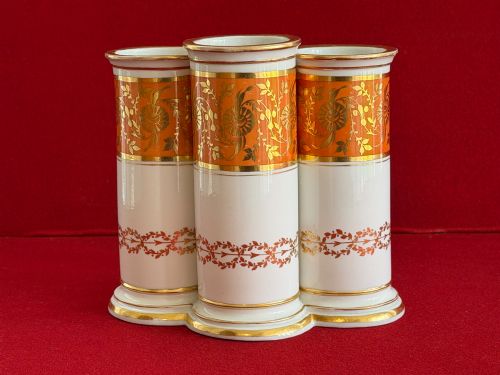
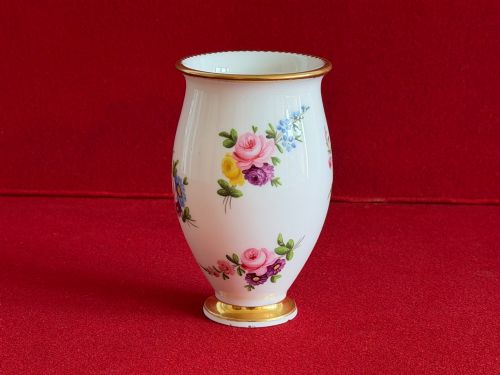
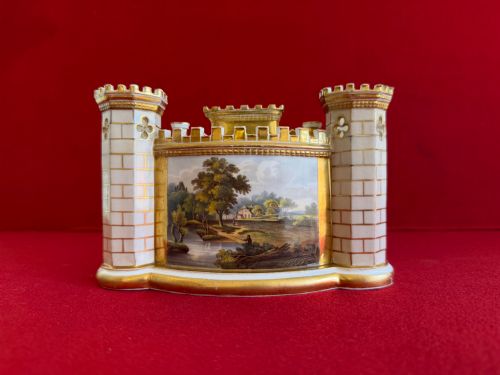
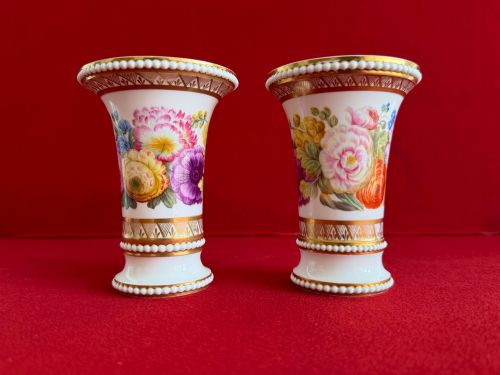
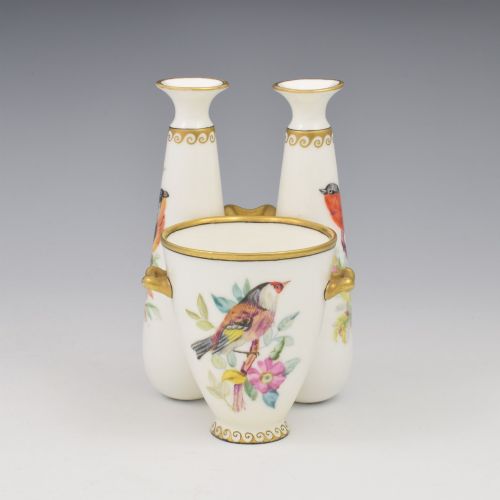
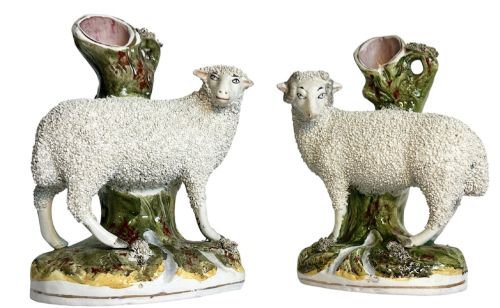
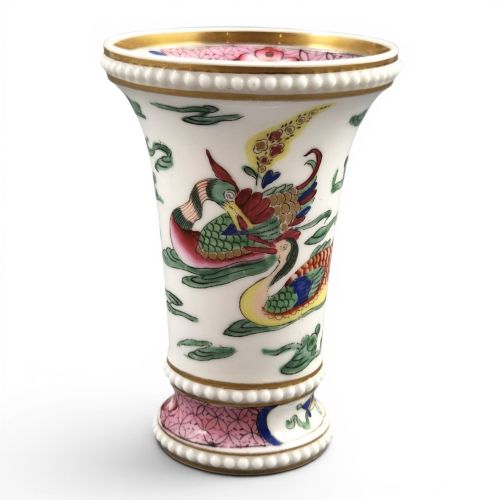
When you search for a white porcelain spill vase, you encounter delicate cylindrical vessels and figural groups designed to hold wooden tapers next to a hearth. The examples on this page span Georgian, Regency, and Victorian periods, taking forms from simple triple vases to Staffordshire sheep and castle designs.
Most pieces date from the nineteenth century, including factory-made works from Worcester and Spode alongside robust Staffordshire pottery figures. Buyers find both classical trumpet forms and sculptural pairings featuring birds, animals, and human figures.
How they were made
Maker workshops shaped these items using porcelain, earthenware, and glazed ceramic, applying smooth glazes to create the characteristic white surface. Artisans then added detail through hand-painting, enamel work, and gold gilding.
Moulds formed the complex figural groups and castle shapes seen in the Victorian listings, while earlier Georgian and Regency pieces relied on fine porcelain pastes fired in kilns.
White Porcelain Spill Vase Retail Price Guide 2026
Typical asking prices for white porcelain spill vase among the pieces listed under this phrase on Sellingantiques today, from the lower quarter to the upper quarter. They describe what is for sale here now, not the wider market.
The listings on this page span the Georgian, Regency, and Victorian periods, incorporating both fine porcelain and Staffordshire earthenware.
What varies in quality
The finesse of the modelling and painting marks the distinction between standard production pieces and finer works. Factory-painted birds and patterns on porcelain show a disciplined hand compared to the looser decoration on vernacular earthenware.
Crispness in the moulding of details, such as the fleece on sheep figures or the architectural lines of a castle, dictates the visual strength of the object.
Flight & Barr Worcester·Swansea·Spode·Royal Worcester·John Hopewell·Flight Barr and Barr Worcester
The White Porcelain Spill Vase Glossary
- Spill vase
- A small cylindrical container designed to hold wooden tapers used for lighting candles and fires. These objects sit on mantelpieces.
- Porcelain
- A ceramic material made by heating materials in a kiln, known for its fine white body and translucent quality. It forms the base of many early nineteenth-century pieces.
- Gilding
- The application of gold leaf or gold powder to the surface of ceramics for decoration. It appears on borders and highlights.
- Flatback
- A style of pottery figure moulded with a flat, unpainted reverse intended to face a wall. This technique is common in Staffordshire figures.
- Earthenware
- A porous type of pottery fired at lower temperatures than porcelain. It requires glazing to become waterproof.
White Porcelain Spill Vase: Frequently Asked Questions
What is a spill vase used for?
These vessels held thin spills of wood or rolled paper used to transfer fire from the hearth to candles and lamps.
Placed on mantelpieces, they kept spills tidy and accessible before matches became common household items.
How do I date a white porcelain spill vase?
Dating relies on factory marks, the style of the ceramic body, and the painting techniques used on the piece.
Georgian and Regency items often feature fine porcelain and botanical or bird patterns, while Victorian examples lean toward Staffordshire figures and heavier earthenware.
Are all white spill vases made of porcelain?
While the search specifies porcelain, makers also produced these items in earthenware and pottery.
Staffordshire works frequently utilise glazed earthenware rather than true porcelain, resulting in a heavier and more opaque material.
How should I display a spill vase?
These pieces suit placement on mantelpieces, side tables, or shelves where their vertical forms add height to a display.
Pairs look balanced flanking a clock or mirror, while single figural groups work well as standalone decorative objects.