


White Porcelain Candlesticks
White porcelain candlesticks bring sculptural elegance to a table, combining crisp ceramic bodies with functional candle holders across Georgian, Victorian and later eras.
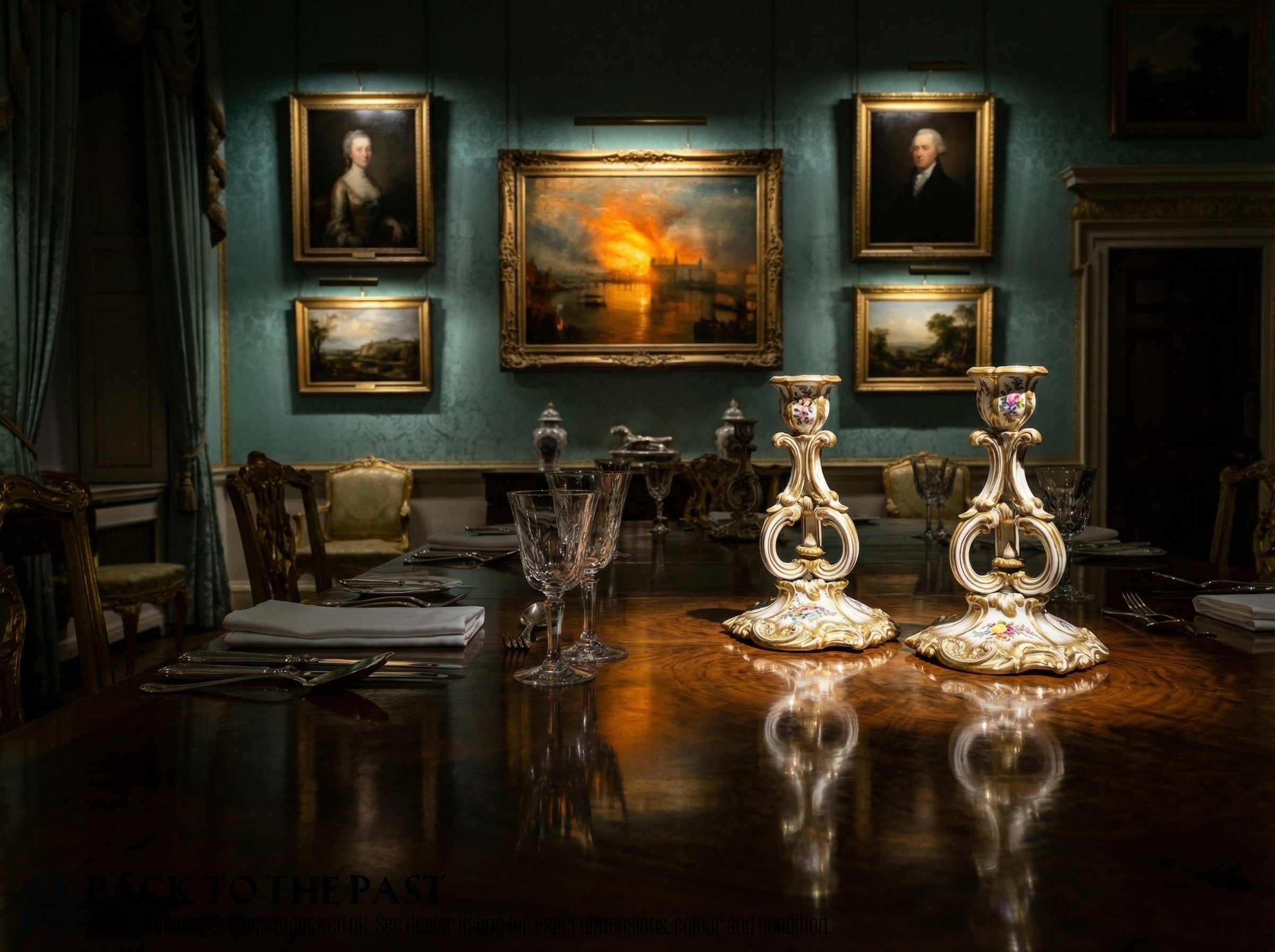
White Porcelain Candlesticks
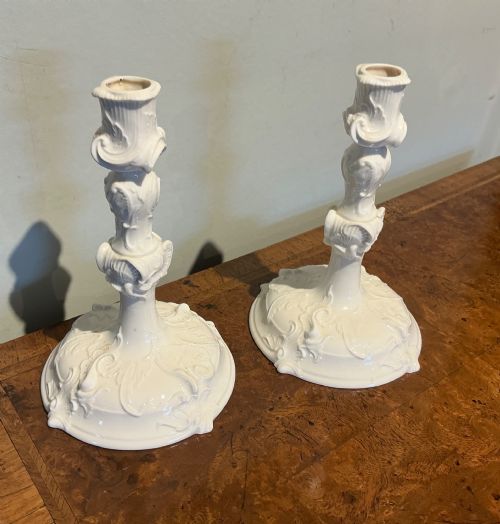
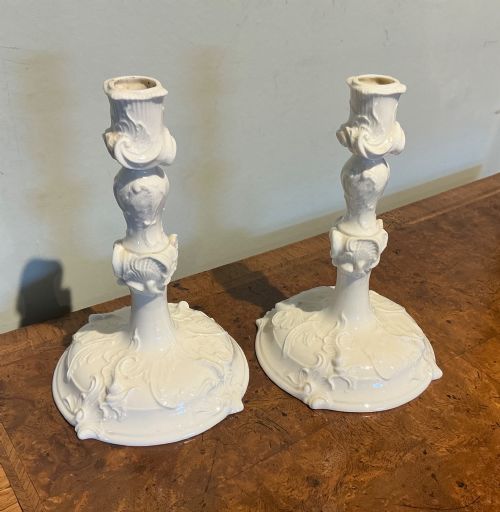
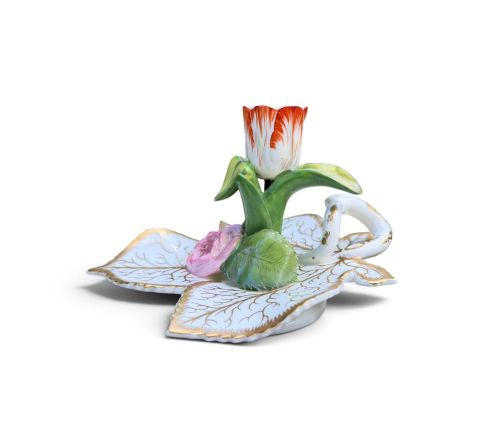
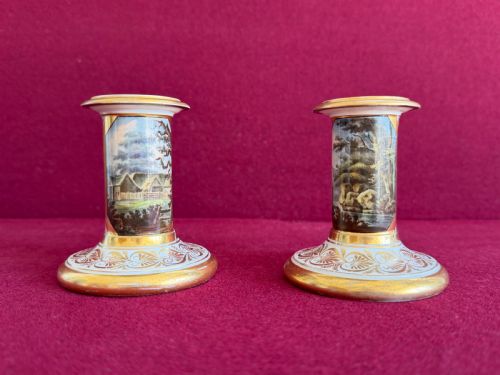
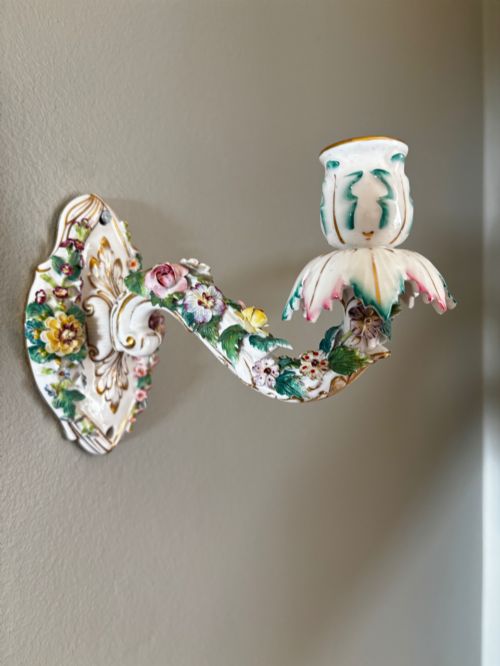
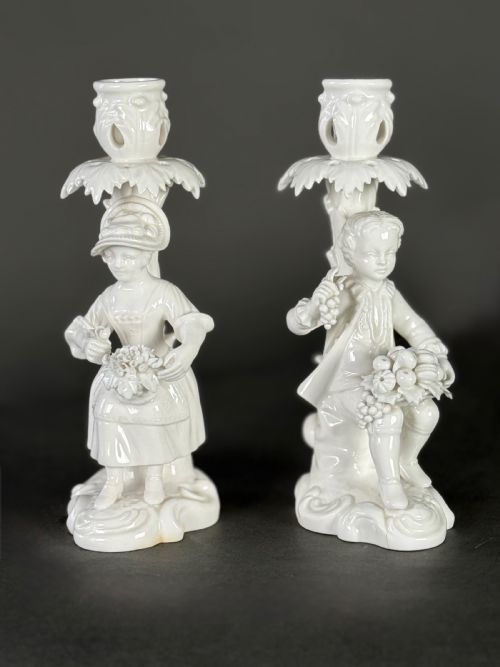
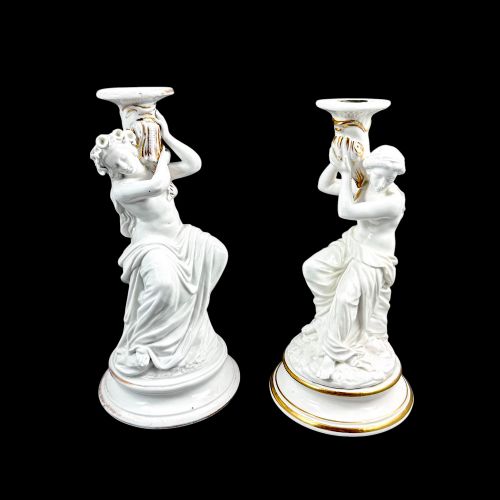
White porcelain candlesticks span simple chambersticks designed for bedside use and elaborate figural pairs meant for formal mantelpieces. When searching for white porcelain candlesticks, buyers encounter forms ranging from Georgian Derby figures and English floral chambersticks to German Rococo Revival candelabra.
Origins stretch from English factories like Worcester, Minton and Chelsea to continental European manufactories including Meissen, Nymphenburg and Sitzendorf. Pieces date from the mid-eighteenth century through the nineteenth century and into the early twentieth century.
How they were made
Makers utilised hard-paste and soft-paste porcelain, often finished with a clear glaze or left in an unglazed blanc de chine state to highlight sculptural detail. Moulding and hand-modelling created complex figural and botanical shapes, which were then fired at high temperatures.
Decoration relied on hand-applied enamel colours, gilding, and gold leaf to accent borders, drapery, and candle nozzles. Brass mounts, bronze components, and gilt bronze elements were frequently integrated to provide structural support or decorative contrast.
White Porcelain Candlesticks Retail Price Guide 2026
Typical asking prices for white porcelain candlesticks among the pieces listed under this phrase on Sellingantiques today, from the lower quarter to the upper quarter. They describe what is for sale here now, not the wider market.
Listings feature hard-paste porcelain, enamel, glaze, and gold leaf across eighteenth and nineteenth-century periods.
What varies in quality
The refinement of the modelled details distinguishes standard production from superior examples, particularly in figural pieces where facial expressions and botanical petals reveal the hand of the modeller. Crisp definition in moulded foliage and floral appliques indicates careful execution during the manufacturing process.
The application of gilding and enamel painting creates significant variation in visual impact, with hand-painted polychrome highlights elevating the status of a piece. The integration of secondary materials, such as gilt bronze mounts, demonstrates the ambition and cost of the original commission.
Nymphenburg·Ridgway·Barr, Flight & Barr·Meissen·Derby·Chelsea·Minton·Sitzendorf
The White Porcelain Candlesticks Glossary
- Blanc de chine
- A French term for white Chinese porcelain that inspired European factories to produce unglazed white wares. English and continental makers adopted this style to showcase pure white ceramic bodies.
- Chamberstick
- A short candlestick fitted with a saucer base and a handle for carrying through a house at night. These practical items often include a small socket for a candle snuffer.
- Hard-paste porcelain
- A durable ceramic composition fired at very high temperatures using kaolin and petuntse. This material produces a dense, bright white body resistant to scratching.
- Candelabra
- A branched candlestick holding multiple candles on a single base. These larger lighting fixtures frequently incorporate elaborate figural or botanical decoration.
- Biscuit
- Unfired or unglazed porcelain that has a matte, porous texture resembling marble. It is frequently utilised for sculptural shafts and figures on nineteenth-century pieces.
White Porcelain Candlesticks: Frequently Asked Questions
How do I clean white porcelain candlesticks?
Dust gently with a soft, dry brush to remove particles from crevices and delicate foliage.
Wash only when necessary using lukewarm water and mild soap, avoiding harsh abrasives that might damage gilding or enamel.
Were these pieces used for daily lighting?
Chambersticks and go-to-bed candlesticks served practical nightly functions for moving through darkened rooms before electricity.
Larger candelabra and figural pairs remained stationary on dining tables, sideboards, and mantelpieces for evening illumination.
How can I tell a Georgian piece from a Victorian one?
Georgian examples often display classic Rococo or early Neoclassical styling with hand-painted details and soft-paste ceramic bodies.
Victorian pieces frequently lean into heavier revivalist styles, crisp hard-paste bodies, and more elaborate figural modelling.
Are all white porcelain candlesticks marked?
Factory marks, pattern numbers, and impressed ciphers appear on many English and continental pieces to identify the maker.
Early items and works from smaller workshops often lack marks, requiring attribution based on paste type, modelling style, and glaze characteristics.