
White Pearl Jewellery
White pearl jewellery combines the quiet lustre of organic nacre with precious mountings from the Victorian era to the mid-century.
White Pearl Jewellery
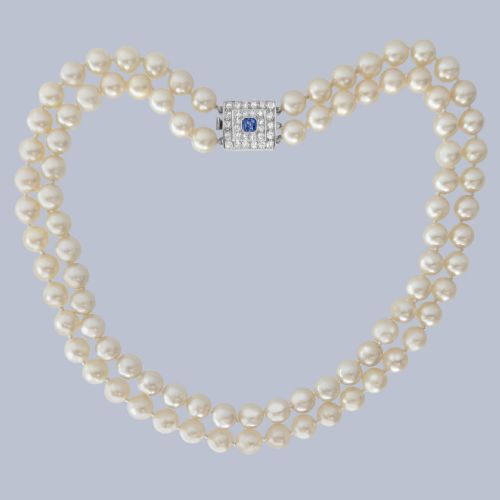
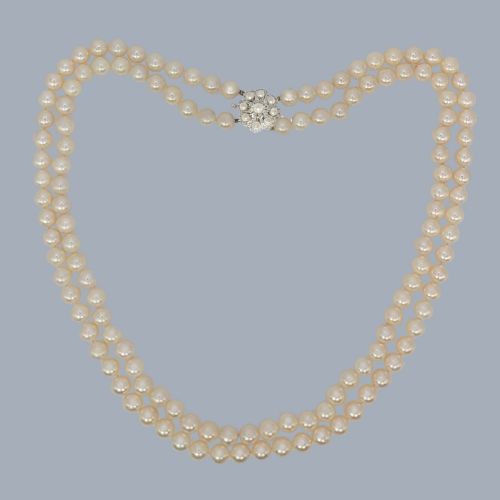
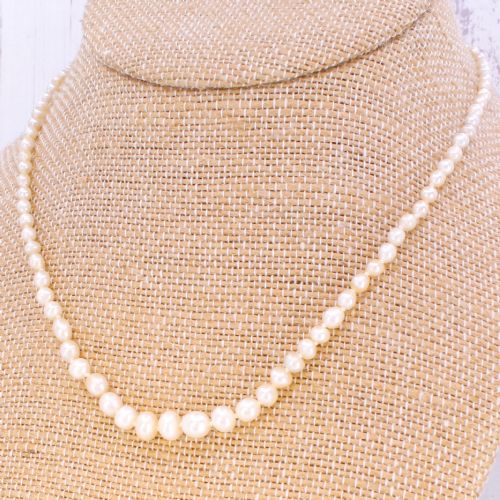
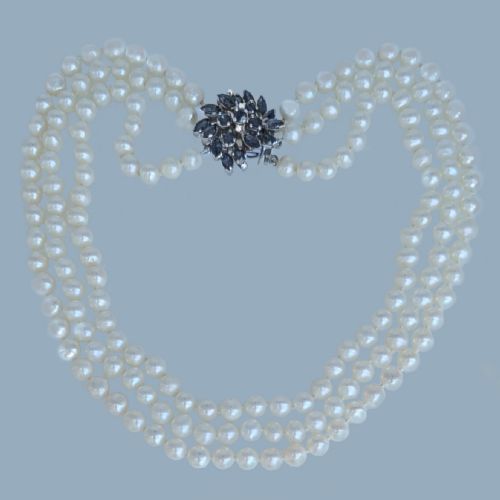
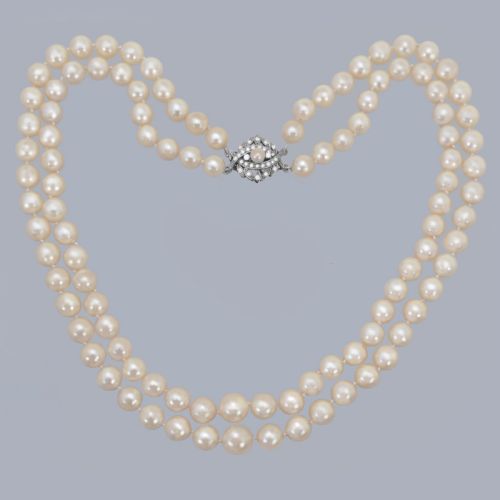
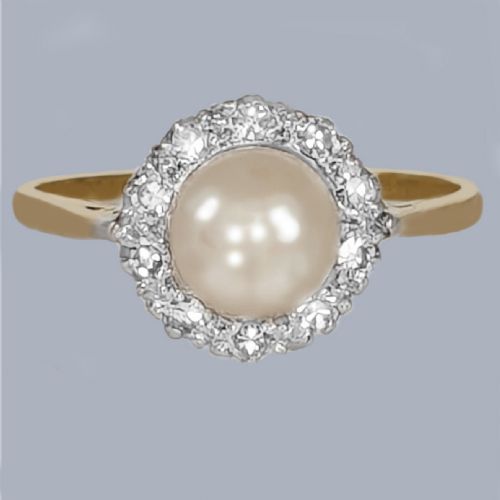
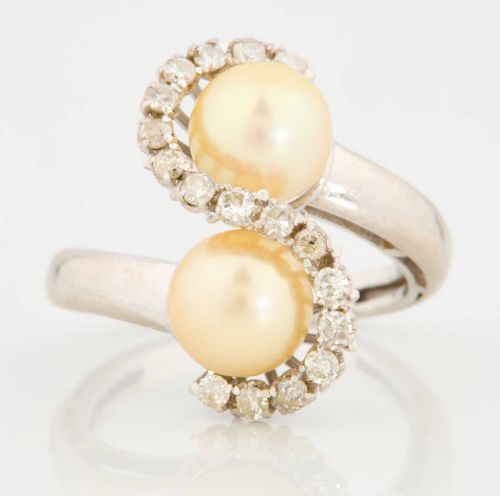
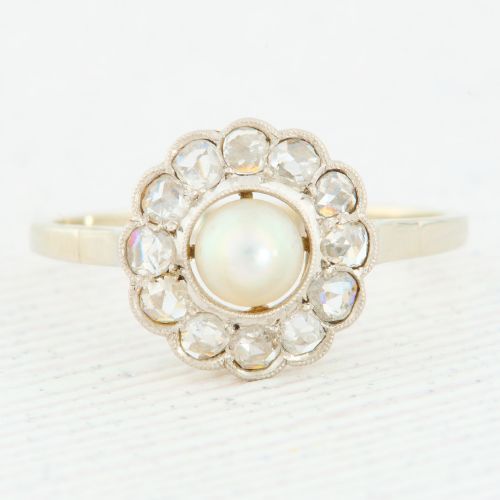
White pearl jewellery encompasses necklaces, rings, earrings, and pendants that place pearls at the centre of the design. Buyers searching for white pearl jewellery frequently encounter multi-strand necklaces and gold or platinum rings set with diamonds.
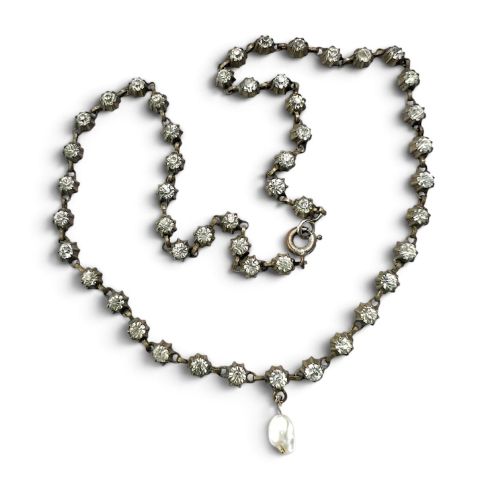
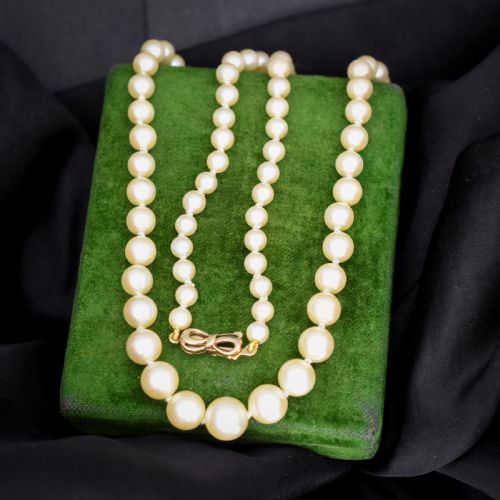
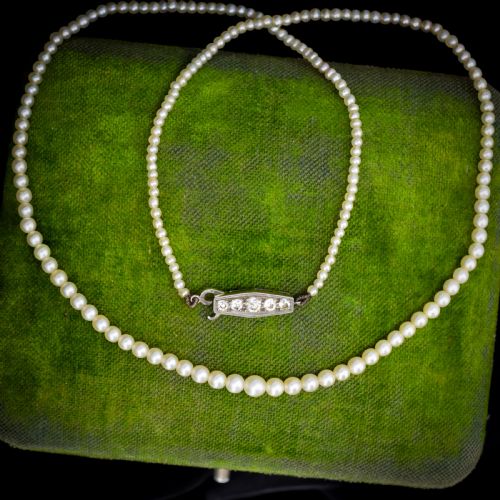
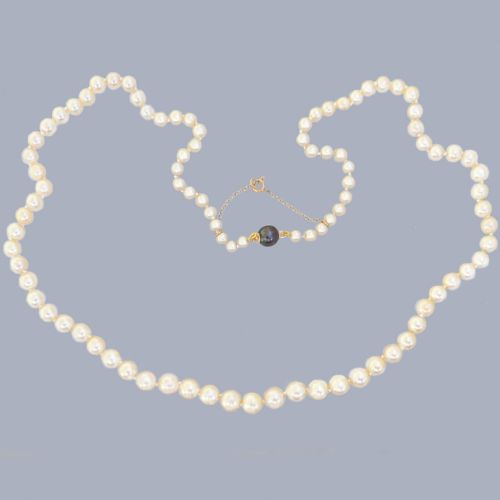
The selection spans from Victorian paste and pearl drop chains to 1960s cultured pearl necklaces secured with gold clasps. Pieces range from single strands of graduated pearls to elaborate floral and foliate cluster rings.
How white pearl jewellery was made
Goldsmiths and platinum-smiths utilised precious metals including 18ct white gold, yellow gold, and platinum to fabricate mountings for pearls. Natural and cultured pearls were paired with diamonds, sapphires, and emeralds.
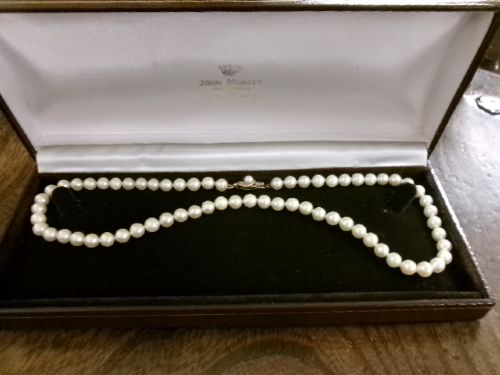
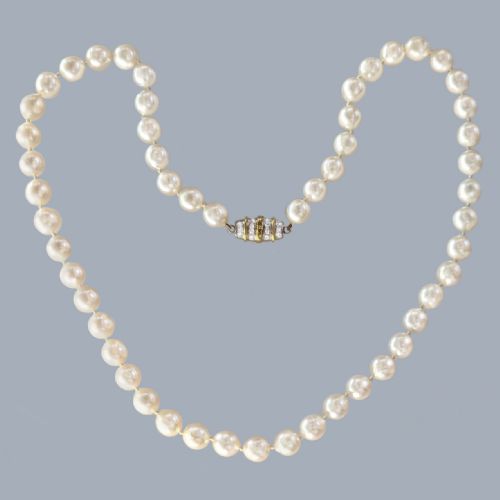
Necklaces were frequently hand-knotted on silk threads between individual beads to secure them, while clasps incorporated box mechanisms or intricate decorative gemstone arrangements.
The listings span from 1900 through the Edwardian era and Art Deco period to the mid-1960s, using platinum, 18ct white gold, and cultured pearls.
What varies in quality
Quality depends upon the lustre and uniformity of the pearls, alongside the complexity of the precious metal mountings. Graduated strands with well-matched bead sizes and secure precious stone clasps represent higher tiers of craftsmanship.
The presence of certified natural saltwater pearls or substantial diamond settings elevates a piece above standard cultured variations.
Mikimoto
The White Pearl Jewellery Glossary
- Cultured pearl
- A pearl formed with human intervention by inserting a nucleus into an oyster or mollusc. These form the majority of mid-century pieces.
- Natural pearl
- A pearl grown organically within a mollusc without human seeding. These are often accompanied by gem certificates.
- Guilloche enamel
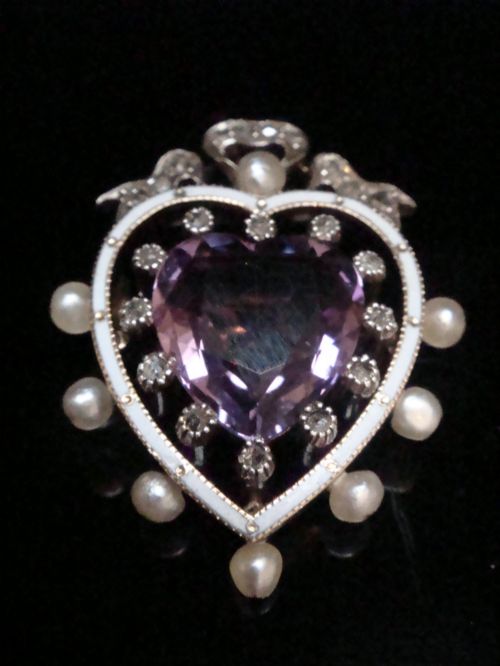
- A decorative technique involving precise engine-turned patterns beneath translucent enamel. This appears on Edwardian pendants and cufflinks.
- Rose cut
- A vintage diamond cut featuring a flat base and a domed crown with triangular facets. This cut is common in Art Deco clasps.
- Seed pearl
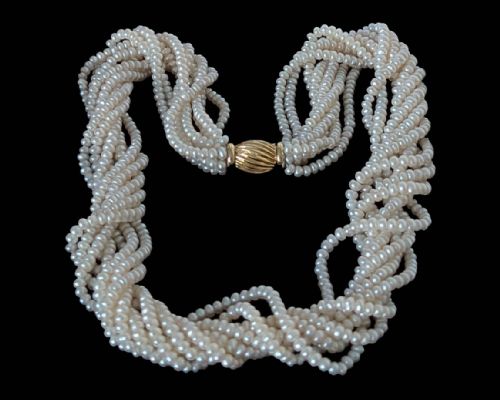
- Very small pearls utilised in clusters or multi-strand ropes. Victorian and mid-century designers employed them for delicate floral motifs.
White Pearl Jewellery: Frequently Asked Questions
How do I care for white pearl jewellery?
Pearls are organic gems that require gentle cleaning with a soft, damp cloth after wearing. Avoid exposing them to perfumes, cosmetics, and harsh chemicals that can damage the nacre.
Store necklaces flat to prevent stretching the silk threads. Periodic re-stringing maintains the integrity of multi-strand pearl necklaces.
Are these pearls natural or cultured?
The inventory includes both natural saltwater pearls and cultured pearls. Listings often specify the origin and include gemological reports.
Edwardian and antique pieces more frequently feature natural pearls, while 1950s and 1960s examples commonly utilise cultured varieties.
What metal types are used in the clasps?
Clasps and mountings are fashioned from 9ct gold, 18ct white gold, yellow gold, platinum, and silver. Many feature secondary gems such as diamonds, sapphires, or emeralds.
The metal standard often reflects the period of manufacture, such as platinum in Edwardian designs and white gold in mid-century cocktail rings.
How do I date a pearl necklace?
Dating relies on the clasp style, metal hallmarks, and construction techniques. Art Deco pieces from the 1920s feature geometric gemstone arrangements, while 1950s and 1960s examples often employ textured gold or daisy cluster clasps.
Hallmarks stamped on gold and platinum mountings provide precise assay office years for British pieces.