





White Painted Garden Urns
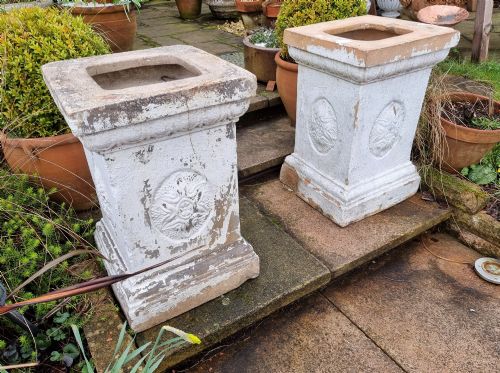
White painted garden urns bring classical presence to terraces and lawns through heavy metal and weathered ceramic.
White Painted Garden Urns
White painted garden urns span multiple centuries of landscape decoration, drawing on 18th century, Regency, and Victorian traditions. These vessels bring formal structure to gardens through classic Campagna forms and pedestal mounts.
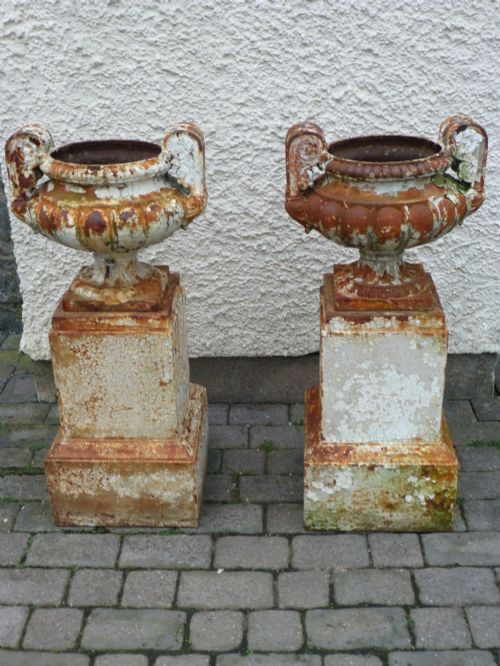
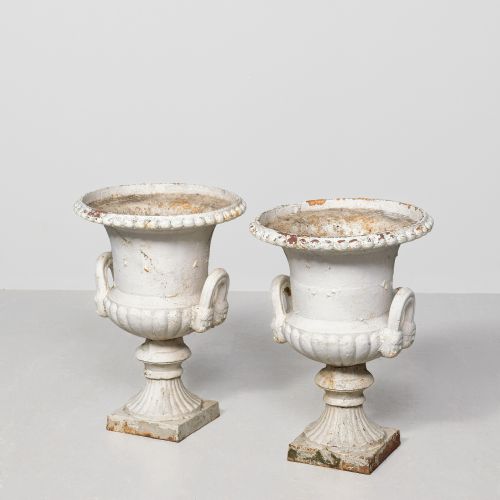
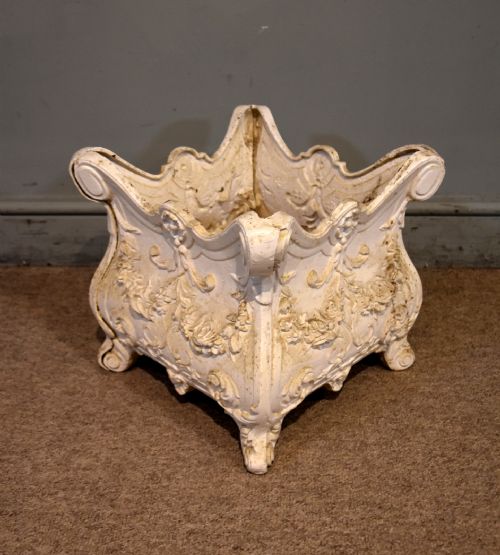
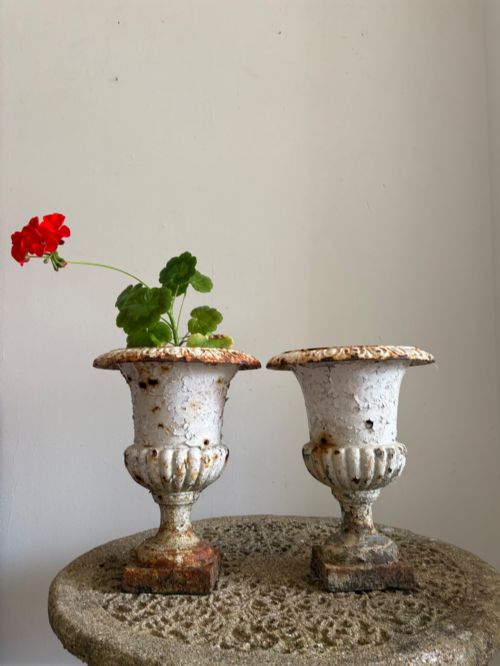
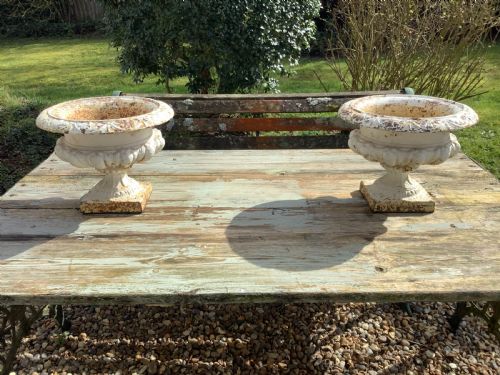
The objects listed here appear primarily as robust cast iron garden urns, alongside occasional terracotta, ceramic, and earthenware examples. They range from small table urns to large pairs designed for plinths.
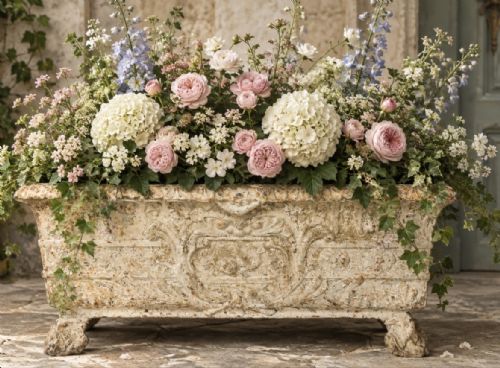
Makers and foundries such as Coalbrookdale and Falkirk produced many of these pieces, alongside Dutch delftware and Italian terracotta workshops. Buyers encounter everything from French planters to classical acanthus leaf designs.
How they were made
Foundries shaped heavy cast iron into classical silhouettes using sand moulds, creating durable vessels capable of withstanding outdoor elements. Terracotta and ceramic versions relied on traditional throwing or moulding techniques before firing.
Surface treatment defines this group through layers of white paint applied over metal or clay. Original distressed paint finishes reveal decades of weathering and repeated decoration.
Materials span cast iron, terracotta, tin-glazed earthenware, and ceramic, coated in white paint.
What varies in quality
Casting crispness separates standard production from superior foundry work, particularly in the rendering of acanthus leaves, gadrooning, and classical relief details. Finer pieces retain sharp definition across complex ornamentation.
The presence of matching pairs and original plinths elevates the status of cast iron urns significantly. Provenance tied to notable foundries such as Coalbrookdale or Carron further distinguishes exceptional examples.
Dunfermline Clay Company·Falkirk Carron foundry·Coalbrookdale
The White Painted Garden Urns Glossary
- Campagna urn
- A bell-shaped garden vessel with a flared rim and footed base, named after the Roman Campagna. This classical form dominates 19th-century cast iron production.
- Gadrooned
- Decorated with a series of rounded, parallel convex curves or flutes. This ornamental moulding appears frequently around the bowls of classical urns.
- Terracotta
- Fired unglazed clay of a brownish-red colour, used for Italian garden urns and planters. It offers a porous material alternative to metal.
- Tin-glazed earthenware
- Pottery coated with a white tin-opacified glaze, seen in Dutch delft garden vessels. This technique provides a smooth surface for painted decoration.
White Painted Garden Urns: Frequently Asked Questions
How do I care for cast iron urns outdoors?
Cast iron garden urns tolerate outdoor conditions well, though periodic repainting protects the metal from rust and moisture accumulation.
Ensuring proper drainage prevents water from freezing inside the bowl and cracking the material during winter months.
Are these urns heavy to move?
Cast iron examples possess substantial weight due to the density of the metal, often requiring multiple people or equipment to reposition safely.
Terracotta and ceramic versions are similarly heavy when filled with soil and plants, so planning their final garden position beforehand is essential.
How do I distinguish 19th-century pieces?
Nineteenth-century cast iron urns typically display thick paint layers, sand-casted surface textures, and construction methods associated with period foundries.
Stylistic markers like classical acanthus ornamentation and heavy plinths help differentiate Victorian and Regency pieces from later reproductions.
Can these urns be used indoors?
While designed primarily for gardens, terraces, and plinths, smaller table urns and decorative vessels transfer successfully to large interior spaces.
Using protective pads underneath prevents heavy metal or ceramic bases from scratching interior floors and furniture surfaces.