




Classical Terracotta Urns
Classical terracotta urns bring architectural proportion and weathered warmth to gardens and interiors alike.
Classical Terracotta Urns
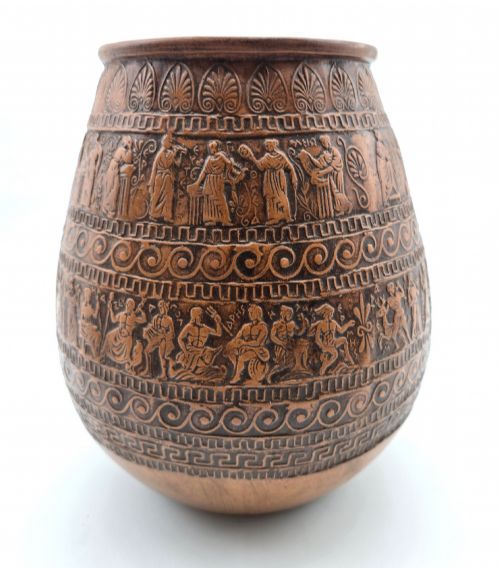
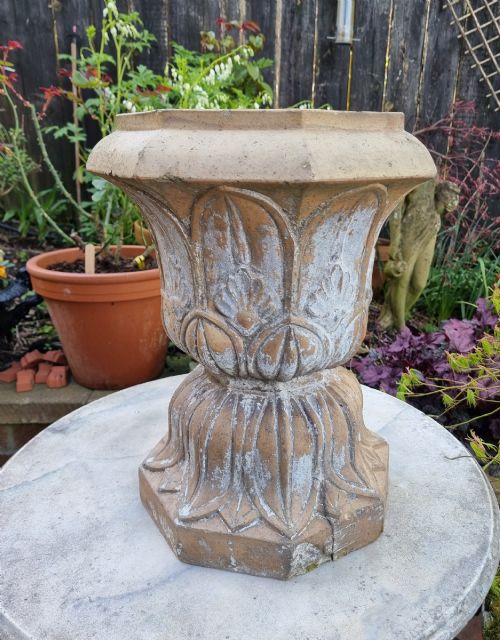
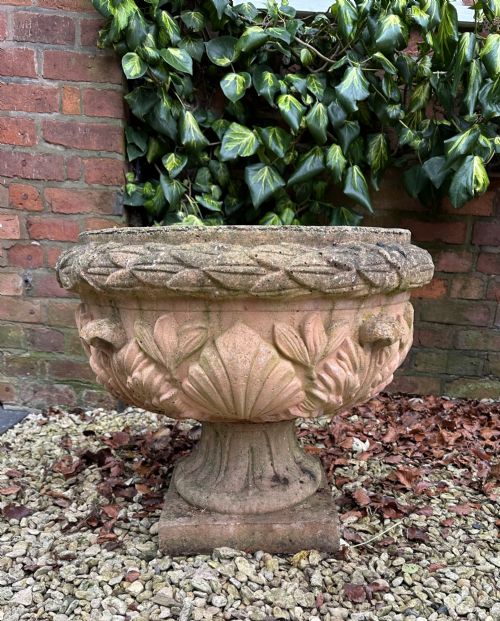
Classical terracotta urns include garden vessels, planters, jardinières and decorative vases shaped by ancient Greek, Italianate and Neoclassical ideals. These objects draw on forms such as the Campana shape, carrying historical motifs like carved handles and classical figures.
Most examples found on this page date from the nineteenth century, including Grand Tour souvenirs, Victorian garden ornaments and European works by makers like P. Ipsens Enke and Goldscheider. They range from large outdoor garden pieces to smaller bisque or glazed interior vessels.
How they were made
Potters shaped these pieces using terracotta, earthenware, and clay, sometimes finishing the surface with a cold-painted layer, glaze or a fine bisque finish. The natural porous material absorbs moisture over decades, developing the characteristic patination seen on nineteenth-century garden pieces.
Moulding and throwing techniques allowed makers to achieve crisp architectural details, such as the carved heads on handles and classical low-relief friezes. Firing temperatures determined the hardness of the clay, influencing how well the vessels withstand outdoor weathering.
Some nineteenth-century handles come equipped with carved stone heads that have silently watched generations of garden weeds grow around them.
What varies in quality
Quality rests upon the crispness of the modelling and the depth of the classical proportions, distinguishing finely cast studio pieces from utilitarian garden wares. Sharp relief work on handles and figures reveals the skill of the original modeller.
Surface patination and the integrity of the material dictate visual depth, with well-aged pieces showing honest weathering rather than surface decay. Maker attribution, such as factory-stamped Copenhagen or Vienna pieces, elevates the standing of individual examples.
P. Ipsens Enke·Goldscheider·Lipscombe & Co
The Classical Terracotta Urns Glossary
- Campana urn
- A bell-shaped vessel with a flared rim and pedestal foot, originating in ancient Rome and revived during the Neoclassical period. This form remains a standard silhouette for garden ornaments.
- Grand Tour
- A cultural journey undertaken by wealthy Europeans through France and Italy, collecting antiquities and classical souvenirs. Items from this tradition often replicate ancient archaeological finds.
- Bisque
- Unglazed ceramic fired once to create a matte, porous finish resembling marble. This technique highlights fine sculptural details without the interference of a shiny glaze.
- Jardinière
- An ornamental pot or stand designed to hold plants or flowers, popular in nineteenth-century interiors. These vessels often feature decorative handles or relief panels.
- Neoclassical
- A Western stylistic movement drawing inspiration from the art and culture of classical antiquity. It emphasises strict proportions, symmetry and restrained ornamentation.
Classical Terracotta Urns: Frequently Asked Questions
Can classical terracotta urns stay outside in winter?
Most nineteenth-century terracotta garden urns tolerate outdoor placement, provided they are drained properly and kept elevated from frozen ground.
However, porous earthenware absorbs water which expands upon freezing, so unglazed vessels benefit from being moved under cover during severe frosts.
How do I clean an antique terracotta urn?
Gentle brushing with a soft bristle brush removes surface dirt and loose debris without damaging the historic patination.
Avoid chemical detergents or pressure washers, as harsh cleaning strips away the weathered surface layer that collectors value.
What is the difference between a garden urn and a jardinière?
Garden urns typically feature a footed pedestal base and are designed primarily for display or structural planting in outdoor settings.
Jardinières function more as decorative indoor planters, often featuring flat bases and elaborate decorative handles or relief friezes.