


Weathered White Urns
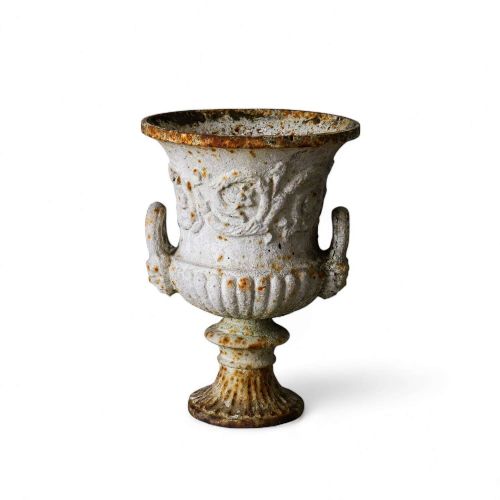
Weathered white urns bring classical garden presence to a terrace, combining cast iron, terracotta, plaster and painted finishes across nineteenth-century and neoclassical forms.
Weathered White Urns
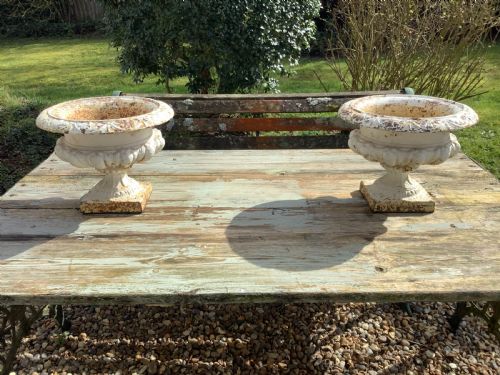
The pieces appearing on this page span the nineteenth century, including specific dates like 1870 and 1920, alongside Regency, Victorian, French country and neoclassical styles. Buyers encounter matching pairs and individual planters bearing the marks of time and paint.
Originating from British and continental workshops, these items serve as focal points in garden design. The selection ranges from robust foundry-cast vessels to smaller table-sized pieces and large pedestals.
How they were made
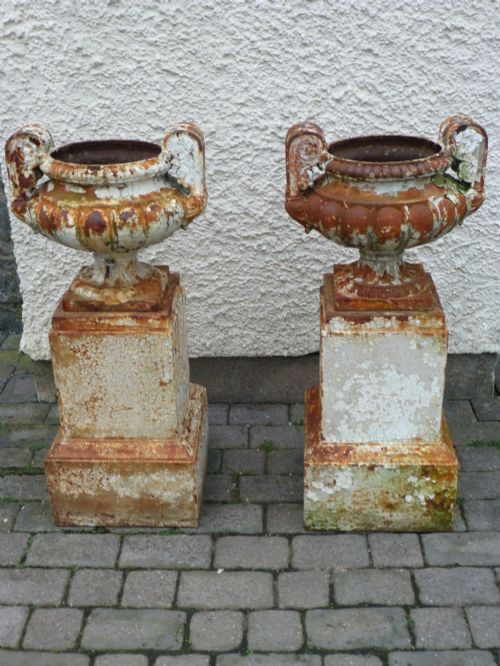
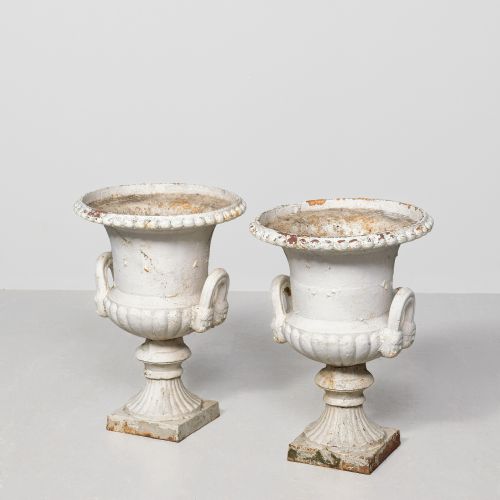
Foundries produced the heavy metal examples using cast iron techniques, shaping classical campana and tazza profiles that frequently rested on original plinths. Makers such as Falkirk Carron and Andrew Handyside utilised sand casting methods for durability.
Earthenware and terracotta vessels were shaped from clay and fired, while other decorative items relied on moulded plaster or painted finishes that developed distress over decades. These surfaces aged to create the characteristic weathered white aesthetic seen across nineteenth-century pieces.
Object types span campana urns, tazza vessels, decorative planters and supporting pedestals.
What varies in quality
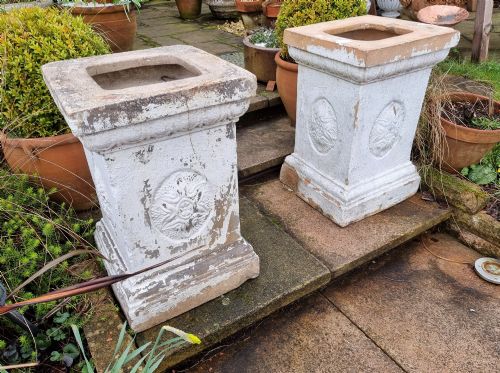
Quality rests in the crispness of the classical casting, particularly the definition of gadrooning and foliage details on iron and terracotta bodies. Finer examples retain their original plinths and show balanced proportions characteristic of neoclassical design.
The integrity of the material and the character of the aged paint surface dictate the visual weight of each piece. Surviving pairs demonstrate superior consistency in manufacture compared to solitary vessels.
Dunfermline Clay Company·Falkirk Carron foundry·Andrew Handyside
The Weathered White Urns Glossary
- Campana
- A bell-shaped garden urn with an everted rim and a tapering body. This form derives from ancient Roman vessels and dominates nineteenth-century cast iron designs.
- Tazza
- A shallow cup or bowl-shaped vessel elevated on a stem and foot. These pieces function as decorative garden urns.
- Gadrooned
- Ornamented with a series of convex curves or flutes moulded along the lower body of an urn. This decorative detail appears on classical revival garden pieces.
- Plinth
- A heavy rectangular or square base supporting an urn or pedestal. Original plinths complete the architectural silhouette of garden ironwork.
Weathered White Urns: Frequently Asked Questions
Where should I place a cast iron urn?
These heavy vessels suit garden terraces, stone plinths and entranceways where their classical silhouettes command attention.
Their robust cast iron construction withstands outdoor exposure while developing further character through weathering.
Are these urns suitable for planting?
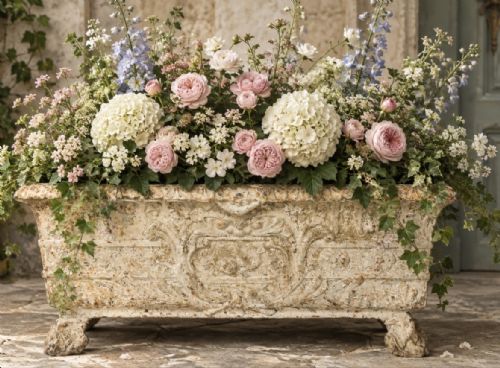
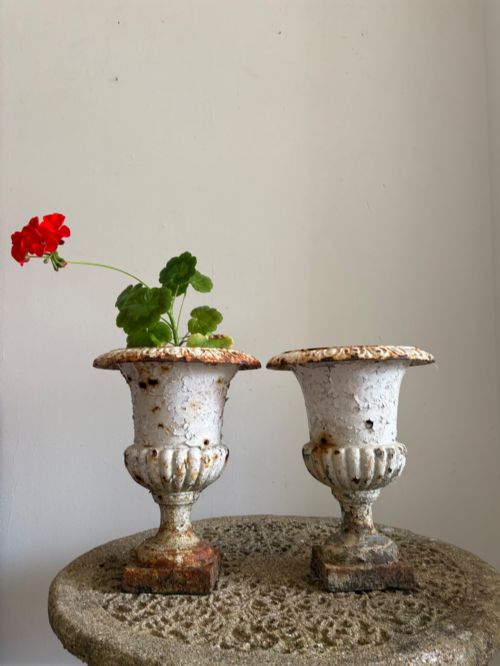
Many of these pieces serve as functional garden planters and olive jars designed to hold flora.
Terracotta and cast iron variants accommodate soil and plants, though gardeners should consider drainage and weight.
How do I identify a Regency urn?
Regency pieces often display neoclassical motifs, strict architectural proportions and distinct foundry marks from the early nineteenth century.
They frequently take campana forms cast in iron with original plinths.