




Carved Terracotta Urns
Carved terracotta urns bring classical presence to gardens and terraces, offering enduring form and rich earthy texture.
Carved Terracotta Urns
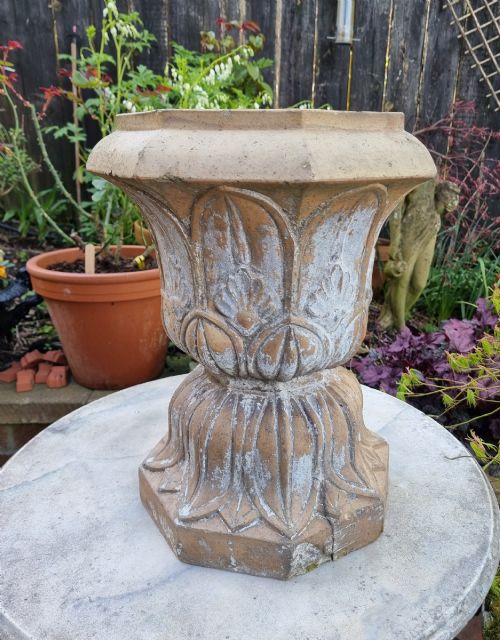
Carved terracotta urns include garden vessels and planters originating across the nineteenth and early twentieth centuries. These pieces display classical and regional styles such as Victorian Neoclassical, Italianate, and Japanese influences.
The selections on this page feature large garden urns alongside paired vases and supporting stonework. Buyers frequently encounter nineteenth-century English and Italian examples alongside red clay and salt-glazed alternatives.
How they were made
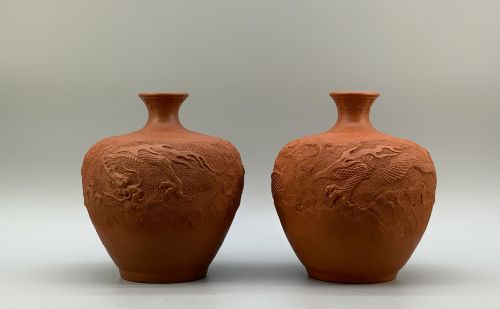
Potters shaped these vessels using traditional red clay, terracotta, and stoneware bodies, often applying salt glazing for added durability. Artisans carved intricate details directly into the surfaces, including sculptural heads on handles and dragon and phoenix motifs.
Many items incorporate supplementary materials like paint and enamel to highlight surface decoration. Supporting elements utilise complementary media such as marble and salt-glazed stoneware to create complete display ensembles.
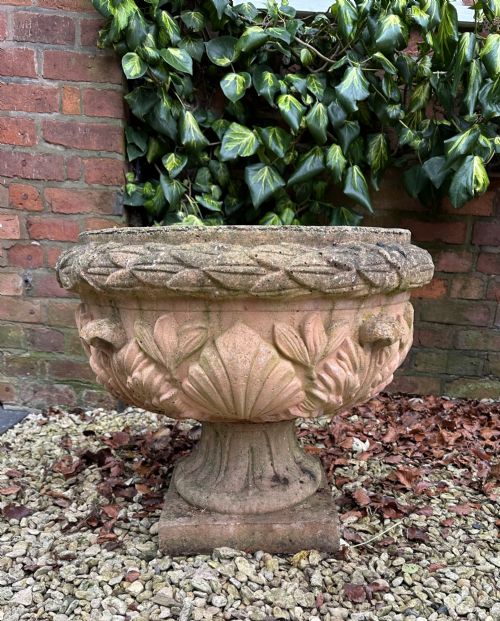
Selected nineteenth-century garden urn handles feature carved human heads keeping watch over the terrace.
What varies in quality
The standard of carving and surface patination distinguishes superior examples from simpler production pieces. Crisp relief work on handles and motifs indicates a high level of sculptural skill.
Integrity of the clay body and depth of natural weathering also define the better specimens. Pieces that retain harmonious proportions across pairs demonstrate superior design execution.
The Carved Terracotta Urns Glossary
- Terracotta
- Fired red clay used extensively for sculptural garden vessels and architectural ornaments. It develops a distinct natural patina over decades of outdoor exposure.
- Campana Urn
- A bell-shaped vessel with a flared rim and footed base, heavily utilised in classical garden design. This form derives from ancient Roman bronze and marble prototypes.
- Salt-Glazed Stoneware
- Pottery finished by throwing common salt into the kiln during high-temperature firing, producing a durable textured surface. This technique provides exceptional resistance to frost and weathering.
- Jardiniere
- A large ornamental pot or stand designed specifically to hold growing plants or flower arrangements. These pieces frequently feature decorative handles or relief moulding.
- Plinth
- A heavy stone or terracotta block that serves as a solid architectural base for mounting urns. It elevates garden vessels to improve sightlines and visual presence.
Carved Terracotta Urns: Frequently Asked Questions
How do I care for antique terracotta?
Historic terracotta benefits from gentle cleaning using soft brushes and clean water to preserve the surface patination and carved details. Avoid aggressive chemical treatments that might strip the natural weathering.
During freezing winter conditions, sensitive unglazed pieces require protection from moisture expansion to prevent cracking the clay body.
How can I tell the period of an urn?
Dating relies on examining the weight of the clay, tool marks left by the maker, and the style of decorative carving. Victorian and nineteenth-century examples often display heavier walls and distinct hand-finished surface textures.
Later twentieth-century pieces typically show more standardised manufacturing methods alongside specific stylistic crossovers like Japanese red clay motifs.
Are these urns frost-proof?
Durability against frost depends upon the specific firing temperature and the density of the clay body utilised. Salt-glazed stoneware and well-fired nineteenth-century terracotta generally withstand outdoor winter conditions successfully.
Porcelain and more porous earthenware variations require sheltered storage during freezing weather to protect the structural integrity of the vessel.