




White Metal Garden Table
These white metal garden table pieces bring enduring utility to outdoor spaces, combining robust metalwork with classic forms.
White Metal Garden Table
When you search for a white metal garden table, you are looking at robust outdoor furnishings designed for practical use and enduring style. The pieces listed here span the nineteenth century, nineteen hundred, nineteen twenty, nineteen thirty, and the Edwardian era, showing a distinct lineage of durable exterior furniture.
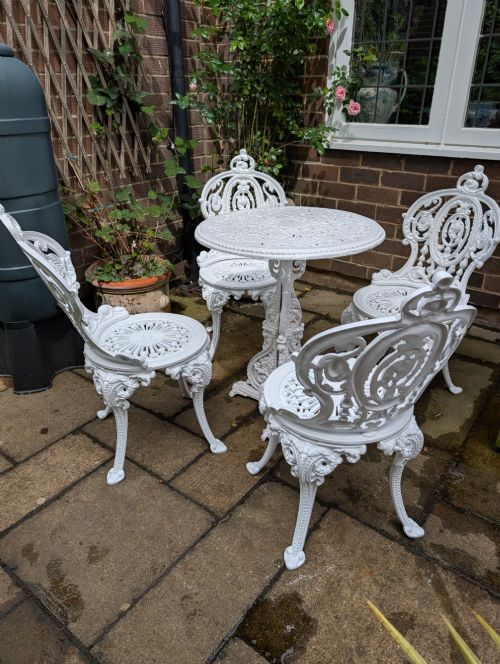
You are most likely to meet round bistro tables, formal garden dining sets, and occasional tables featuring painted finishes. These items frequently appear alongside matching chairs, plant stands, and urns to complete an exterior arrangement.
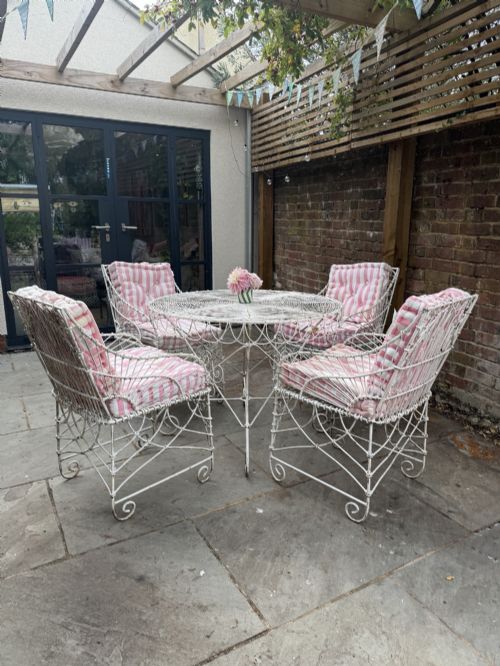
The styles range from Victorian and Edwardian examples to French country, French provincial, French chateau, and French bistro designs. Many incorporate wirework, strapp work, or wooden and marble tops resting upon sturdy iron frames.
How they were made
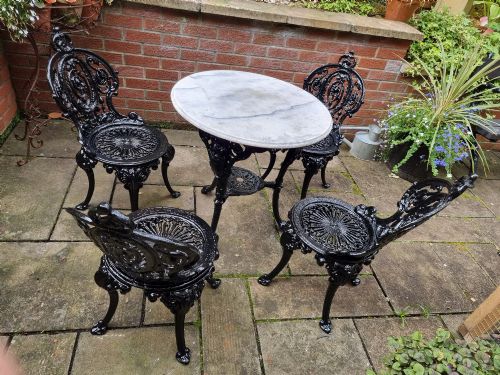
Makers utilised heavy cast iron and wrought iron for structural strength, often combining these metals with wooden or marble surfaces. Wirework and strapp work techniques created lighter, open structures suitable for conservatories and sheltered terraces.
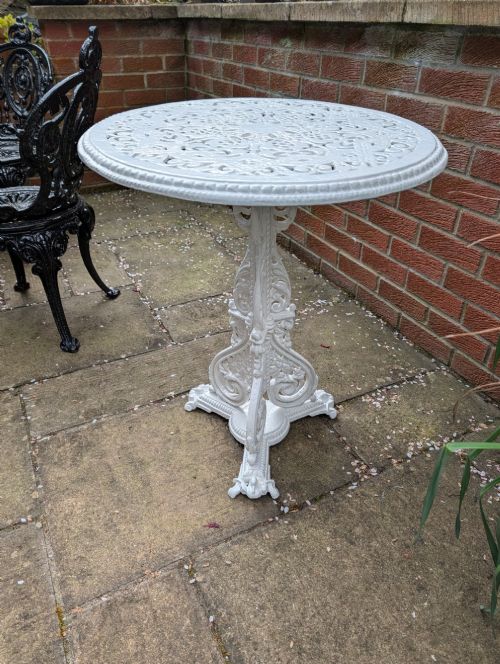
Paint was applied as a protective and decorative layer over the metal components, giving these tables their characteristic white appearance. This painted surface protected the iron beneath from moisture while brightening garden settings.
Some tables feature clever strapp work designed to confuse spiders and delight observant tea drinkers.
What varies in quality
Quality rests upon the heft of the casting, the precision of the ironwork, and the integrity of the combined materials. Heavy cast-iron iterations show superior solidity compared to lighter wirework or steel-topped variants.
The refinement of decorative details, such as Christopher Dresser designs or intricate strapp work, elevates certain examples above standard utility pieces. Surviving original painted surfaces and intact marble or wood tops also distinguish finer specimens.
Christopher Dresser
The White Metal Garden Table Glossary
- Cast iron
- A strong, heavy alloy poured into moulds to create rigid forms and detailed decorative patterns. It provides exceptional stability for exterior furniture.
- Wrought iron
- Iron heated and hammered into shape by hand, producing resilient and slightly flexible structural components. This material allows for slender, graceful curves.
- Strapp work
- A decorative technique using flat metal bands crossed or woven into geometric patterns. It appears frequently on tabletops and plant stands.
- Wirework
- Metal wire bent and joined to form open, lattice-like structures. This technique creates lighter garden furnishings suited for conservatories.
- Marble top
- A polished stone surface fitted to a metal base, offering a cool and durable table surface. It combines classical aesthetics with practical utility.
White Metal Garden Table: Frequently Asked Questions
What periods do these tables come from?
The pieces span the nineteenth century, the Edwardian period, and the early decades of the twentieth century. This timeline covers Victorian industrial production through to French bistro and country house designs.
Most items reflect manufacturing methods from the eighteen hundreds up to nineteen thirty. Each era brings distinct stylistic influences, from ornate Victorian castings to simpler bistro formats.
How were these tables used originally?
These tables served primarily for outdoor dining, tea, and social gatherings in gardens, courtyards, and conservatories. They were built to withstand exterior conditions while providing a stable surface.
Smaller bistro tables suited pavement cafes and private patios, while larger dining sets accommodated families. Plant stands and urns functioned as decorative pedestals for displaying greenery.
Are these tables suitable for modern gardens?
These durable metal tables integrate easily into contemporary outdoor spaces, patios, and garden rooms. Their robust construction allows them to remain outside during fair weather.
Pairing a nineteenth-century or nineteen-twenty table with modern seating creates a practical dining spot. Their painted finishes complement natural foliage and stone paving.
How do I identify French bistro styles?
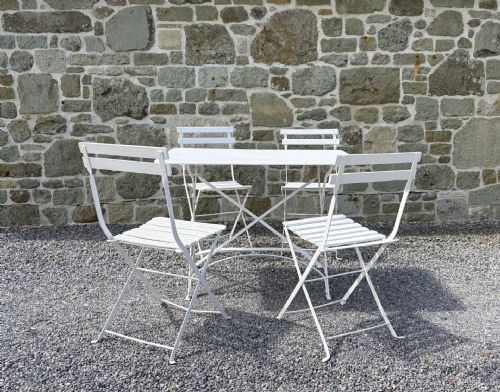
French bistro and provincial styles typically feature lighter iron frames, often paired with wooden or marble tops. They emphasise functional elegance rather than heavy Victorian ornamentation.
Look for strapp work, simpler curved legs, and proportions suited for smaller terraces or cafes. These pieces often date from the nineteen-twenties.