



French Iron Bistro Table
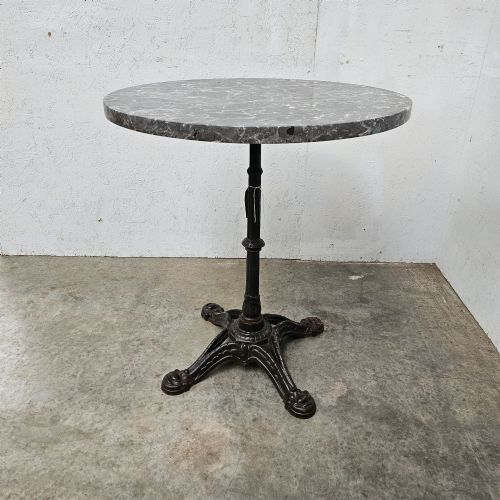
A french iron bistro table brings enduring cafe culture into domestic spaces through heavy metal bases and smooth stone or timber surfaces.
French Iron Bistro Table
A french iron bistro table represents the utilitarian seating once found outside pavement cafes, bakeries and terraces across France. Buyers search for these pieces to bring compact, sturdy character into kitchens, conservatories and gardens.
The versions met most frequently on this page combine cast or wrought iron bases with circular or rectangular tops. These tables date predominantly from the nineteenth century through to the early decades of the twentieth century.
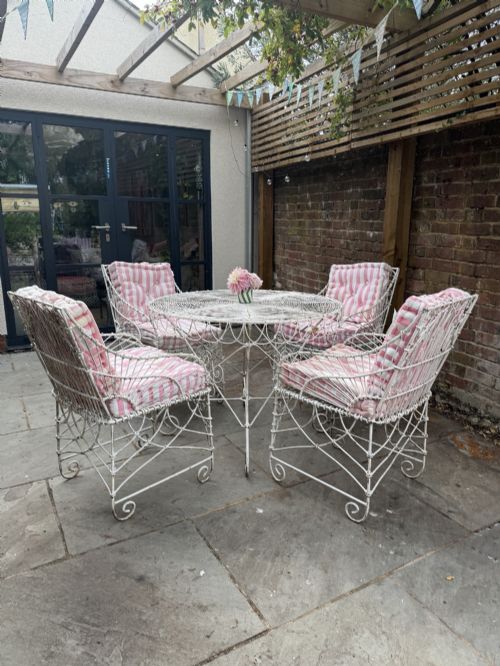
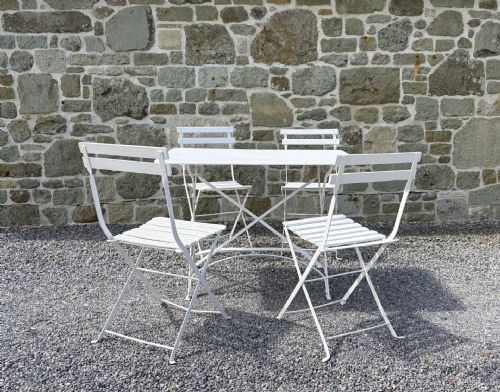
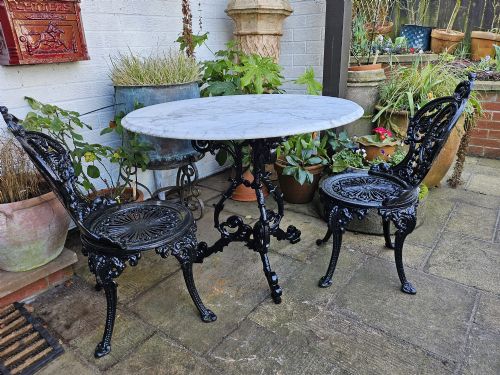
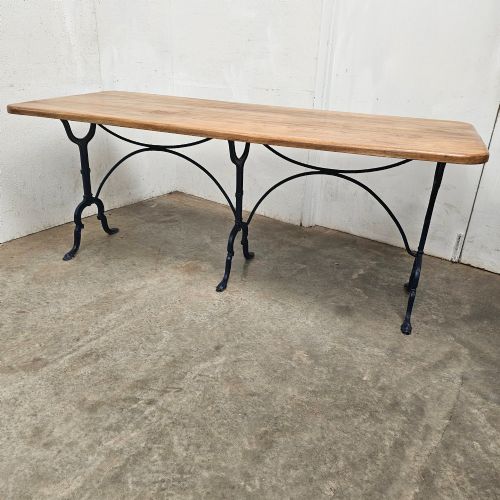
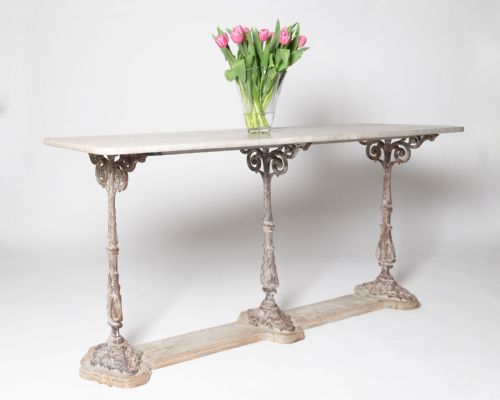
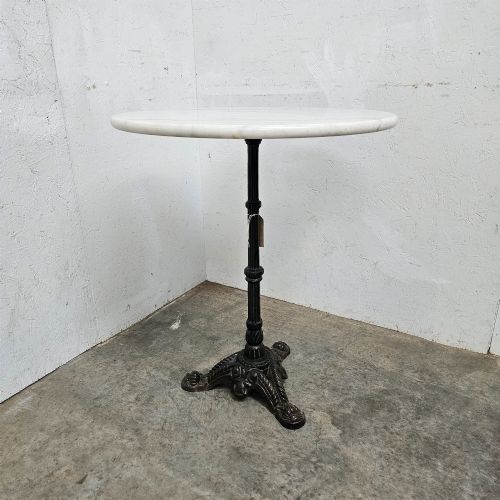
Makers produced these tables in various configurations, including standard round cafe tables, console tables and longer dining formats. Many examples appear alongside matching folding chairs or garden sets.
Materials and Construction
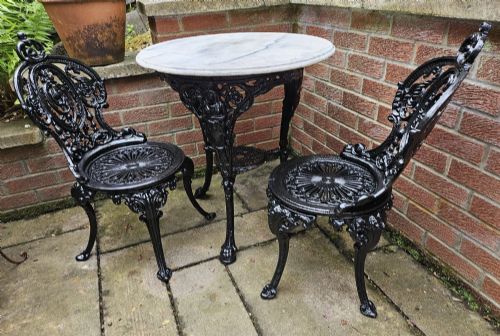
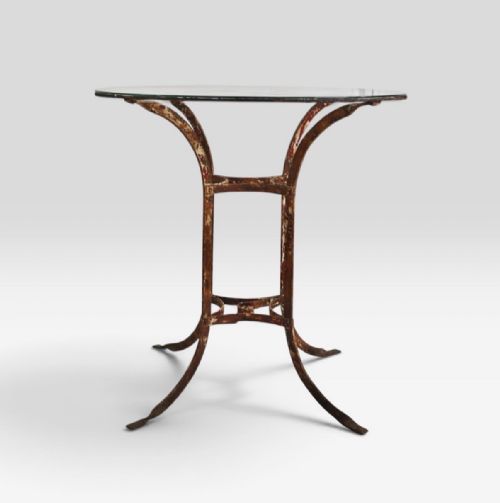
Foundries cast iron into ornate pedestal bases and tripod legs using traditional moulds, often incorporating pierced scrollwork or branding. Wrought iron and steel elements appear in hand-formed strapwork frames and folding mechanisms.
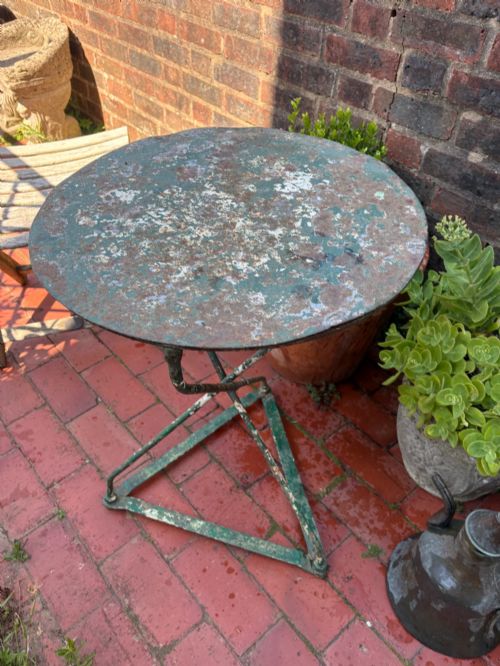
Tops utilise dense slabs of white or green marble, heavy zinc, or thick timber planks such as elm and oak secured to the metal frames. Painted finishes in green or white protect the metalwork from outdoor weathering.
Listings span from the late nineteenth century through to the 1930s, featuring cast iron, marble, oak, and zinc materials.
Build and Material Integrity
Quality rests in the heaviness of the casting and the crispness of the ironwork detail on the pedestal base. Better examples retain substantial marble slabs without modern replacements or structural cracks.
Original painted surfaces displaying honest weathering outlast modern repainting efforts. The rigidity of the frame construction and the snug fit of the top to the base distinguish superior pieces.
The French Iron Bistro Table Glossary
- Cast iron
- Molten iron poured into a mould to create rigid, decorative table bases. This heavy material provides the stability required for outdoor cafe use.
- Wrought iron
- Iron heated and hammered into shape by hand, producing flexible structural supports and strapwork. It appears frequently in folding garden furniture.
- Gueridon
- A small round table supported by a central column or pillar. These form a major portion of the antique bistro seating available.
- Arras
- A style of heavy French metal garden furniture traditionally produced in a specific northern town. These pieces feature distinct slatted or riveted iron construction.
French Iron Bistro Table: Frequently Asked Questions
Can I leave my table outside?
Most pieces handle outdoor conditions thanks to their robust metal construction, though winter storage protects marble and wood tops from frost damage.
Applying protective wax or suitable paint helps preserve the iron framework against moisture over time.
How do I clean a marble top?
Warm water and mild soap are sufficient for daily maintenance of vintage stone surfaces.
Avoid acidic cleaning agents that etch marble and dull the historical patina accumulated over the decades.
Are these tables heavy to move?
Cast iron bases and solid stone tops contribute considerable weight to ensure the furniture stays planted on uneven pavement.
Two people are usually required to lift and relocate larger console or dining formats safely.
How do I date an iron table?
Construction methods, foundry marks, and the style of the ironwork provide clues to the production era.
Earlier nineteenth-century examples tend to feature heavier castings and simpler fixings compared to later stamped steel versions.