


Conservatory Bistro Table
A conservatory bistro table brings compact utility and classic character to a light-filled room or terrace.
Conservatory Bistro Table
A conservatory bistro table offers a compact surface suited to intimate seating arrangements and bright garden rooms. These pieces appear across Victorian, Edwardian, and early twentieth-century periods, alongside French provincial and bistro styles.
The form encompasses round garden tables, console tables, side tables, and occasional tables designed for both indoor and outdoor placement. Most examples on this page date from the nineteenth century or the early decades of the twentieth century.
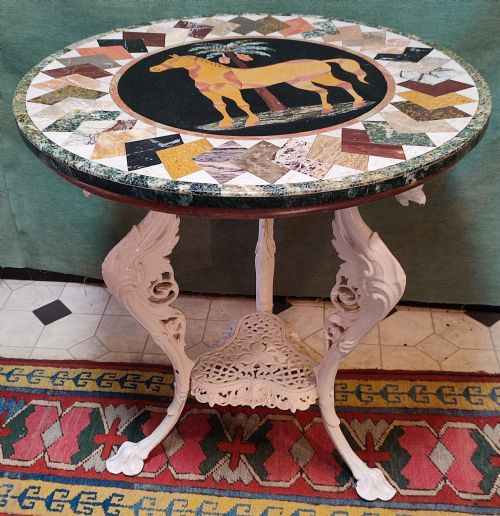
Makers and manufacturers utilised durable metals and stone to create resilient furniture that withstands the elements while retaining decorative elegance. Buyers encounter various iterations, including specimen marble tops and elaborate scroll work.
Materials and construction methods
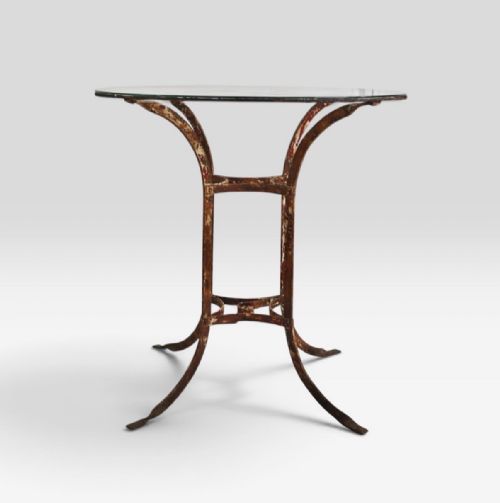
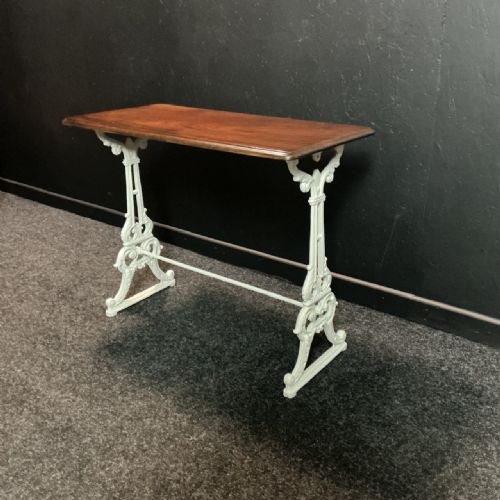
Foundations rely heavily on cast iron and wrought iron, frequently shaped into intricate scroll work or strap work bases. These robust metal frames provide the structural support necessary for heavy stone surfaces.
Tops feature materials such as white marble, specimen marble, cedar, and glass, creating a contrast with the dark metal bases. Painted finishes and faux bamboo treatments appear on specific pieces, reflecting period tastes.
Several tables disguise sturdy iron as lightweight bamboo, proving that Victorians enjoyed a touch of botanical theatre indoors.
Assessing quality in construction and materials
Quality rests in the crispness of the cast iron detail and the integrity of the stone or timber top. Finer examples display deeply defined scroll work and well-fitted marble surfaces without replacement parts.
The weight and stability of the base indicate superior manufacture, whereas lighter or poorly joined components alter the balance of the table. Original painted surfaces or patinated metal add to the desirability of an antique piece.
The Conservatory Bistro Table Glossary
- Cast iron
- A strong, hard alloy of iron and carbon poured into moulds to create decorative bases. This material allows for intricate scroll work and supports heavy stone tops.
- Specimen marble
- A decorative surface composed of various coloured marbles fitted together in geometric or pictorial patterns. This technique produces a mosaic effect across the tabletop.
- Strap work
- Ornamentation formed of narrow flat bands resembling leather straps, applied in interlaced patterns. It appears frequently on the metal frames of garden and conservatory furniture.
- Britannia table
- A traditional small table type featuring a heavy cast iron pedestal base and a round top. These pieces often bear manufacturer markings from nineteenth-century English foundries.
- Faux bamboo
- A decorative finish where wood or metal is carved or painted to imitate natural bamboo stalks. This style gained popularity during the Victorian and Edwardian eras.
Conservatory Bistro Table: Frequently Asked Questions
Where should I place a conservatory bistro table?
These tables fit naturally into sunrooms, conservatories, or small kitchen dining corners due to their compact footprint. They also function well on sheltered patios and terraces during warmer months.
Because many examples feature iron bases and stone tops, they handle moderate temperature shifts well. However, protecting vulnerable wooden elements from persistent moisture preserves the finish.
How do I date a cast iron table?
Dating relies on stylistic clues such as Victorian scroll work, Edwardian proportions, or the specific casting techniques used on the base. Archival records and historical design registrations sometimes help narrow the decade.
Earlier nineteenth-century pieces often display heavier casting and hand-finished details. Twentieth-century iterations tend towards simpler strap work or specific French bistro styling.
Can these tables stay outside year-round?
While metal and stone components endure outdoor conditions, prolonged exposure to harsh frost and rain can damage timber elements and painted surfaces. Moving wooden or delicate marble-topped variants indoors during winter prevents weathering.
Cast iron bases tolerate the elements better than wood, but checking for moisture accumulation in joints prevents rust.
What is the difference between a bistro table and an occasional table?
A bistro table is traditionally designed for seated dining or drinking, standing at a height suitable for small chairs. Occasional tables often serve decorative purposes or hold small objects rather than accommodating diners.
In historical listings, these terms sometimes overlap depending on the tabletop diameter and the lightness of the frame.