




White Glazed Cherubs
White glazed cherubs bring classical form and lustrous surface together in figures, vessels, and apothecary jars spanning several centuries.
White Glazed Cherubs
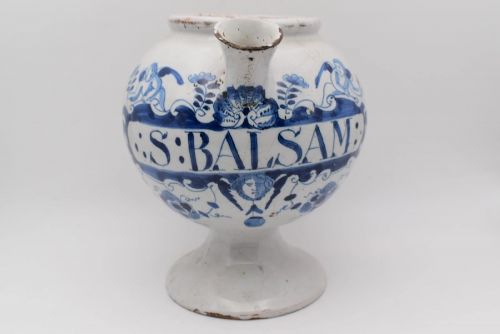
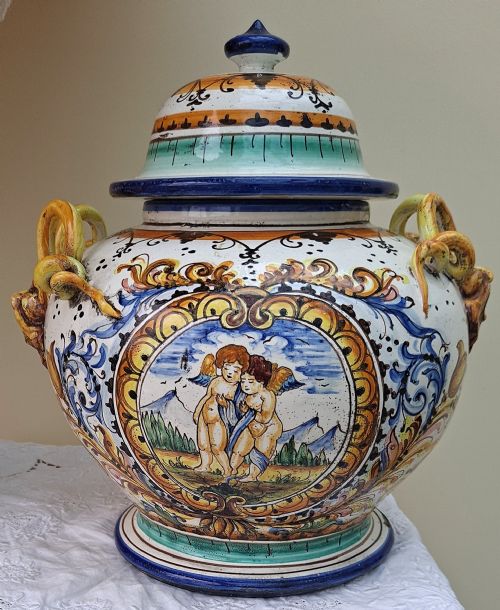
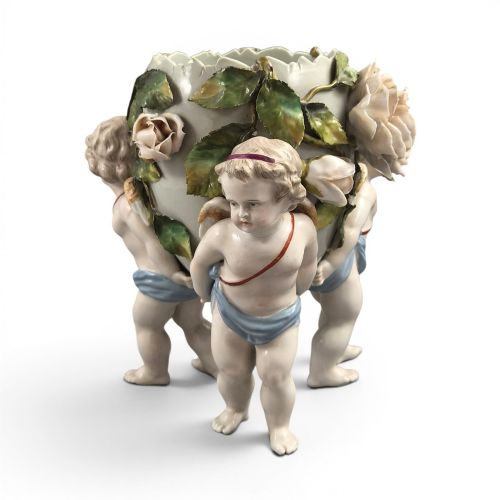
White glazed cherubs appear across 17th-century tin-glazed apothecary jars, 18th-century porcelain figures, and 19th-century continental groups. These pieces combine playful putti or amor figures with the smooth, reflective finish characteristic of tin glaze and hard-paste porcelain.
The version most commonly met on this page is the 19th-century continental porcelain figure or vase, often originating from factories such as Sitzendorf or modeled by makers like Karl Tutter, alongside earlier English Delftware and Italian majolica pharmacy jars.
How they were made
Makers shaped these white glazed cherubs using earthenware, terracotta, and hard-paste porcelain, applying tin glaze or clear enamel to create the glossy white surface. Potters moulded intricate details such as wings, drapery, and vessels before firing at high temperatures.
Factories like Meissen and Minton relied on specialised ceramic pastes and precise kiln controls to achieve the characteristic uniform white finish on sculptural groups and candlesticks.
White Glazed Cherubs Retail Price Guide 2026
Typical asking prices for white glazed cherubs among the pieces listed under this phrase on Sellingantiques today, from the lower quarter to the upper quarter. They describe what is for sale here now, not the wider market.
Listings span from the 17th century to the 1930s, utilising earthenware, porcelain, terracotta, and tin-glazed surfaces across figures and apothecary jars.
What varies in quality
The quality of the glaze application also determines the visual depth, with smooth, even white surfaces showing superior control over kiln temperature and liquid coating mixtures.
Paul Scheurich·Veuve Perrin·Karl Tutter·Sitzendorf·Minton
The White Glazed Cherubs Glossary
- Albarello
- A cylindrical earthenware jar used in pharmacies for storing ointments and dry drugs. They frequently feature painted decorations alongside cherubs.
- Blanc de Chine
- A French term for white porcelain originating from China, later adopted in Europe to describe uncolored or white-glazed porcelain figures and vessels.
- Tin Glaze
- An opaque white glaze containing tin oxide, applied to earthenware to provide a smooth surface for painting or to mimic porcelain.
- Putto
- A plump, naked male child figure found in classical art, commonly referred to as a cherub or amor on 18th- and 19th-century ceramic pieces.
White Glazed Cherubs: Frequently Asked Questions
What are white glazed cherubs?
White glazed cherubs are ceramic figures, vessels, and apothecary jars featuring winged putti or amor motifs finished with a white tin glaze or porcelain glaze.
These pieces range from 17th-century Italian pharmacy jars to 19th-century European porcelain display groups and candlesticks.
How were these ceramic cherubs used?
Many served as decorative mantel ornaments, compotes, and candlesticks in middle and upper-class domestic interiors.
Apothecary jars with cherub motifs held medicinal ingredients in pharmacies before becoming collector items.
How do I distinguish 18th-century pieces?
Eighteenth-century examples often employ tin-glazed earthenware, faience, or early European hard-paste porcelain with softer glaze textures.
They display hand-formed characteristics and stylistic traits typical of Italian majolica, English Delftware, or early continental factories.
How do I live with white glazed cherubs?
Display these glazed ceramics on stable surfaces away from direct foot traffic to protect delicate porcelain wings and protruding limbs.
Clean them gently with a soft dry cloth and avoid harsh chemical cleaners that might damage the historic glaze.