


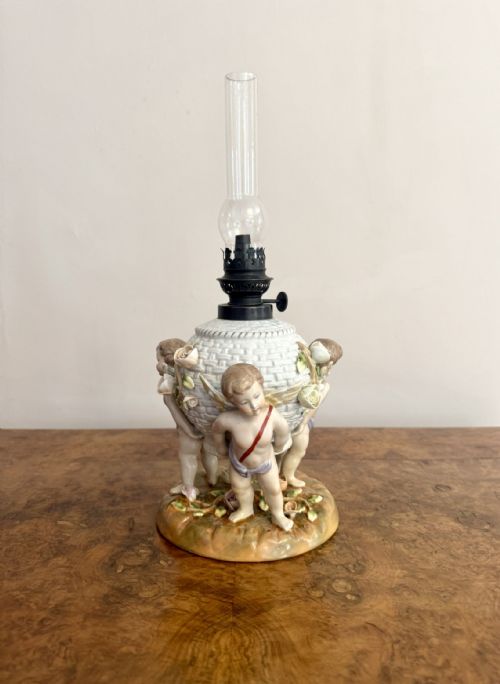


Vintage Porcelain Putti
These vintage porcelain putti combine delicate modelling with decorative function, bringing classical charm into period interiors.
Vintage Porcelain Putti
Vintage porcelain putti encompass figures, centrepieces, lamps, and candelabra produced across the nineteenth and early twentieth centuries. These decorative works draw heavily on Rococo Revival, Victorian, and Art Nouveau styles, often incorporating applied floral elements or gilt mounts.
The objects take many functional forms, including table oil lamps, candlesticks, dressing table mirrors, and figural groups. Figures modelled by makers such as Sitzendorf, Royal Dux Bohemia, and Karl Tutter appear frequently among these pieces.
Origins span continental European workshops, notably German and French factories, alongside English makers. Pieces range from small blanc de chine candlesticks to large centrepieces featuring musical putti.
Materials and Techniques
Makers utilised porcelain as the primary sculptural medium, often applying glaze, enamel, and gold leaf to accent details. Metal components such as brass, gilt bronze, and gilt toleware frequently support lamps and mirrors.
Complex forms like centrepieces and candelabra combined moulded porcelain figures with applied elements such as porcelain roses. Individual pieces integrate glass shades or beaded elements in lighting configurations.
Vintage Porcelain Putti Retail Price Guide 2026
Typical asking prices for vintage porcelain putti among the pieces listed under this phrase on Sellingantiques today, from the lower quarter to the upper quarter. They describe what is for sale here now, not the wider market.
Listings feature porcelain forms spanning the Victorian, Edwardian, and Art Deco periods, created in German, French, and English workshops.
Assessing Quality
Model crispness and the fineness of painted enamel work distinguish superior examples from standard production. The subtlety in modelling facial expressions and hand-applied floral details separates ambitious centrepieces and lamps from simpler figures.
Integration of secondary materials, such as gilt bronze mounts or finely cast brass, elevates the status of functional objects like lamps and mirrors.
Sitzendorf·Royal Dux Bohemia·Plaue Schierholz·Royal Worcester·Karl Tutter·Meissen·Japy Freres
The Vintage Porcelain Putti Glossary
- Putti
- Plural of putto, representing plump, winged male infants derived from classical art. These figures appear widely in European porcelain sculpture and centrepieces.
- Blanc de chine
- A French term for white Chinese porcelain, adopted by European factories to describe unglazed or white-glazed porcelain figures and candlesticks.
- Rococo Revival
- A nineteenth-century design style reviving the asymmetrical scrolls, natural motifs, and ornate curves of the eighteenth century. This aesthetic heavily influences many nineteenth-century porcelain groups.
- Candelabra
- Branched lighting fixtures designed to hold multiple candles. These often incorporate porcelain figures alongside metal arms.
- Centrepiece
- A large decorative object placed at the middle of a dining table or console. Porcelain examples often combine putti with bowls or baskets for floral arrangements.
Vintage Porcelain Putti: Frequently Asked Questions
How were porcelain putti used?
These pieces served both decorative and practical functions in period interiors, appearing as centrepieces for dining tables or as figural ornaments on mantelpieces.
Many examples were incorporated into functional objects such as oil lamps, candlesticks, and dressing table mirrors, blending utility with classical sculpture.
What periods do these pieces represent?
The selection spans from the mid-nineteenth century through the Edwardian era and into the early twentieth century.
Earlier nineteenth-century pieces often reflect Rococo Revival and Victorian aesthetics, while later items embrace Art Nouveau and Art Deco sensibilities.
How do I identify different styles?
Styles follow distinct historical revivals and design movements, ranging from the elaborate scrolls of Victorian Neo-Rococo to the flowing, organic lines of Art Nouveau.
Examining the modelling of the figures, the presence of applied floral decoration, and associated materials helps determine the period and stylistic influence.
How should I care for antique porcelain?
Antique porcelain requires gentle handling, particularly around delicate applied elements like flowers, wings, and fine extremities.
Dusting with a soft, dry brush preserves the surface enamel, glaze, and any applied gold leaf or gilt bronze mounts without risking damage.