

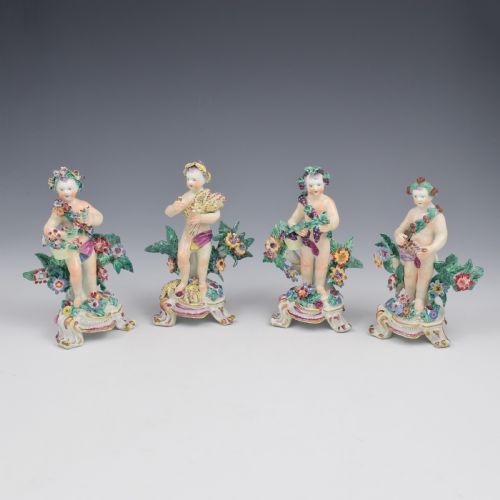


Ceramic Cherub Ornament
These ceramic cherub ornament pieces bring playful mythological figures into your rooms through centuries of European porcelain tradition.
Ceramic Cherub Ornament
A ceramic cherub ornament typically appears as a figurine, vase, or centrepiece depicting winged putti figures modelled in porcelain. These works emerge from diverse historical periods ranging from the eighteenth century through to the twentieth century, capturing evolving tastes in decorative art.
Buyers frequently encounter Continental and English pieces styled in Rococo Revival, Victorian, and Art Deco aesthetics. The forms vary from single standing putti and dancing figures to complex chariot vases and large decorative ewers.
The assortment includes historical examples from renowned makers alongside nineteenth-century Victorian interpretations and early twentieth-century creations. Each piece demonstrates how ceramicists adapted the cherub motif across different eras of manufacture.
Materials and construction methods
The primary material across these listings is porcelain, encompassing both hard-paste and soft-paste varieties shaped into intricate sculptural forms. Makers utilised hand-painting techniques to decorate the surfaces, often adding enamel detailing to bring depth to the figures.
Gilding and gold leaf frequently highlight the edges, bases, and decorative elements of vases and centrepieces. Specialised techniques such as pate-sur-pate appear in specific pairings, building up layers of slip to create translucent relief designs against a contrasting ground.
Ceramic Cherub Ornament Retail Price Guide 2026
Typical asking prices for ceramic cherub ornament among the pieces listed under this phrase on Sellingantiques today, from the lower quarter to the upper quarter. They describe what is for sale here now, not the wider market.
Listings span multiple centuries, incorporating hard-paste and soft-paste porcelain alongside detailed enamel and gold leaf applications.
Distinctions in quality and execution
The application of glaze and gilding further separates standard production from superior examples. Skilled execution is evident in smooth, even surfaces where gold leaf or enamel work enhances the sculptural contours without obscuring the underlying porcelain body.
Bow Porcelain·Royal Worcester·Meissen·Minton·Karl Tutter·Royal Doulton
The Ceramic Cherub Ornament Glossary
- Putto
- A plump, naked child figure, frequently winged, appearing in classical art and decorative objects. These figures form the core subject of cherub ornaments.
- Hard-paste porcelain
- A durable ceramic material fired at very high temperatures using kaolin and petuntse. It creates a dense, bright white body that resists scratching.
- Soft-paste porcelain
- An early ceramic composition fired at lower temperatures, producing a warmer tone and a softer body. Collectors prize its distinctive glaze texture.
- Pate-sur-pate
- A ceramic technique involving the buildup of successive layers of liquid clay slip on a dark body. This creates a cameo-like relief effect.
- Ewer
- A large jug with a wide spout and a curved handle, often used as a decorative vessel rather than for pouring liquids.
Ceramic Cherub Ornament: Frequently Asked Questions
How do I date a porcelain cherub?
Dating relies on examining the paste composition, glaze characteristics, and any factory marks stamped or painted on the base. Stylistic cues like Rococo Revival curves or Art Deco lines also point to specific eras of manufacture.
Comparing the modelling technique with known historical periods helps narrow down the production decade. Certain factories used distinct colour palettes and gilding styles that shifted over time.
Were these figures meant for display?
These pieces were designed primarily as decorative objects for mantels, sideboards, and grand dining tables. Centrepieces and vases served both ornamental and functional purposes in affluent households.
Their intricate forms and delicate hand-painted surfaces meant they occupied prominent spaces in drawing rooms. They were intended to showcase the wealth and refined taste of the owner.
What is the difference between soft-paste and hard-paste?
Hard-paste porcelain uses natural petuntse and kaolin, fired at extreme heat to create a vitrified, scratch-resistant body. Soft-paste relies on an artificial glass frit mixture fired at lower temperatures, resulting in a softer appearance.
Collectors often notice that soft-paste has a warmer, slightly creamy glow beneath the glaze. Hard-paste tends to show a crisper, brighter white surface finish.