





White Glazed Ceramic Jug
A white glazed ceramic jug brings centuries of tin-glazed earthenware and stoneware tradition straight to the table.
White Glazed Ceramic Jug
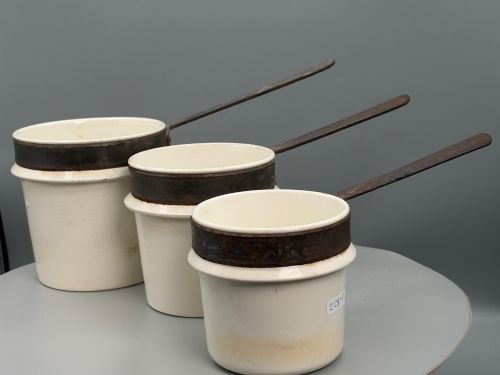
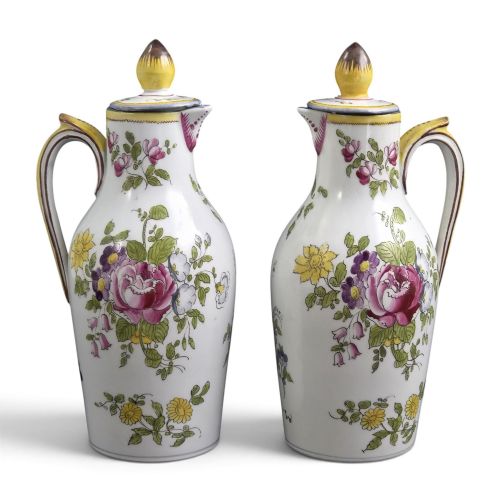
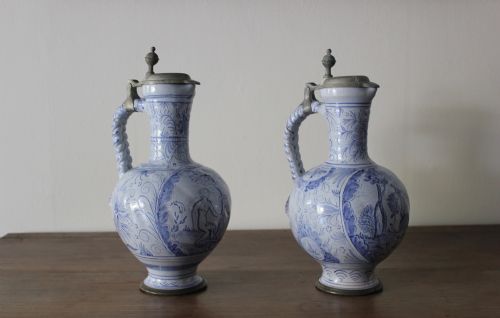
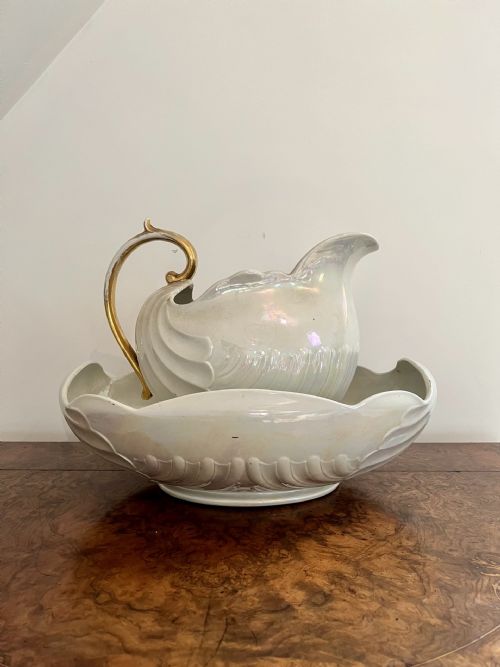
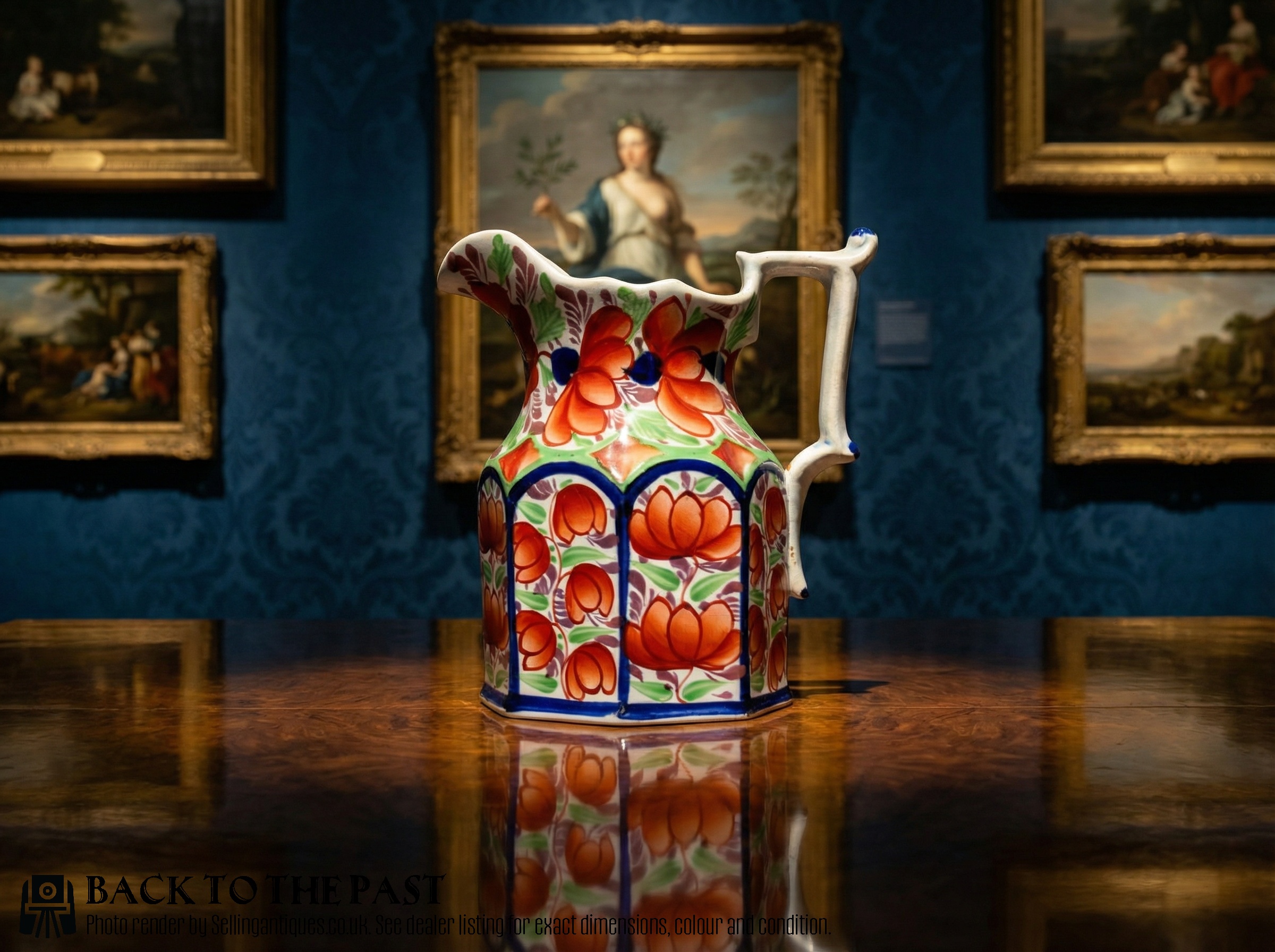
A white glazed ceramic jug encompasses everything from seventeenth-century Dutch Delftware and Italian majolica to nineteenth-century Staffordshire and Doulton Lambeth pieces. You will most frequently encounter tin-glazed earthenware vessels alongside blue and white floral pieces and polychrome tavern jugs.
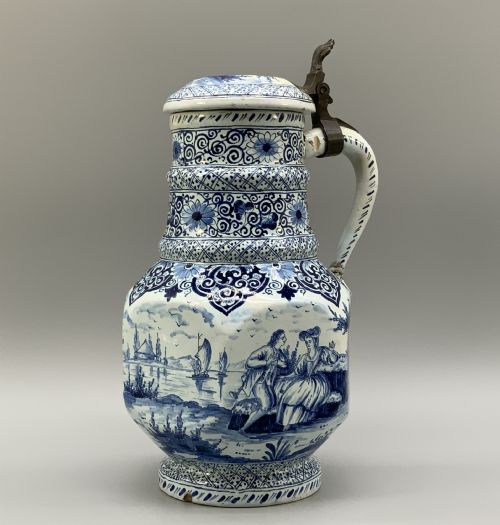
These vessels range from apothecary jars and puzzle jugs to tobacco and beverage pitchers shaped with mask spouts or pewter lids. Their origins span English, Dutch, Italian, and Belgian workshops across the seventeenth, eighteenth, and nineteenth centuries.
Materials and construction methods
Makers shaped these jugs from earthenware and ceramic bodies before applying tin glaze to create a smooth white surface suitable for blue and white or polychrome painting. Many historical examples integrate fitted pewter lids or decorative spouts formed directly from the clay body.
The firing process bonded metallic pigments like cobalt blue and manganese directly into the wet glaze, producing deep hues that settled into the porous earthenware beneath.
White Glazed Ceramic Jug Retail Price Guide 2026
Typical asking prices for white glazed ceramic jug among the pieces listed under this phrase on Sellingantiques today, from the lower quarter to the upper quarter. They describe what is for sale here now, not the wider market.
A monkey toby jug sits ready to pour.
Assessing quality in historical ceramics
Quality rests upon the crispness of the hand-painted decoration, whether in fine blue and white Chinoiserie scenes or bold polychrome florals, and the evenness of the white tin glaze over the earthenware body. Superior examples maintain sharp details on relief elements like mask spouts and handle terminals.
The stability of applied metal mounts, such as original pewter lids, and the structural integrity of complex forms like puzzle jugs and pilgrim flasks further distinguish finer studio productions from utilitarian wares.
Doulton Lambeth·Pieter Verburg·Shelley·Staffordshire
The White Glazed Ceramic Jug Glossary
- Tin glaze
- An opaque white glaze containing tin oxide, applied to earthenware to provide a smooth ground for painted decoration. It defined European pottery production before the widespread adoption of creamware and porcelain.
- Delftware
- Tin-glazed earthenware produced in the Netherlands and England, famously decorated in cobalt blue. Pieces often feature floral, maritime, or Chinoiserie motifs.
- Majolica
- A type of Italian tin-glazed earthenware decorated with brightly coloured metal oxides on an opaque white glaze. Early pieces frequently take ornamental shapes like pilgrim flasks and drug jars.
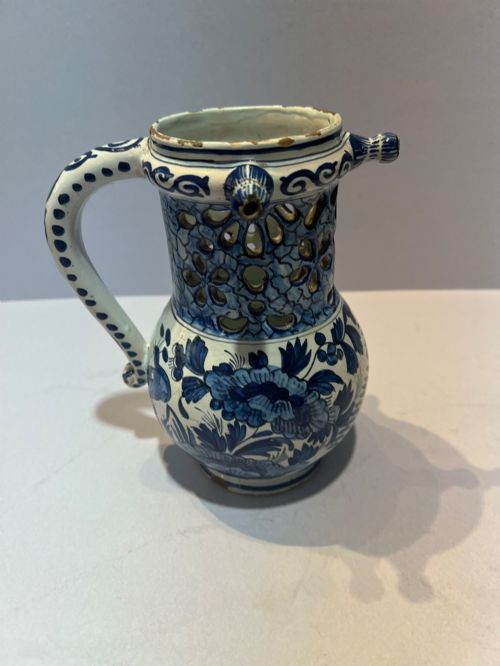
- Puzzle jug
- A drinking vessel with a perforated neck that forces the drinker to figure out the secret channel to avoid spilling. They date primarily to the eighteenth century and served as tavern novelties.
White Glazed Ceramic Jug: Frequently Asked Questions
How do I clean an antique jug?
Wash historical ceramics gently by hand using lukewarm water and mild soap, avoiding harsh scrubbing or soaking that might compromise aged earthenware bodies.
Keep tin-glazed pieces away from modern dishwashers, as aggressive heat and detergents will crack the delicate glaze and fade painted pigments.
Were these jugs used daily?
Many earthenware pitchers and tavern jugs served practical roles for water, beer, or pharmaceutical mixtures in domestic and commercial settings.
Other forms, such as puzzle jugs and decorative salesman samples, functioned primarily as novelties or display items rather than utilitarian kitchenware.
How do I date a ceramic jug?
Examine the base, glaze texture, and painting style to determine whether a piece belongs to the seventeenth, eighteenth, or nineteenth century. Tin glaze often shows characteristic crazing and minor edge chipping that reveals the darker earthenware beneath.
Potter marks, stylistic clues like Chinoiserie motifs, and incorporated materials such as pewter lids help narrow down the period of manufacture.
What is a tin-glazed finish?
Tin glazing involves adding tin oxide to a lead glaze to create a brilliant white, opaque surface that imitates Chinese porcelain. Painters applied cobalt blue and other metallic colours directly onto this absorbent unfired surface.
This technique dominated Dutch and English pottery workshops before cleaner industrial refining methods emerged during the nineteenth century.