

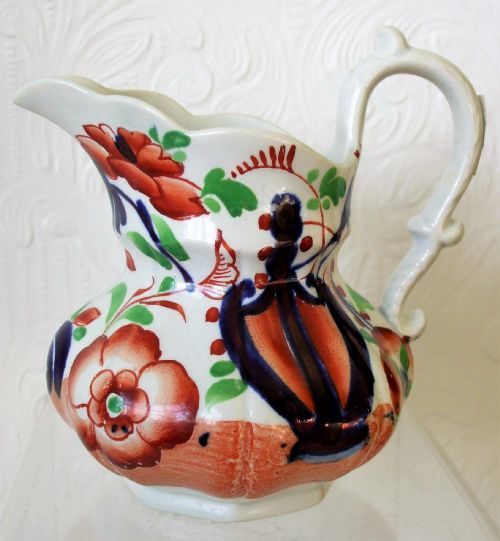
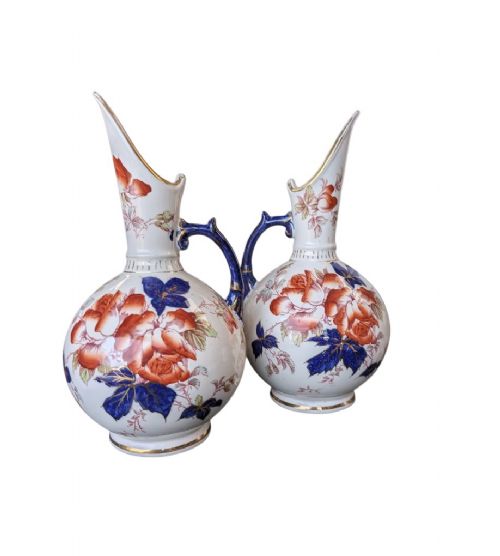
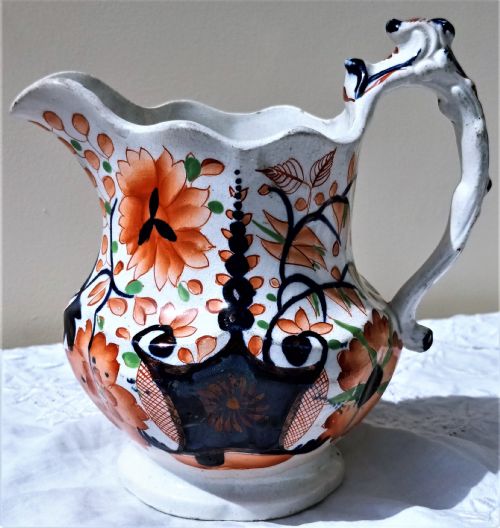


Orange Floral Pottery Pitcher
These orange floral pottery pitcher selections bring vibrant nineteenth-century earthenware and pearlware forms into modern spaces through bright enamel patterns.
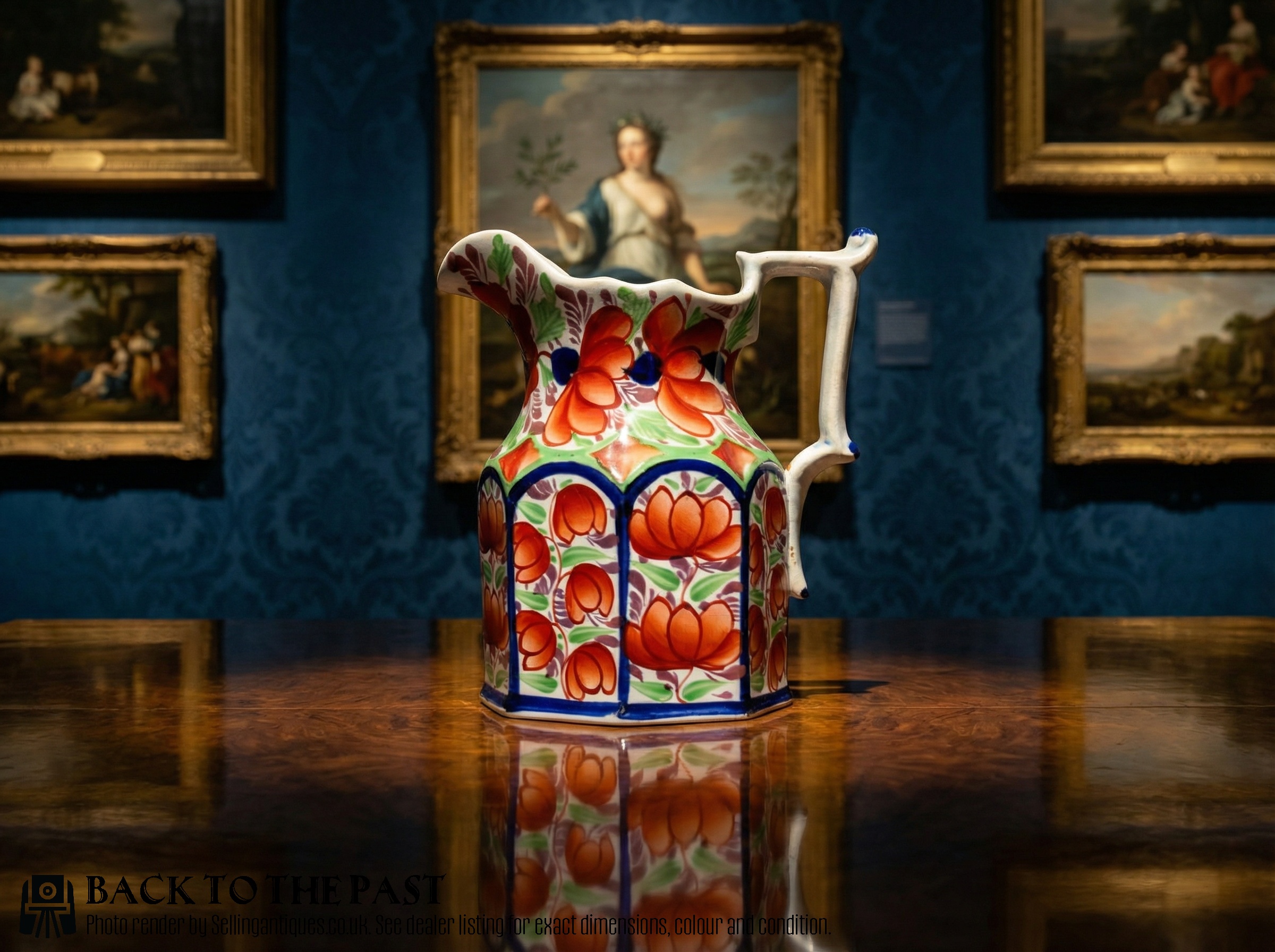
Orange Floral Pottery Pitcher
An orange floral pottery pitcher brings together practical pouring vessels decorated with botanical motifs and striking orange hues. Buyers searching for an orange floral pottery pitcher encounter nineteenth-century earthenware and pearlware jugs featuring hand-applied designs.
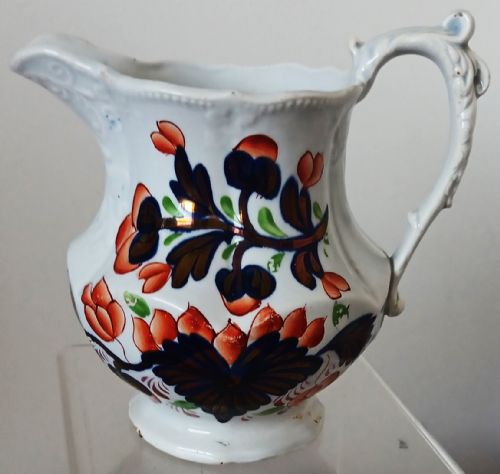
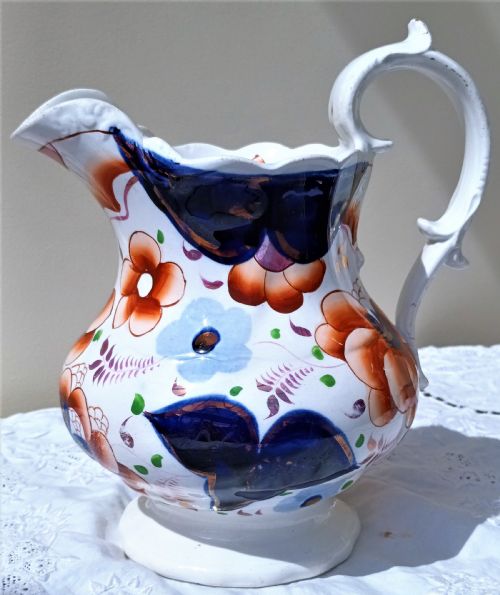
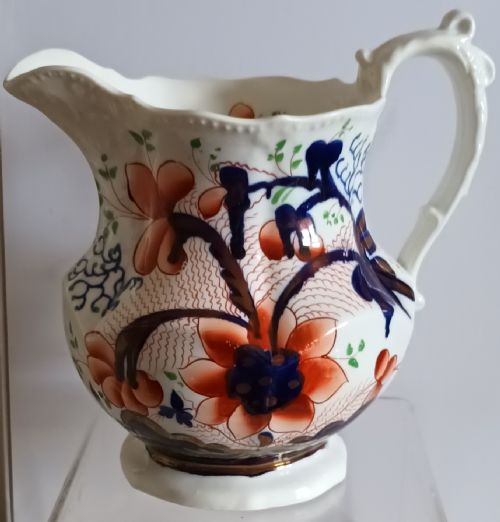
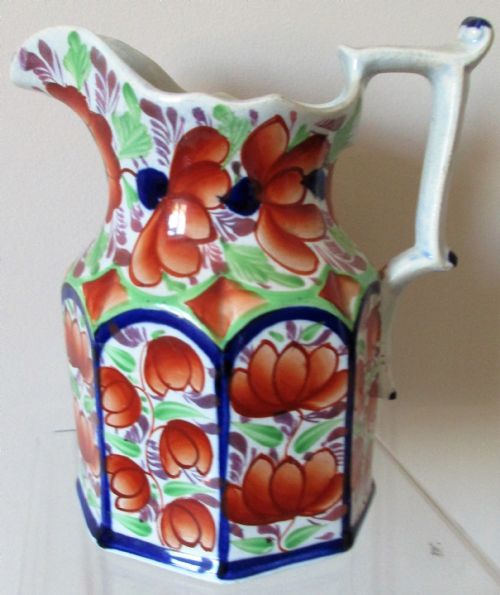
The selections on this page are dominated by Victorian Gaudy Welsh pottery jugs, alongside eighteenth-century Georgian pearlware examples and Japanese Imari pairs. These pieces range from standard jug shapes to pouch jugs and pitcher variants.
Victorian examples showcase named patterns such as Grape, Drape, Pagoda, Gwent, Aberaeron, Harlech, and Conwy. Each orange floral pottery pitcher reflects domestic table use across different historical periods.

Materials and construction methods
Potters shaped these vessels from earthenware, pearlware, and hard-paste porcelain using traditional throwing and moulding techniques. The bodies were then fired to create sturdy household containers suitable for daily utility.
Surfaces received protective glazes, sometimes incorporating copper lustre or gold leaf accents to enhance the visual depth. Enamel colours were applied by hand to build the distinctive floral and architectural patterns.
Makers utilised ceramic pigments to achieve the characteristic orange tones seen across the Victorian Gaudy Welsh and Georgian wares. Firing processes locked the glaze and enamel layers together on the ceramic substrate.
Orange Floral Pottery Pitcher Retail Price Guide 2026
Typical asking prices for orange floral pottery pitcher among the pieces listed under this phrase on Sellingantiques today, from the lower quarter to the upper quarter. They describe what is for sale here now, not the wider market.
Listings feature earthenware, pearlware, and hard-paste porcelain materials across Victorian and Georgian periods.
Distinctions in quality and execution
Execution of the hand-painted enamel patterns separates finer examples from standard production pieces. Precision in the application of copper lustre and gold leaf details indicates the skill of the decorator.
Clarity of the ceramic body and smoothness of the glaze layer demonstrate superior kiln control and material preparation. The crispness of moulded details in shapes like pouch jugs also marks the distinction between workshop outputs.
The Orange Floral Pottery Pitcher Glossary
- Pearlware
- A refined earthenware developed in the eighteenth century featuring a subtle blue-tinted glaze that pooled in recesses. It served as a popular canvas for bright underglaze and overglaze painting.
- Gaudy Welsh
- A style of colourful pottery produced in the nineteenth century, characterised by cobalt blue, copper lustre, and vibrant orange enamel motifs. It was chiefly made for domestic markets in Wales and beyond.
- Earthenware
- Porous pottery fired at lower temperatures than porcelain and stoneware, requiring a vitreous glaze to hold liquids. It forms the structural body of most nineteenth-century jugs.
- Copper Lustre
- A metallic glaze finish imparting a coppery, reflective sheen to ceramic surfaces. Potters used it as a contrasting border or accent on patterned tablewares.
- Imari
- A Japanese ceramic style featuring deep blues and iron reds, often augmented with gold. Victorian makers drew direct inspiration from these imported aesthetics.
Orange Floral Pottery Pitcher: Frequently Asked Questions
What is an orange floral pottery pitcher?
These pieces are ceramic pouring vessels decorated with floral motifs and prominent orange enamel colours. They primarily date from the eighteenth and nineteenth centuries.
Buyers find forms ranging from standard jugs to pouch jugs and Japanese Imari pairs. Each item reflects the domestic tableware traditions of its respective period.
How were these pitchers used historically?
These vessels functioned primarily as practical containers for serving liquids at the dining table. They held water, milk, or beer during daily household meals.
Over time, many pieces transitioned from active service to display items due to their decorative enamel patterns. Their sturdy earthenware and pearlware bodies made them durable for everyday kitchen tasks.
How do I identify Victorian Gaudy Welsh jugs?
Victorian Gaudy Welsh jugs are recognised by their distinctive palette of cobalt blue, copper lustre, and bright orange enamel. Collectors often identify specific named patterns like Pagoda, Grape, or Gwent.
These nineteenth-century pieces display hand-painted botanical or architectural motifs over a white ceramic ground. The presence of copper lustre provides a reliable clue to this specific regional style.
How do I care for antique ceramic pitchers?
Antique ceramic pitchers require gentle handling and should be washed by hand using mild soap and lukewarm water. Avoid abrasive sponges or harsh detergents that might damage the historical enamel and lustre surfaces.
Display them away from direct sunlight and areas subject to sudden temperature shifts to protect the glaze. Proper placement ensures the fragile earthenware bodies remain stable over time.