


White Glaze Delft Plates
White glaze delft plates bring centuries of tin-glazed earthenware into a room, offering collectors bold chargers and dishes with distinct brushwork.
White Glaze Delft Plates
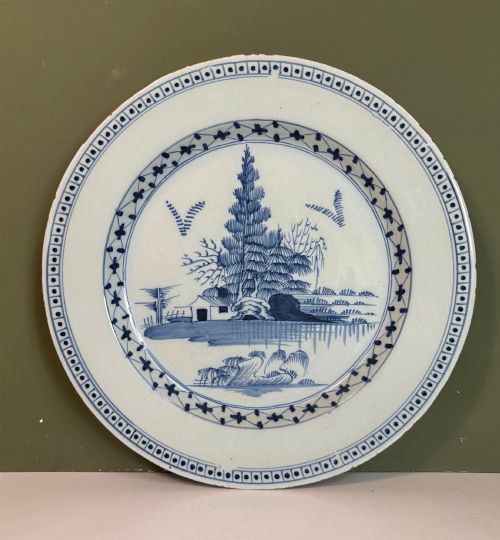
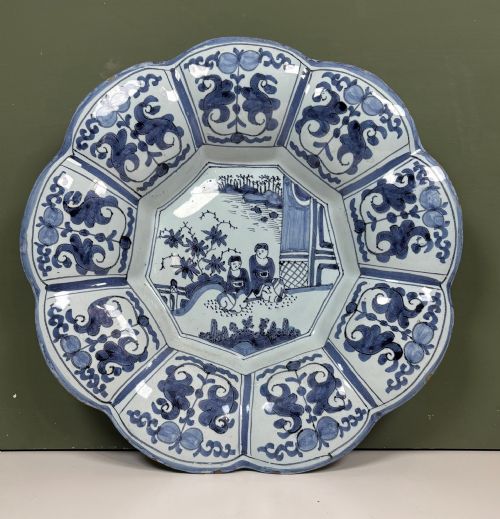
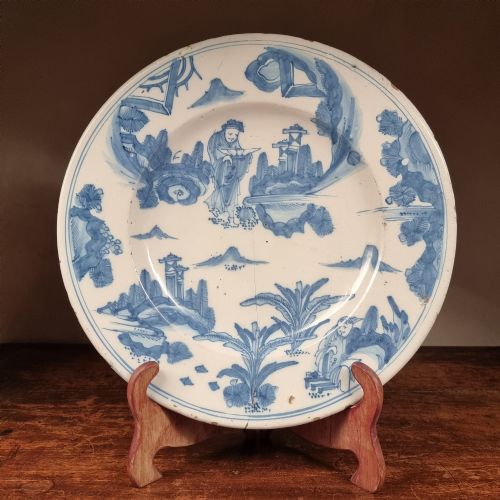
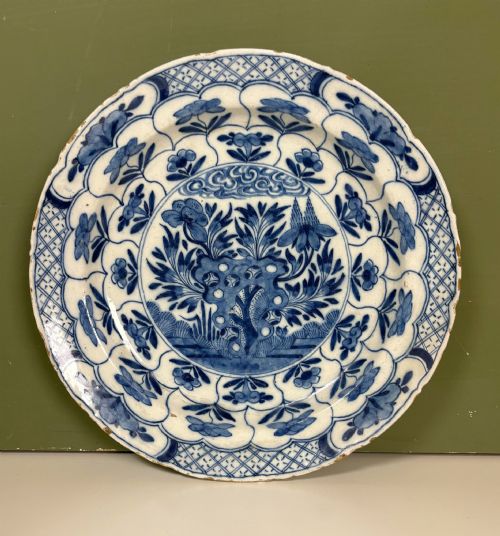
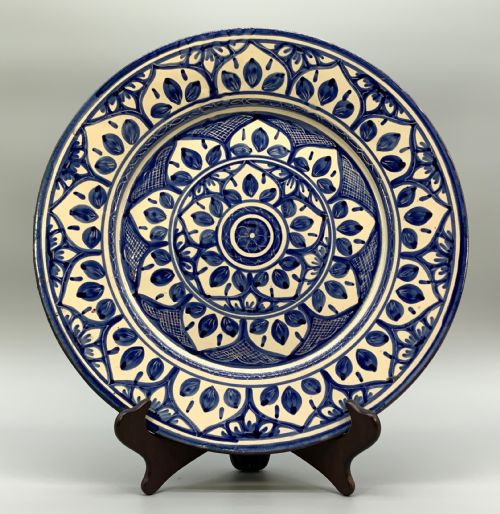
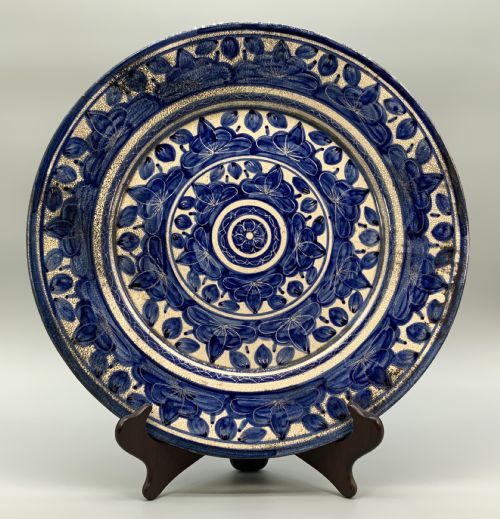
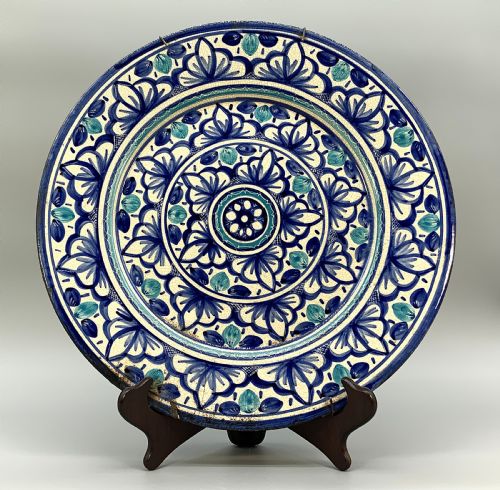
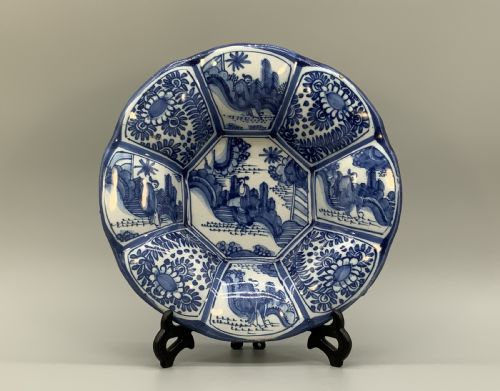
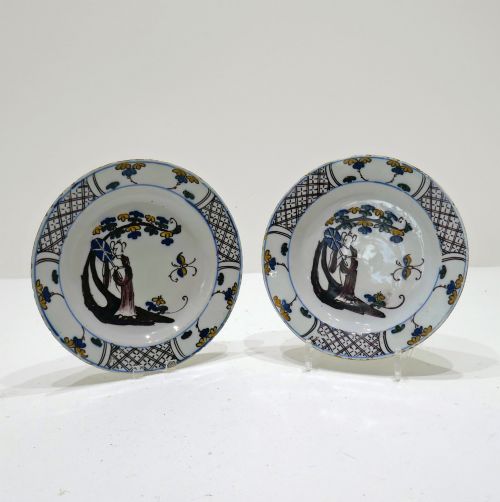
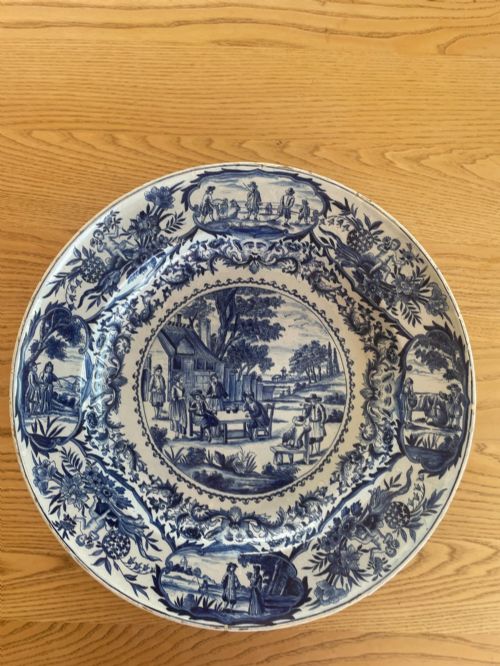
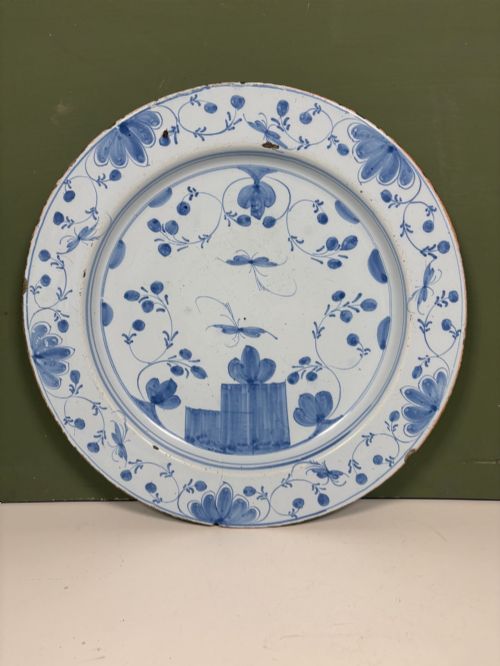
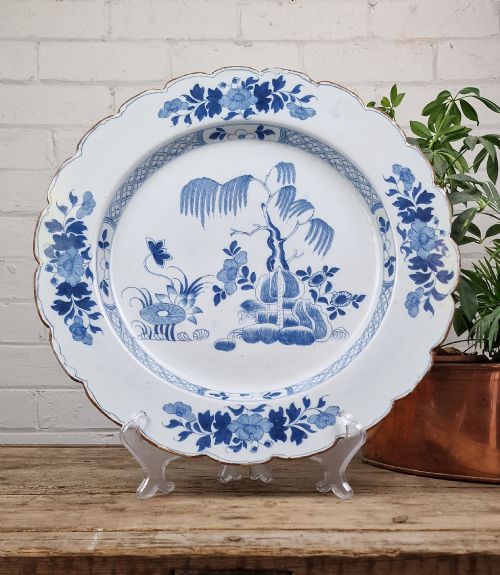
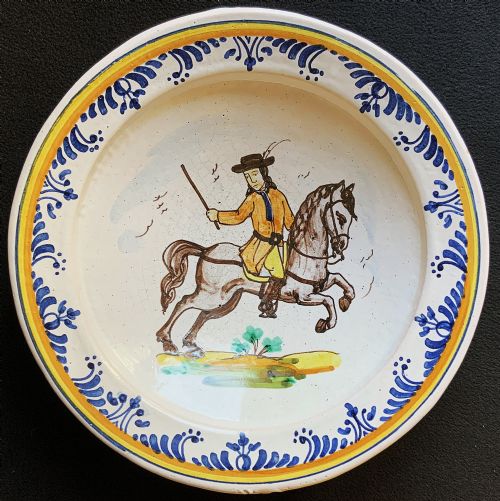
When you search for white glaze delft plates, you look at earthenware dishes shaped as chargers, shallow bowls, and decorative plates spanning the seventeenth, eighteenth, and nineteenth centuries. The pieces on this page lean heavily towards eighteenth-century English and Dutch examples, alongside seventeenth-century Kraak styles and mid-twentieth-century Moorish revivals.
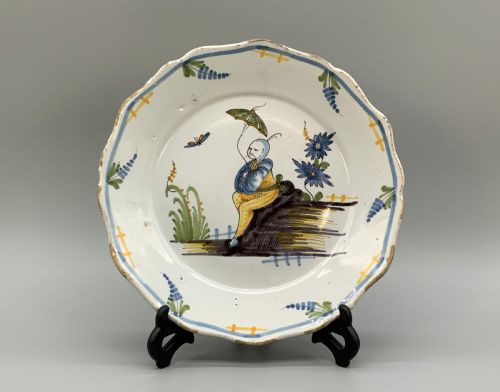
Forms range from small domestic plates to massive chargers designed for display on dresser rails. Collectors frequently encounter blue and white colour schemes, alongside polychrome and manganese examples showing Chinoiserie or floral motifs.
Materials and production methods
Potters built these objects using earthenware clay, coated them with an opaque white tin glaze, and painted them with metallic oxides such as cobalt pigment. The tin-glazed surface provided a smooth white ground for cobalt blue or polychrome pigments to sit upon before firing.
Firing took place in kilns where pigments reacted directly with the glaze, creating soft blurs along the painted outlines and characteristic surface variations unique to each piece of tin-glazed earthenware.
Listings feature earthenware from the seventeenth century through to 1940, uniting Dutch and English delftware with continental European faience.
Assessing quality and character
Quality rests in the crispness of the tin glaze, the stability of the earthenware body, and the confidence of the brushwork on the surface. Finer examples display steady hand-painted details in cobalt oxide, manganese, or yellow without excessive pooling or crawling of the white glaze.
The weight of the charger or plate and the evenness of the footring reflect the skill of the potter in the workshop. Pieces with balanced proportions and clear potting marks hold a stronger presence.
Lambeth Delft
The White Glaze Delft Plates Glossary
- Tin-Glazed Earthenware
- Pottery fired with a lead glaze made opaque by the addition of tin oxide. This creates the characteristic milky white surface found on delft plates.
- Charger
- A large decorative plate intended for display on a wall or dresser rather than for dining. These large dishes dominate early delftware production.
- Chinoiserie
- European decorative design inspired by Chinese art and aesthetics. Eighteenth-century plates frequently apply these motifs in blue and white.
- Kraak Style
- A Dutch delft style imitating Chinese Kraak porcelain from the late Ming dynasty. Plates in this style feature panelled borders and central landscape or bird motifs.
- Polychrome
- Decoration employing multiple colours, typically iron red, yellow, green, and blue. These pigments create richer palettes on eighteenth-century plates.
White Glaze Delft Plates: Frequently Asked Questions
How were delft plates used?
Historic delft plates served dining functions in wealthy households during earlier centuries before transitioning into purely decorative items. Larger chargers sat on sideboards and dressers to display wealth and taste.
Over time, owners moved these earthenware dishes onto walls for safe viewing, protecting the soft tin-glazed surface from cutlery damage.
How do I tell English and Dutch delft apart?
English delft bodies tend to be slightly softer and pinker in tone under the glaze, while Dutch wares often display a brighter, colder white glaze. Bristol and Lambeth potteries developed distinct potting characteristics that differ from Delftware made in the Netherlands.
Brushwork also offers clues, as English painters often worked with looser, more gestural strokes compared to the tighter geometric layouts of many Dutch workshops.
What causes crazing on tin glaze?
Crazing occurs as the ceramic body and the tin glaze contract at different rates over decades and centuries. Tiny network cracks appear across the white surface as the piece ages naturally in various environments.
This phenomenon is normal for tin-glazed earthenware and forms part of the physical history of antique pottery.
How should I display my charger?
Chargers require secure wall hangers designed specifically for heavy earthenware plates to distribute weight evenly. Avoid placing them in direct sunlight or areas with sudden temperature shifts to protect the glaze.
Using sturdy wooden plate stands on flat surfaces offers another secure method for showcasing large decorative dishes safely.