



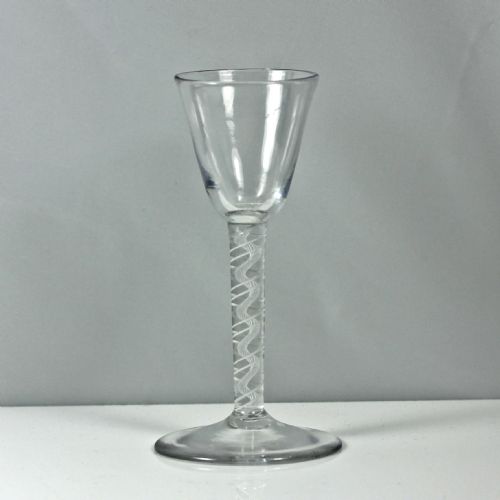


White Glass Vessel
A white glass vessel brings tactile weight and crisp tone to a room, ranging from Georgian wine glasses to Art Deco opalescent pieces.
White Glass Vessel
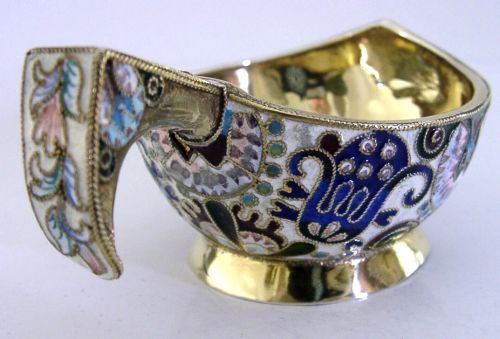
When you search for white glass vessel, you encounter a diverse group of objects spanning the eighteenth century to the twentieth century. These items include drinking glasses, vases, decanters, and bowls created across Britain, Europe, and Russia.
The eighteenth-century examples lean heavily towards English drinking glasses featuring opaque twist stems alongside continental flasks and tankards. Later Victorian and twentieth-century items shift towards opaline glass, enamel decoration, and moulded opalescent forms.
Materials and methods
Makers utilised lead glass, clear glass, and various forms of white, opaline, or milk glass as the foundation for these objects. Techniques involved free-blowing, moulding, and applying enamel paints or detailed surface decoration.
Stems on drinking glasses were formed using intricate air or opaque twist methods, whilst later twentieth-century pieces employed press-moulding to achieve dense opalescence and sculptural depth.
The listings show periods ranging from the mid-eighteenth century through Georgian and Victorian eras, up to Art Deco works from the 1930s.
Distinctions in quality
The refinement of the glass metal and the crispness of the forming process separate standard items from superior examples. Weight, balance, and the clarity of the white or opaline tone dictate the standing of a piece.
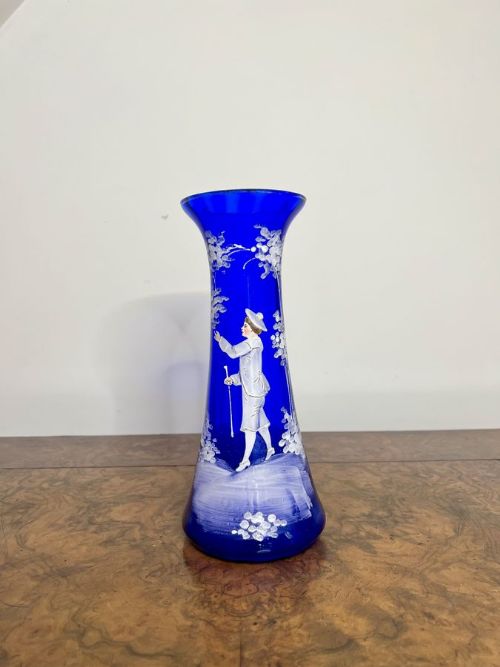
Painted details and enamel work show variation in hand control and pigment density, where precise brushwork and well-preserved surface detail elevate the execution of the object.
Rene Lalique·Elizabeth Graydon-Stannus·Mary Gregory
The White Glass Vessel Glossary
- Opaque twist
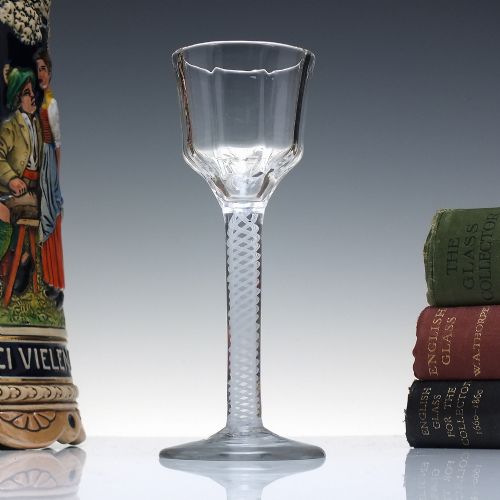
- A stem form found in eighteenth-century drinking glasses, created by drawing white or coloured enamel threads through the molten glass. This technique produces linear patterns inside the stem.
- Opaline glass
- An opaque or translucent white glass popular during the eighteenth and nineteenth centuries. It provides a smooth, porcelain-like surface suitable for enamel painting.
- Opalescent glass
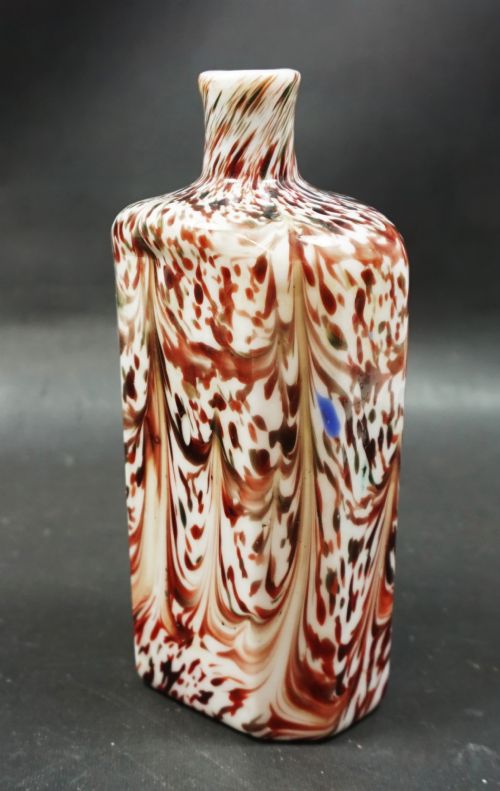
- A type of glass that appears milky-white with bluish or amber highlights when lit from certain angles. It gained widespread use during the Art Deco period.
- Double series twist
- A stem variation combining two distinct sets of twists, such as a pair of opaque white threads enclosed by a lattice of finer threads. It represents a more complex stage of glass manufacture.
- Decalcomania
- A transfer-printing technique used on nineteenth-century decorative glass and ceramics. It allowed intricate coloured designs to be applied to the surface before firing.
White Glass Vessel: Frequently Asked Questions
How do I date a white glass vessel?
Dating relies on identifying the manufacturing technique, form, and material characteristics relative to documented periods. Eighteenth-century pieces often show specific stem formations and pontil marks, whilst twentieth-century examples display distinct mould lines and stylistic signatures.
Examining the type of white glass, such as early opaque milk glass versus later pressed opalescent material, helps narrow the decade of production.
What is an opaque twist wine glass?
An opaque twist wine glass is an eighteenth-century drinking vessel featuring a stem decorated with white enamel glass threads. These threads are twisted into spiral formations during the drawing of the stem.
They succeeded baluster glasses and remain popular with collectors due to their delicate appearance and technical ingenuity.
How should I clean my glass vessel?
Cleaning requires warm water and mild soap, avoiding harsh abrasives that can damage surface enamel or painted panels. Hand washing protects fragile elements like hand-painted details or delicate rims.
Drying with a soft lint-free cloth prevents water spots and preserves the lustre of the glass.
What is the difference between milk glass and opaline glass?
Milk glass is a dense, opaque white glass that physically resembles porcelain and was widely produced in the nineteenth and twentieth centuries. Opaline glass typically exhibits a softer, translucent quality with a subtle fire when held to the light.
Both materials provide a smooth canvas for enamel painting and gilding.