



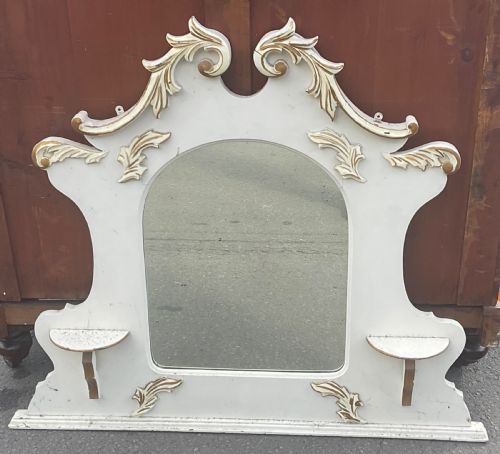


White Gilt Overmantel
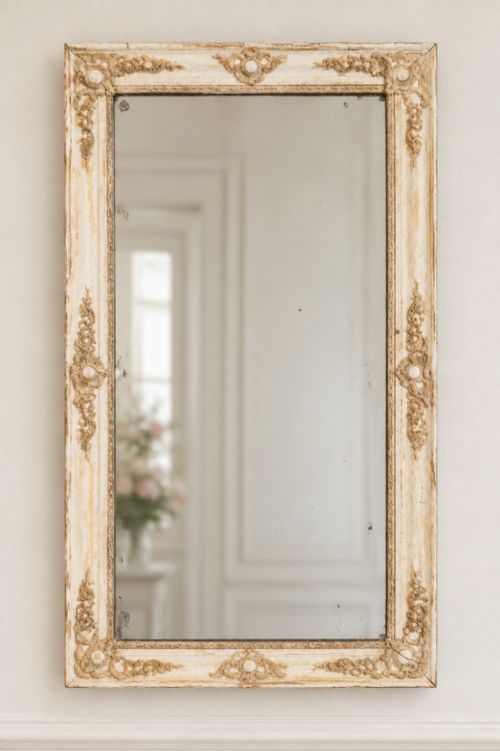
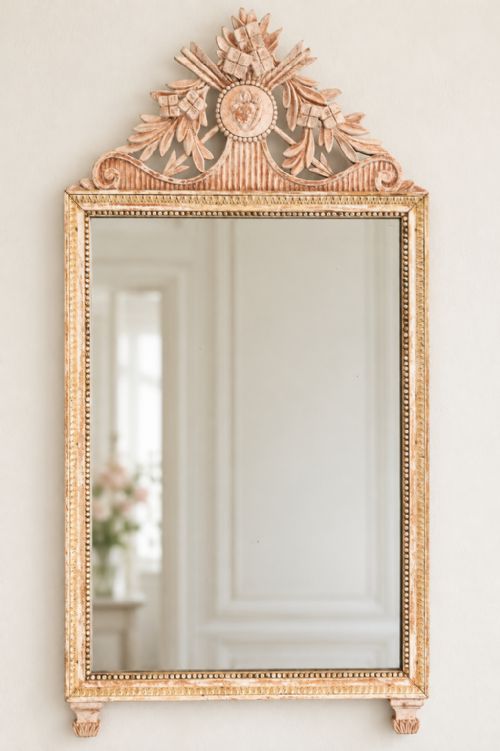
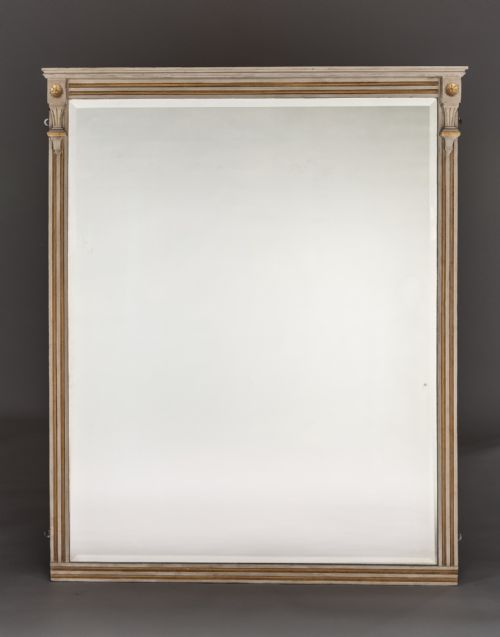
A white gilt overmantel brings scale and reflective light to a room, framed in painted wood highlighted with gold leaf.
White Gilt Overmantel
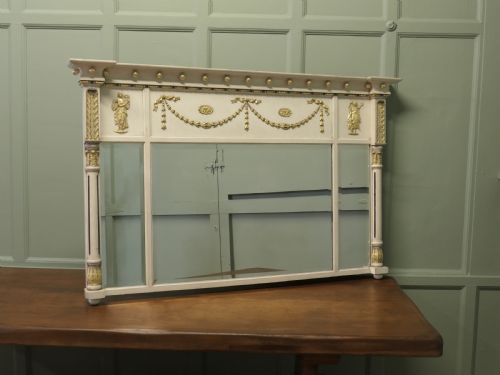
A white gilt overmantel is a large mirror designed to hang above a fireplace, combining a white or painted wooden base with gilded details. These pieces typically stretch horizontally to sit comfortably above a mantelpiece, drawing the eye upwards and brightening the interior space with reflected light.
The selections span the nineteenth century into the early twentieth century, taking forms such as overmantel mirrors, wall mirrors, and triptych or triple-plate designs. Buyers encounter styles ranging from Regency and Victorian to French Chateau, Louis XVI, Neoclassical, Rococo Revival, and Edwardian.
Origin points across the stock include English and French workshops, alongside Italian examples from the Victorian and Edwardian eras. The framework frequently employs carved wood and gesso, finished with painted surfaces and parcel-gilt accents.
How they were made
Makers built these frames using timber foundations coated in gesso, a plaster-like mixture that allowed artisans to carve intricate decorative motifs before finishing. Wood forms the structural core, often shaped into classical or revivalist profiles suited to domestic hearths.
Surfaces received layers of paint, predominantly white or pale tones, complemented by gold leaf applied as parcel gilt to highlight specific carved details. Mirror glass, including crackle finish and multi-plate triptych layouts, was then fitted into the prepared frames.
White Gilt Overmantel Retail Price Guide 2026
Typical asking prices for white gilt overmantel among the pieces listed under this phrase on Sellingantiques today, from the lower quarter to the upper quarter. They describe what is for sale here now, not the wider market.
Several mirrors retain centuries-old crackle finish glass that turns a straight glance into a whimsical puzzle of fractured reflections.
What varies in quality
Quality rests in the crispness of the carved wood and gesso ornamentation, where deep, deliberate moulding separates superior pieces from simpler designs. The execution of the painted and parcel-gilt finish determines the visual depth of the frame.
The integrity of the mirror glass and the proportion of the frame relative to its intended architectural placement dictate the overall presence of the object. Heavier, larger frames utilising traditional carving techniques represent the upper tier of surviving examples.
The White Gilt Overmantel Glossary
- Overmantel
- A large mirror or decorative panel made specifically to hang on the wall directly above a fireplace mantelpiece. These fixtures were proportioned to anchor the hearth within the room.
- Parcel Gilt
- A decoration method where only specific raised portions or carved details of an object are gilded with gold leaf, leaving the remaining surface painted. This technique creates contrast against a white or coloured wooden base.
- Gesso
- A mixture of plaster of Paris, chalk, and size used as a prepared surface for painting and gilding on wood. Artisans moulded and carved this material to achieve low-relief ornamentation.
- Triptych
- A mirror composed of three panels placed side by side, often seen in Regency and nineteenth-century designs. The division breaks the reflection into sections across a wider horizontal frame.
- Giltwood
- Timber that has been coated with gold leaf or a gold-coloured finish. It provides the reflective metallic highlights seen on classical and revivalist frames.
White Gilt Overmantel: Frequently Asked Questions
How do I hang an overmantel mirror safely?
These heavy wooden frames require secure fixings anchored directly into wall studs or masonry above the fireplace. Professional mirror hangers use heavy-duty brackets to distribute the substantial weight safely.
Position the lower edge just above the mantel shelf to create a cohesive visual connection with the fireplace structure.
What is a parcel gilt finish?
A parcel gilt finish means that only designated raised parts of the frame receive gold leaf application. The underlying painted wood remains visible on the flat or recessed sections.
This technique emphasises the carved details and moulding without overwhelming the painted surface.
How do I clean antique mirror glass?
Use a soft, dry cloth to remove dust from the glass and the delicate gesso frame. Avoid spraying liquids directly onto the mirror surface to prevent moisture seeping behind the plate.
Harsh chemical cleaners can damage both the antique glass and the surrounding painted or gilded finish.
Are these mirrors suitable for rooms without fireplaces?
While originally designed for hearths, these large wall mirrors function effectively on any expansive wall space. They serve as focal points in hallways, dining rooms, and drawing rooms.
The considerable width and reflective surface help to bounce light across larger living areas.
How do I identify a Regency overmantel?
Regency pieces often feature clean architectural lines, classical motifs, and sometimes multi-plate or triptych glass configurations. The styling leans towards restrained neoclassical influences.
Makers working in this period utilised painted and parcel-gilt wooden frames alongside crackle finish mirror plates.