



White Earthenware Meat Platter
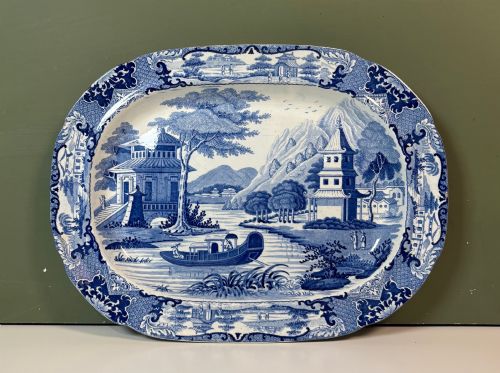
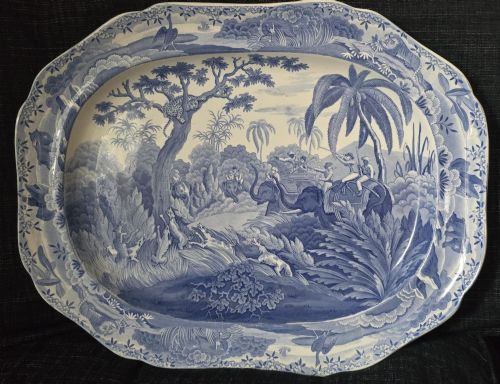
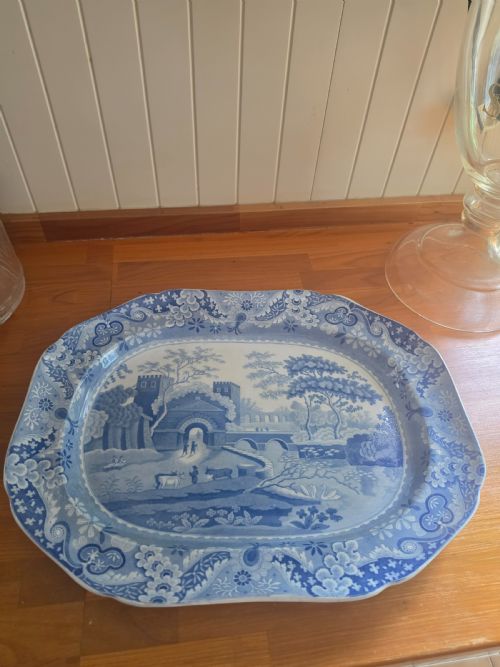
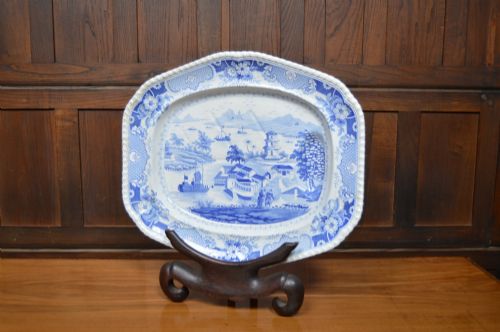
A white earthenware meat platter brings generous nineteenth-century proportions and bold transfer-printed scenes to the table, offering a sturdy centrepiece for large joints of meat.
White Earthenware Meat Platter
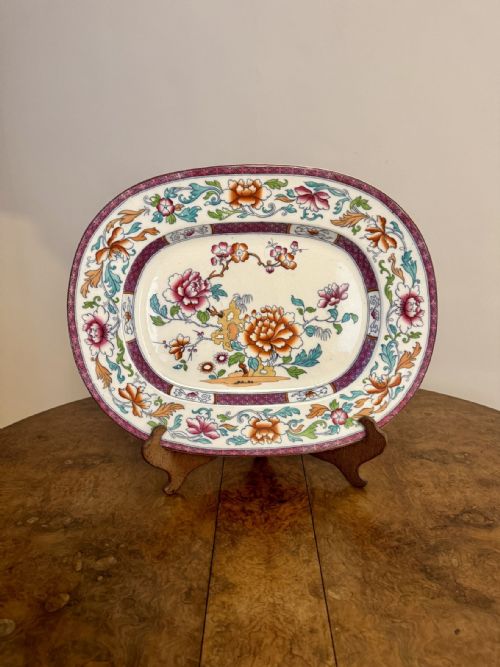
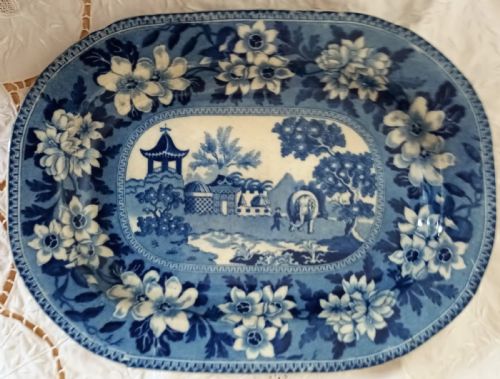
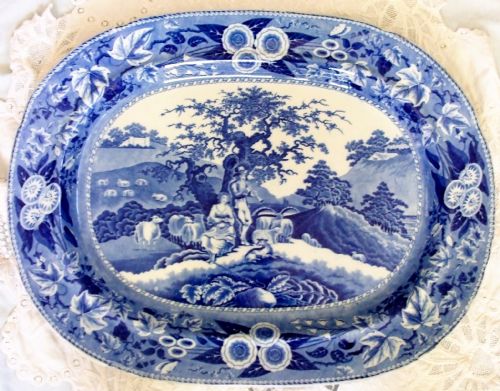
A white earthenware meat platter is a substantial ceramic serving vessel designed for family dining and grand entertaining during the Georgian and Victorian eras. These large dishes frequently display blue and white transfer printing, depicting romantic landscapes, classical ruins, topographical views, and exotic Chinoiserie patterns.
The versions most commonly met on this page date from the nineteenth century, ranging from the Regency period through to late Victorian production. They appear in expansive rectangular or oval formats, often incorporating clever practical additions such as internal wells and matching ceramic meat drainers.
Makers across Staffordshire and beyond produced these heavy platters to withstand daily domestic service while presenting an ornate decorative surface. Surviving examples demonstrate how functional kitchenware became a canvas for detailed pictorial artistry.
Assessing Quality and Execution
Quality rests primarily in the clarity and depth of the transfer print, where crisply rendered lines and rich cobalt tones distinguish superior potteries from simpler output. The sharpness of the copperplate engraving determines whether architectural details and distant landscapes remain distinct or blur into the glaze.
White Earthenware Meat Platter Retail Price Guide 2026
Typical asking prices for white earthenware meat platter among the pieces listed under this phrase on Sellingantiques today, from the lower quarter to the upper quarter. They describe what is for sale here now, not the wider market.
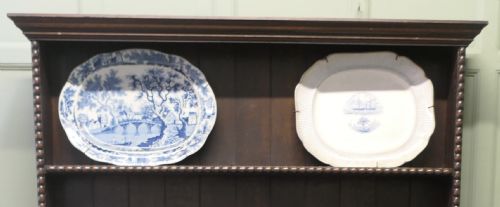
Surviving serving vessels display diverse subjects from classical ruins to botanical patterns and naval battles.
Spode·John Rogers and Son·Copeland and Garrett·Minton·Thomas Lakin·Don Pottery·Davenport·Elkin Knight and Bridgwood·Mason's Ironstone
The White Earthenware Meat Platter Glossary
- Pearlware
- An early refined earthenware body developed by Josiah Wedgwood, characterised by a faint bluish tint in the glaze where it pools in recesses.
- Transferware
- A pottery decoration technique where a design is printed from an engraved copper plate onto tissue paper and then rubbed onto the unglazed ceramic surface.
- Well and tree
- A clever platter design featuring carved channels and a central well that directs meat juices away from the joint during carving.
- Meat drainer
- A perforated ceramic insert that sits inside the platter to lift the joint clear of accumulated juices.
- Ironstone
- A dense, heavy semi-vitreous earthenware patented in the nineteenth century for its exceptional durability and resistance to chipping.
White Earthenware Meat Platter: Frequently Asked Questions
How were meat platters used?
These large serving dishes held roasted joints of beef, lamb, or poultry at the dining table, presenting the main course before carving. Their generous proportions accommodated family-sized portions during nineteenth-century feasts.
Many examples included integrated wells and drains to catch carving juices, keeping the meat elevated and the table linen clean during service.
How do I care for my platter?
Wash the ceramic surface gently by hand using mild soap and warm water, avoiding harsh scouring pads that can dull the historical glaze. Modern dishwashers should be avoided entirely to protect the underglaze transfer printing from fading.
Display the platter securely using appropriate plate hangers or stand it safely on a sturdy sideboard where it bears no undue weight.
What is a meat drainer?
A meat drainer is a pierced ceramic plate designed to sit snugly inside the well of a larger platter. It kept roasted meat elevated so that fats and juices could run down into the lower reservoir.
Finding a platter that retains its original matching drainer is unusual, as these separate ceramic inserts were easily separated or broken over decades of use.
How do I date a transferware platter?
Dating relies on identifying the pottery maker's mark stamped or printed on the reverse, alongside stylistic clues in the border designs and pictorial motifs. Early nineteenth-century pieces often feature pearlware bodies and romantic pastoral scenes.
Later Victorian platters tend to use heavier ironstone bodies and feature geometric or architectural borders surrounding topographical views.