



Vintage Ceramic Turkey Platter
A vintage ceramic turkey platter brings scale and traditional presence to the table, and the pieces listed here offer robust nineteenth century service.
Vintage Ceramic Turkey Platter
When you search for a vintage ceramic turkey platter, you find large serving vessels designed for family dining and substantial joints of meat. These pieces date from the nineteenth century, including specific years such as eighteen-eighty and eighteen-ninety alongside broader nineteenth century examples.
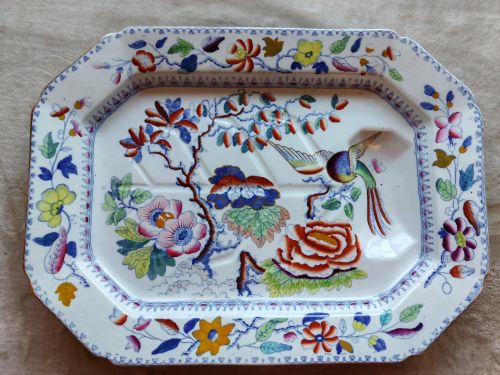
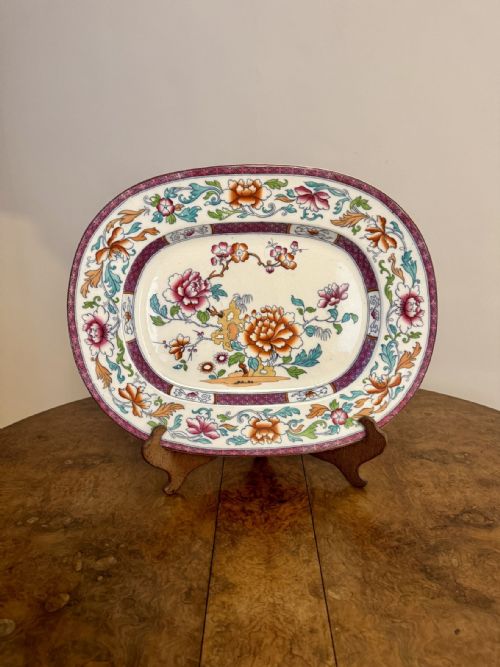
The forms on this page include large meat platters, serving dishes, and heavy plates designed to hold heavy loads. Many examples display blue and white transfer printing, whilst others show Victorian Chinoiserie styles and Chinese Garden patterns.
Buyers meet Victorian earthenwares and ironstone bodies that were made for heavy household use. These large serving pieces remain practical centrepieces for modern dining tables.
How they were made
Potters shaped these large serving platters from earthenware and dense ironstone bodies. Ironstone provided the structural strength needed for heavy nineteenth century service.
Decorators applied blue and white transfer print designs and cobalt pigments beneath a lead glaze. Enamel colours were sometimes added over the glaze to build up patterns like the Indian Grasshopper design.
Vintage Ceramic Turkey Platter Retail Price Guide 2026
Typical asking prices for vintage ceramic turkey platter among the pieces listed under this phrase on Sellingantiques today, from the lower quarter to the upper quarter. They describe what is for sale here now, not the wider market.
Listings feature nineteenth century earthenware and ironstone bodies decorated with cobalt pigment and blue and white transfer print.
What varies in quality
Quality in a vintage ceramic turkey platter rests upon the clarity of the transfer print and the crispness of the cobalt pigment against the white ground. Finer pieces maintain sharp pictorial detail across large surface areas without blurring in the pattern.
The weight and density of the ceramic body distinguish standard earthenware from superior ironstone. Stronger ironstone bodies resist crazing and support large platters without warping in the kiln.
Mason s Ironstone China
The Vintage Ceramic Turkey Platter Glossary
- Ironstone
- A dense, durable type of earthenware patented in the nineteenth century. It resists chipping better than standard pottery and forms a heavy base for large serving dishes.
- Transfer printing
- A decoration technique where an engraved copper plate transfers a design onto tissue paper, which is then pressed onto the ceramic body. This method allowed intricate patterns like Chinoiserie scenes to be repeated accurately.
- Cobalt pigment
- A metallic oxide used to produce deep blue decoration under the glaze. It withstands high kiln temperatures without fading.
- Chinoiserie
- A European style that reflects Chinese artistic motifs and garden landscapes. It appears frequently on nineteenth century blue and white meat platters.
- Lead glaze
- A glassy coating applied to pottery before firing to create a smooth, waterproof surface. It enhances the brightness of the underlying blue and white transfer print.
Vintage Ceramic Turkey Platter: Frequently Asked Questions
How big are these platters?
These serving pieces are described as large meat platters and heavy meat plates. They were built to hold substantial joints of meat for Victorian dining.
Their generous dimensions make them practical for modern festive dining and large gatherings.
What is ironstone china?
Ironstone is a hard, heavy ceramic material developed in the nineteenth century to imitate Chinese porcelain. It provides exceptional durability for large serving dishes.
Platters made from this material withstand frequent handling and heavy loads.
How do I date these pieces?
The listings span the nineteenth century, with specific dates including eighteen-forty, eighteen-fifty, eighteen-eighty, and eighteen-ninety. Stylistic clues like Victorian blue and white transfer printing help confirm this era.
Maker marks on the reverse can sometimes narrow down the exact decade of manufacture.
Can I use these for food?
These nineteenth century platters were originally designed as practical meat plates and serving trays for the dining table. Their glazed ceramic surfaces remain suitable for serving food.
Careful hand washing preserves the lead glaze and cobalt pigment over time.