

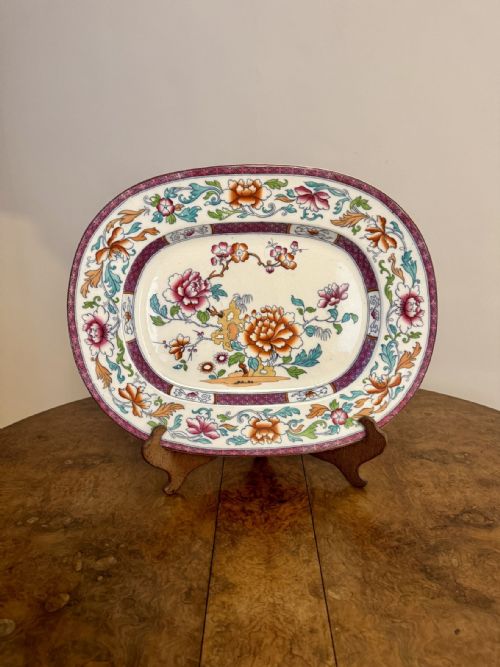
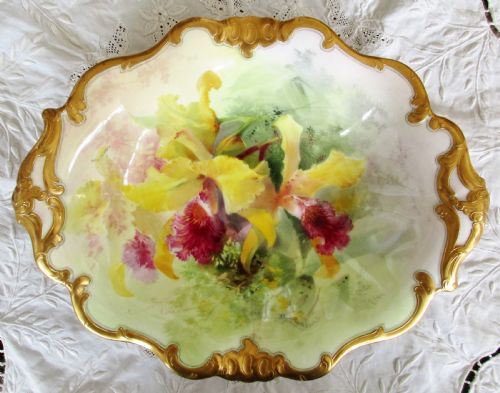


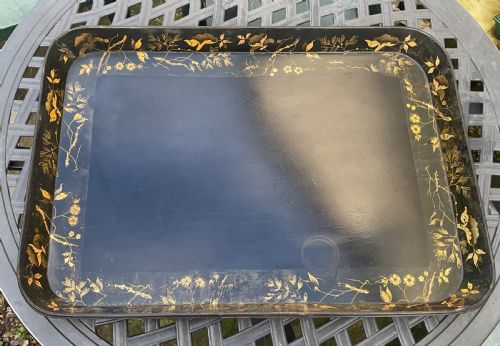

Victorian Floral Serving Tray
A victorian floral serving tray brings hand-painted botanicals and rich japanned grounds directly to the table.
Victorian Floral Serving Tray
A victorian floral serving tray unites the practical demands of nineteenth-century hospitality with delicate hand-painted or transferred botanical motifs. The listings on this page span the nineteenth century, including pieces from the Victorian era alongside Regency and Edwardian examples.
Materials and construction methods
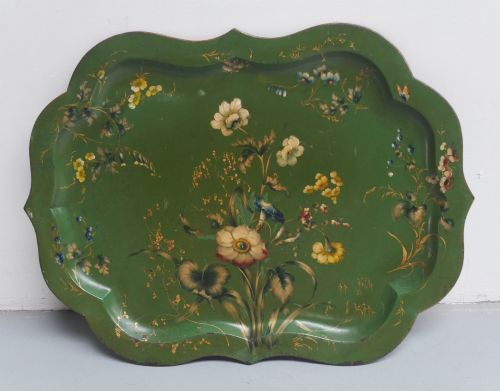
Papier-mâché pieces rely on layers of paper pulp and glue pressed over moulds, then finished with heavy black lacquer, gold leaf, and hand-painted floral details. Ebonised wood frames and stands often support these lightweight yet remarkably sturdy serving trays.
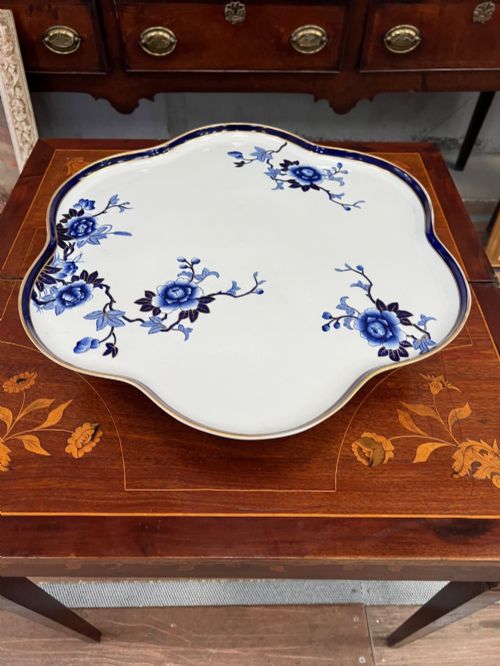
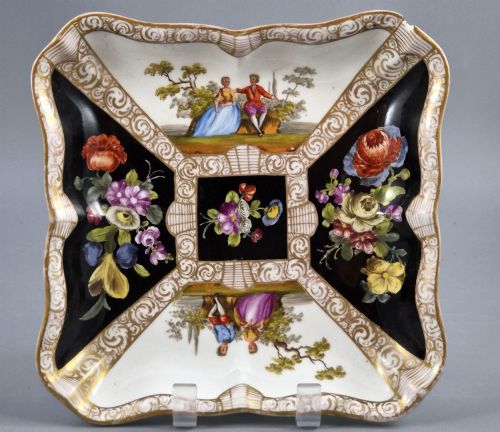
Ceramic platters and dishes employ traditional earthenware, ironstone, and porcelain bodies finished with rich glazes, underglaze blue transfers, or polychrome enamel painting. Silver-plated and toleware examples utilise metal bases shaped, engraved, and gilt-embellished by hand.
Victorian Floral Serving Tray Retail Price Guide 2026
Typical asking prices for victorian floral serving tray among the pieces listed under this phrase on Sellingantiques today, from the lower quarter to the upper quarter. They describe what is for sale here now, not the wider market.
Listings feature nineteen-century papier-mâché, earthenware, and silver plate alongside distinct decorative styles including Chinoiserie and Rococo Revival.
Distinguishing marks of quality
Quality reveals itself in the crispness of the hand-painting and the depth of the lacquer or glaze. Superior papier-mâché examples show meticulous brushwork in the floral and gilt embellishments without surface cracking across the black ground.
Finer ceramic platters and porcelain dishes display clear, sharp transfer printing or masterly hand-applied enamel colours with crisp factory marks underneath. The weight and balance of metal trays, alongside the preservation of original silver plating and engraving, separate standard wares from exceptional pieces.
Meissen·Royal Doulton·Minton·Carlton Ware·Walker & Hall·Royal Crown Derby·Elkin Knight & Bridgwood
The Victorian Floral Serving Tray Glossary
- Papier-mâché
- A composite material made from paper pulp mixed with glue and oil, then pressed and dried into sturdy shapes. It provides a smooth dark ground for lacquer and gilt decoration on serving trays.
- Toleware
- Painted or japanned metalware, usually iron or tinplate, decorated with colourful floral motifs and gilt highlights. Pontypool and similar workshops produced these durable household serving articles.
- Ashet
- A large oval or rectangular serving platter used for meat dishes at the dining table. This traditional Scottish and northern English term appears frequently in nineteenth-century ceramic listings.
- Chinoiserie
- European artistic interpretations of Chinese decorative styles, featuring pavilions, figures, and exotic flora. On trays, this style often combines with black ebonised papier-mâché and gilt work.
- Silver Plate
- A base metal such as copper or Britannia metal coated with a thin layer of silver. Many nineteenth-century presentation trays and platters use this technique to achieve the look of solid silver.
Victorian Floral Serving Tray: Frequently Asked Questions
How were these trays used in the nineteenth century?
These serving vessels carried tea services, wine decanters, or large meat joints between the kitchen and the dining room. Many acted as presentation pieces for formal hospitality or sat upon dedicated stands as permanent furniture.
Larger papier-mâché trays handled heavy loads of silver and porcelain during afternoon tea. Ceramic platters went straight to the dining table to serve roasted meats and game.
Can I use an antique tray for daily serving?
Most antique serving trays tolerate gentle daily use provided they receive careful hand-washing without harsh detergents. Papier-mâché and japanned surfaces require protection from standing water and extreme heat.
Ceramic platters and metal trays handle food service reliably well. Owners often display delicate papier-mâché trays on walls or stands to protect the original lacquer and gilt.
How do I tell papier-mâché from metal trays?
Papier-mâché feels remarkably light for its size and sounds dull rather than metallic when tapped lightly with a finger. It possesses a warm tactile quality compared to cold tinplate or iron.
Toleware and silver-plated trays exhibit the rigid weight and resonance of metal. Magnets will attract iron-based toleware but have no effect on papier-mâché or silver plate.
What distinguishes Victorian ceramics from Regency pieces?
Regency designs frequently draw on neoclassical motifs, crisp geometric borders, and restrained floral arrangements executed in refined earthenwares and early toleware. Colours tend towards stark contrasts and classical palettes.
Victorian pieces embrace exuberant floral studies, rich polychrome enamels, and heavy gilt embellishments across diverse materials like ironstone and papier-mâché. The botanical painting becomes far more naturalistic as the nineteenth century progresses.