

White Decorative Urn
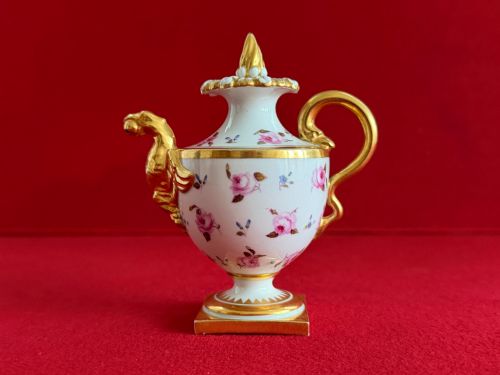
White decorative urn pieces bring classic elegance to interiors and gardens, offering timeless sculptural forms shaped in porcelain, cast iron, and earthenware across the nineteenth century.
White Decorative Urn
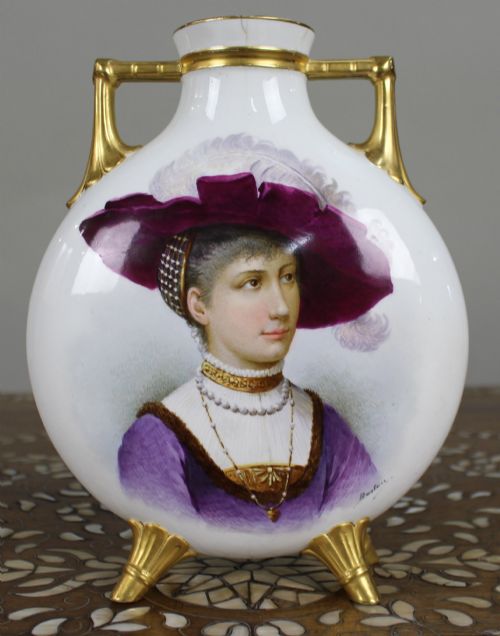
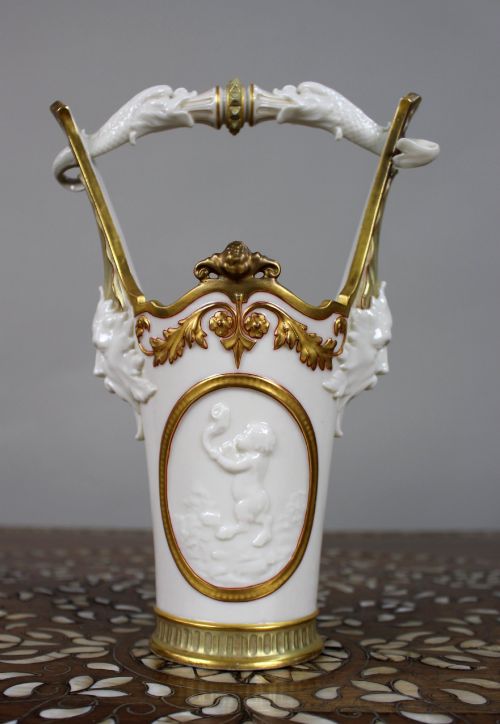
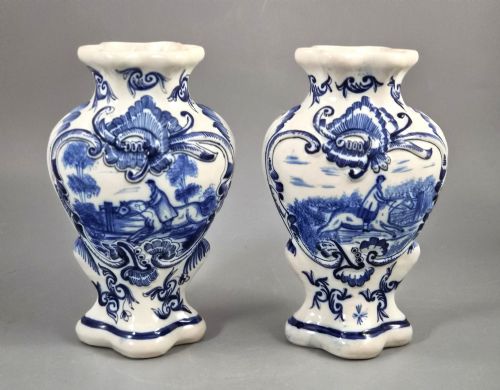
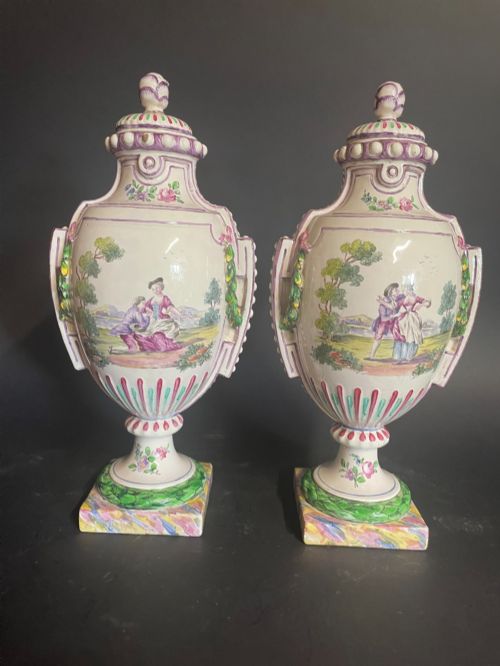
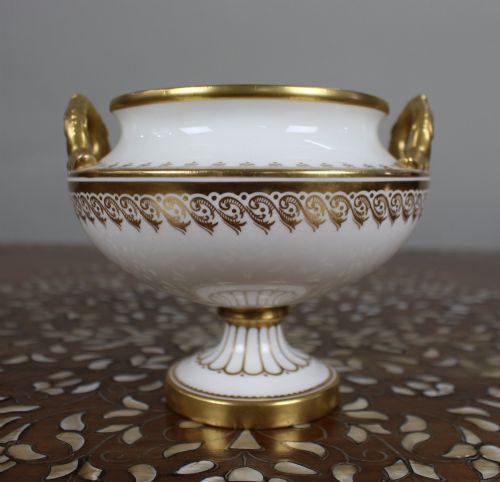
A white decorative urn encompasses sculptural vessels created for interior display and garden placement, drawing heavily on classical vocabulary. The selections span the nineteenth century, encompassing Victorian, Regency, and Neoclassical designs intended to serve as focal points.
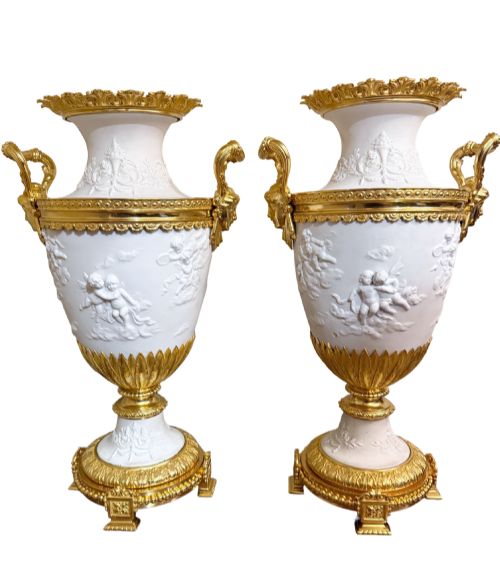
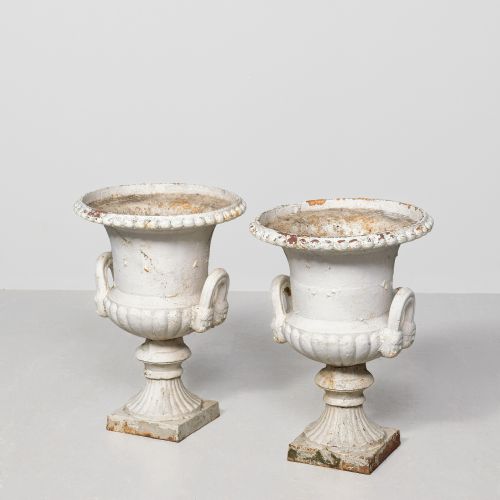
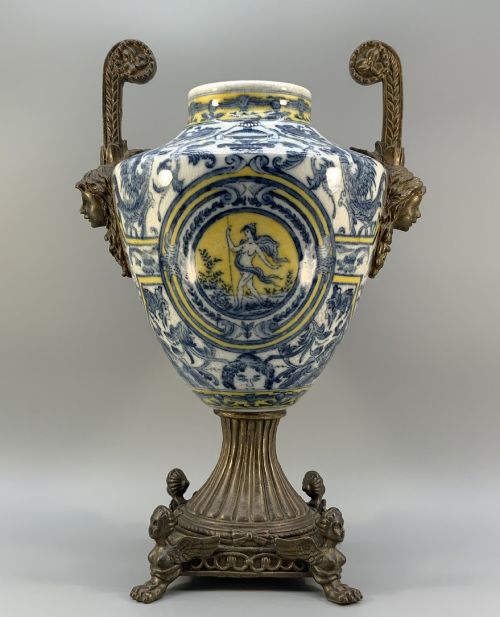
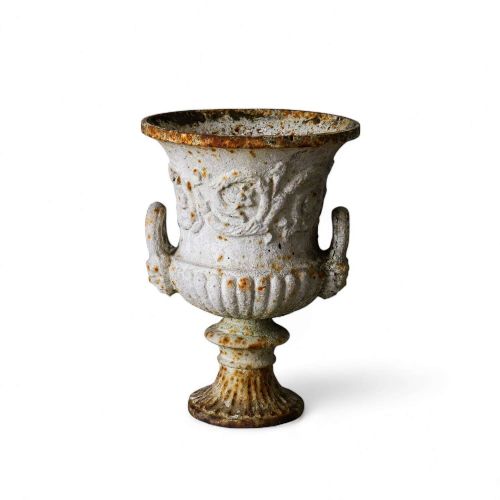
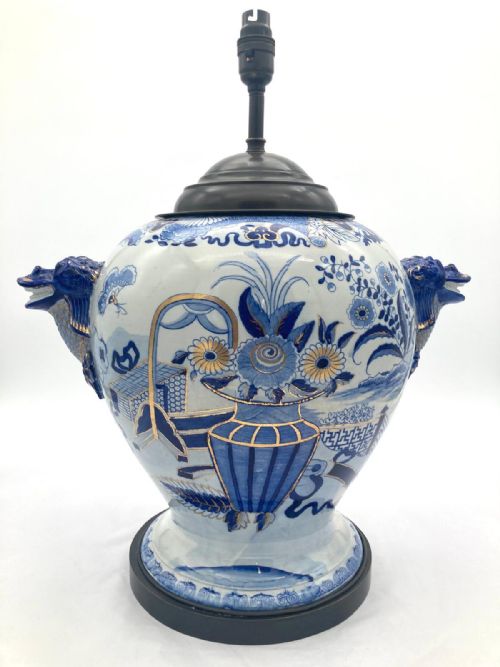
Most entries on this page present as ceramic vessels, porcelain vases, or cast iron garden urns featuring white glazes, enamel, or original painted surfaces. These range from interior cabinet pieces to large terrace ornaments.
Makers and factories represented include English porcelain works alongside French, Austrian, and Japanese manufacturers producing classical and revivalist forms. Buyers encounter two-handled Campana shapes, monumental pairs, and pedestal-mounted garden planters.
Materials and construction methods
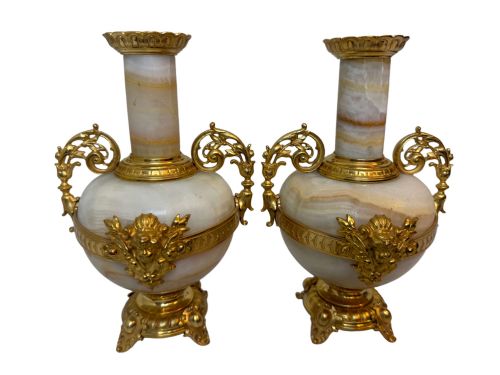
Ceramic pieces rely on porcelain, earthenware, and ironstone shaped on the wheel or cast in moulds, then finished with white glazes, hand painting, or gilding. Many porcelain items incorporate gilt bronze mounts or Ormolu additions.
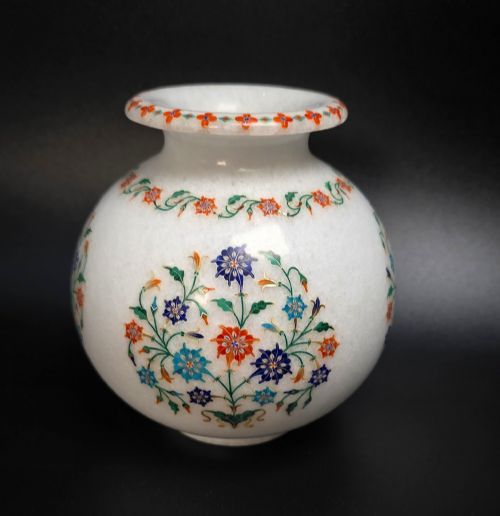
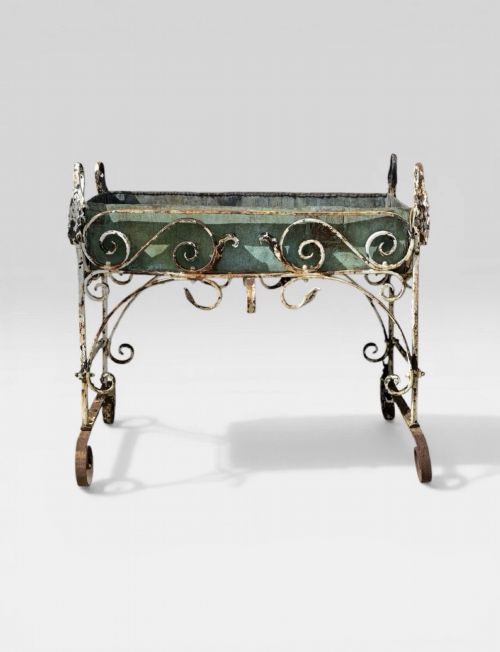
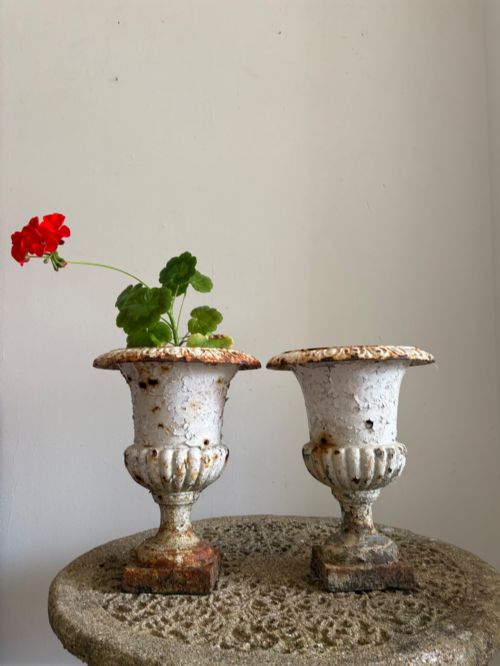
Cast iron garden urns utilise durable metal casting techniques, often finished with original paint or left with weathered surfaces suited to outdoor placement. Stone and marble variants incorporate intricate inlay or carved acanthus leaf details.
Decorative embellishments combine hand-applied gold leaf, enamel work, and applied bas-reliefs, reflecting periods from the Regency era through to the late Victorian phase.
Listings feature nineteenth-century materials including porcelain, cast iron, white onyx, and glazed earthenware.
Distinctions in craftsmanship
Quality rests in the crispness of the modelling, whether in the precision of porcelain bas-reliefs or the sharp casting of iron garden urns. Superior examples demonstrate careful hand-painting, refined gilding, and balanced proportions.
The integration of secondary materials defines the upper tier, such as finely chased gilt bronze mounts fitted precisely to porcelain bodies. Weathered cast iron pieces gain distinction from intact original surfaces and well-preserved structural integrity.
Flight Barr And Barr·Royal Worcester·Andrew Handyside·Hicks And Meigh·Moorcroft Macintyre
The White Decorative Urn Glossary
- Faience
- Tin-glazed earthenware produced in France and other European regions. This ceramic technique yields an opaque white surface suitable for hand-painted decoration.
- Bas-relief
- A sculptural technique where figures or ornamentation project slightly from a flat background. Wedgwood jasperware examples utilise this method to create white relief designs against contrasting fields.
- Ormolu
- Gilded bronze used for decorative mounts on nineteenth-century porcelain vessels. This material adds structural support and ornamental richness to table urns.
- Tazza
- A shallow saucer-like vessel mounted on a stem and foot. Victorian cast iron examples function as garden urns and planters.
White Decorative Urn: Frequently Asked Questions
Where should I place a white decorative urn?
Interior porcelain and earthenware versions suit side tables, mantelpieces, or pedestals as focal display items.
Cast iron and stone garden urns function effectively on terraces, patios, or framing garden pathways.
How do I distinguish Regency from Victorian urns?
Regency pieces often display strict Neoclassical restraint, drawing directly on ancient Greek and Roman models with clean lines and refined gilding.
Victorian examples frequently embrace revivalist exuberance, incorporating Rococo scrolls, heavier casting, and elaborate hand-painted floral or avian subjects.
Can cast iron garden urns remain outside year-round?
Cast iron offers robust durability for exterior use, enduring seasonal weather changes without structural failure.
Protected placement or sheltered winter storage helps preserve original painted surfaces and painted finishes.
What is the difference between an urn and a vase?
Urns typically feature a stemmed base and structural handles, following classical funerary or architectural vessel forms.
Vases encompass a broader category of open-topped containers designed primarily for holding flowers or standing alone as decorative objects.