



White China Ornaments
White china ornaments bring centuries of ceramic artistry into your rooms, offering everything from pastoral figures to Staffordshire dogs.
White China Ornaments
White china ornaments encompass figures, fairings, animals and allegorical groups produced across the eighteenth and nineteenth centuries. When you search for white china ornaments, you encounter pieces moulded in soft-paste porcelain, earthenware and biscuit porcelain from English, German and French factories.
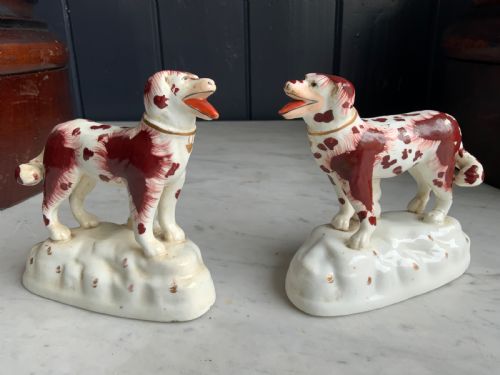
The selection on this page leans heavily towards Victorian Staffordshire dogs, alongside eighteenth-century Bow and Derby figures. Makers across Europe rendered these decorative objects in plain white glaze, sometimes touched with gilt, enamel or gold leaf.
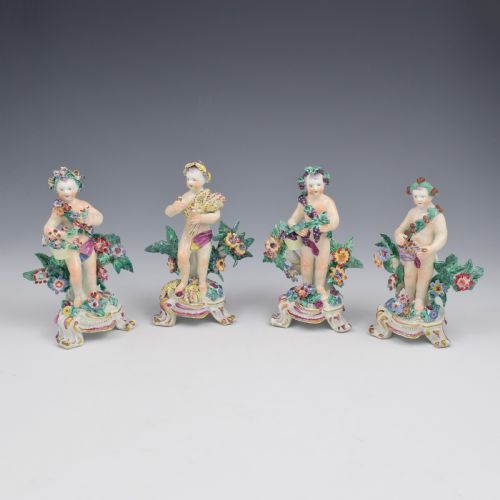
Forms range from seated spaniels and ceramic cows to allegorical representations of the seasons, elements and continents. These figures served purely to decorate the mantelpiece and parlour, capturing the tastes of Regency, Victorian and Edwardian households.
How they were made
Potters shaped these ornaments using soft-paste porcelain, earthenware, and biscuit porcelain, applying a smooth glaze over the ceramic body. Many nineteenth-century Staffordshire dogs and continental figures received an overall white glaze, whilst earlier eighteenth-century pieces from factories like Bow utilised soft-paste porcelain bodies.
Decoration often remained minimal to highlight the white ceramic surface, though certain pieces incorporate enamel painting, gilt highlights or gold leaf details. Biscuit porcelain, fired without a glossy glaze, provided a matte finish favoured by French manufactories like Chantilly for sculptural figures.
Listings span the eighteenth, nineteenth and early twentieth centuries, featuring earthenwares alongside soft-paste and biscuit porcelains.
What varies in quality
The purity of the glaze and the precision of any applied gilding or enamel work further separate standard production from superior output. Early eighteenth-century porcelain figures demonstrate greater sculptural ambition and potting skill than mass-produced late Victorian earthenwares.
Bow Porcelain·Royal Worcester·Triebner Ens And Eckert·Chantilly·Beswick
The White China Ornaments Glossary
- Soft-paste porcelain
- An artificial ceramic composition fired at lower temperatures than hard-paste porcelain. English factories utilised this material extensively in the eighteenth century before adopting bone china.
- Biscuit porcelain
- Unglazed ceramic fired once to create a matte, porous finish resembling marble. French manufactories favoured this technique for sculptural figures.
- Fairing
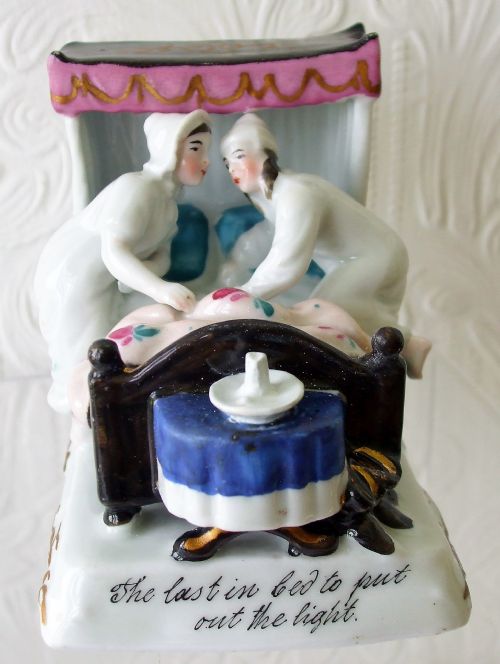
- A small, humorous ceramic ornament produced in Germany during the nineteenth century. These pieces typically depicted domestic scenes with narrative titles along the base.
- Putto
- A plump, unwinged male infant depicted in classical art and porcelain figures. Eighteenth-century allegorical sets frequently employ putti to represent seasons or elements.
- Gilt
- A thin layer of gold applied to ceramic surfaces for decoration. Makers used gold leaf or liquid gold highlights to accent collars, bases and drapery.
White China Ornaments: Frequently Asked Questions
Where were Staffordshire dogs placed?
Victorian households traditionally placed pairs of Staffordshire spaniels on either side of the fireplace mantelpiece. Owners often turned the dogs so they faced inward toward each other, mimicking real pets guarding the hearth.
Beyond the mantel, these pottery dogs sat proudly on sideboard tops and parlour windowsills. Their primary role was domestic decoration rather than practical use.
What is biscuit porcelain?
Biscuit porcelain is ceramic ware fired in a kiln without any glossy glaze applied to the surface. This leaves the material with a smooth, chalky, matte finish that closely resembles carved marble.
European factories utilised this technique for classical and pastoral figures where sculptural detail mattered more than a shiny finish. The porous nature of biscuit porcelain means it stains easily if handled with dirty hands.
How do I date an antique figure?
Examine the weight, material and base of the piece to determine its era of production. Eighteenth-century figures often utilise soft-paste porcelain with unglazed foot rims, whilst Victorian Staffordshire pieces employ heavier earthenware bodies.
Look for impressed factory marks, painted ciphers or specific style indicators such as Regency or Art Deco moulding. Comparing the modelling style with documented factory outputs helps narrow down the decade of manufacture.