




White Ceramic Wash Set
White ceramic wash set pieces are functional bedroom chamber arrangements designed for personal grooming before indoor plumbing became universal.
White Ceramic Wash Set
A white ceramic wash set comprises matching basins and jugs once placed upon bedroom washstands to provide water for morning ablutions. These sanitary services populate the domestic interior across the nineteenth century and into the Edwardian era, surviving in various regional forms.
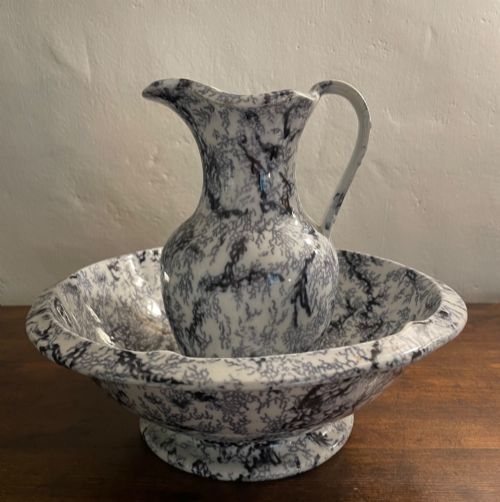
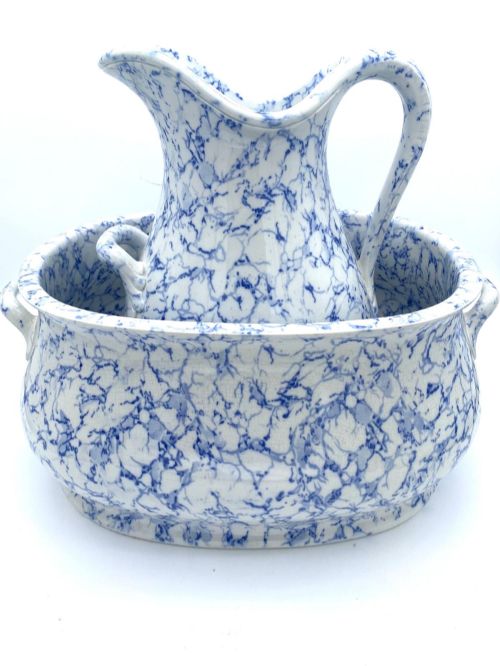
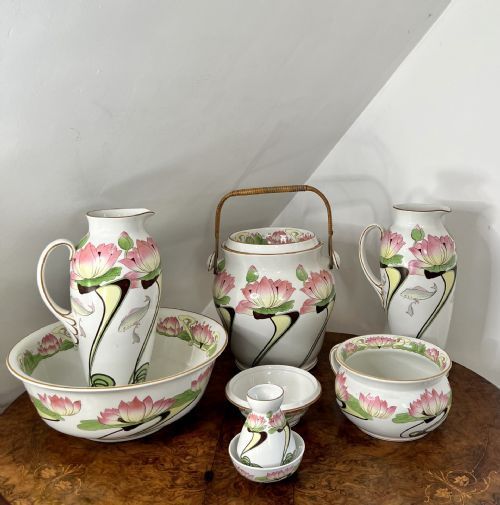
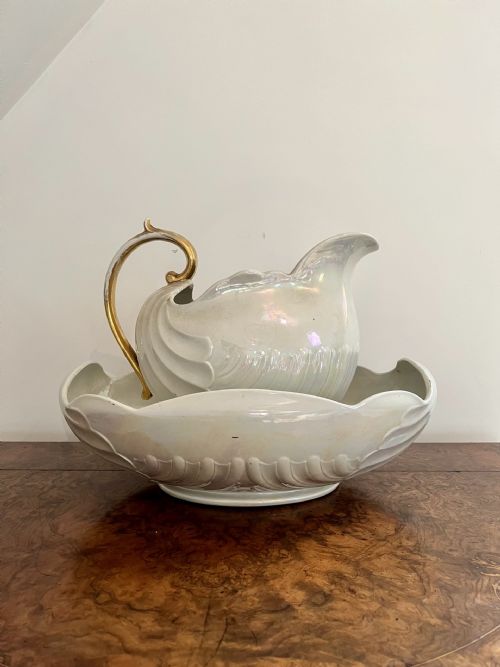
The selections here range from early pieces bearing Staffordshire flow blue patterns to later Edwardian bathroom sets and robust ironstone compositions. Buyers encounter jug and bowl sets alongside specialised items such as footbaths and large basins.
Victorian and Edwardian examples dominate the current selection, reflecting the peak period of elaborate bedroom porcelain production. Makers from Staffordshire potteries and prominent factories supply the underlying styles seen throughout the listings.
Materials and production methods
Potteries utilised earthenware, heavy ironstone, and porcelain bodies to form the substantial vessels required for daily use. These ceramic bases received opaque white glazes or transfer-printed decoration before undergoing high-temperature kiln firing.
Certain sets feature hand-painted or transferred patterns in blue and white, alongside details executed in enamel, gilt, or gold leaf. The combination of durable ironstone bodies and protective glaze allowed the ware to withstand constant exposure to water.
Listings feature earthenware, ironstone, and porcelain pieces spanning the nineteenth century and the Edwardian era.
Evaluating quality and design
Quality rests upon the crispness of the ceramic moulding, the evenness of the white glaze, and the precision of any applied decoration. Finer sets display balanced proportions between the large basin and its corresponding jug, alongside sophisticated handle and rim modelling.
The reputation of the producing pottery influences the distinction of a set, with established factories achieving cleaner finishes and more refined bodies than smaller regional potteries. Intricate patterns or supplementary gilding elevate standard utilitarian ware into decorative display pieces.
Minton·Masons·Doulton Burslem·Shelley
The White Ceramic Wash Set Glossary
- Ironstone
- A dense, heavy ceramic developed to resist chipping and cracking during daily domestic service. This durable material formed the foundation for many nineteenth-century sanitary wares.
- Flow Blue
- A cobalt blue transfer-printing technique where the colour blurred slightly into the white glaze during firing. This chemical reaction created a misty, painterly effect popular in Victorian ceramics.
- Washstand
- A dedicated wooden piece of furniture designed to hold the basin, jug, and accessories of a toilet service. These stands typically featured marble tops or splashbacks to protect surrounding walls.
- Earthenware
- A porous pottery body fired at lower temperatures than porcelain and glazed to achieve impermeability. Most nineteenth-century bedroom ceramics utilised this versatile material.
- Footbath
- A deep, oblong vessel belonging to a larger sanitary or bathing arrangement rather than standard washware. These expansive pieces accommodated lower-body washing before the widespread installation of fixed bathtubs.
White Ceramic Wash Set: Frequently Asked Questions
How do I date a white ceramic wash set?
Dating relies upon stylistic markers, ceramic body weights, and factory backstamps pressed or printed into the base of the pottery. Early nineteenth-century pieces often feature heavier earthenware bodies and distinct transfer-printed motifs.
Later Edwardian sets typically show lighter construction and brighter white glazes. Comparing the shape of the jug handle and the rim profile against known period examples helps narrow the production era.
Were these sets used for washing?
These ceramic vessels served as the primary means of personal washing in bedrooms before plumbed bathrooms became standard in houses. Water was heated elsewhere and brought up in the large pitcher for use at the washstand.
Basins collected the used water until the set was emptied into slop pails. Despite their practical origins, many fine sets also functioned as decorative bedroom furnishings.
Can I use these sets in a modern bathroom?
These antique ceramic pieces adapt well to modern bathrooms as decorative display items, umbrella stands, or towel holders. Their robust ironstone and earthenware construction handles dry storage without difficulty.
Placing antique ceramics directly against running water requires caution due to potential historic hairline fractures or sensitive glazes. Many collectors prefer to exhibit them on open shelving or washstands.
What is the difference between ironstone and porcelain?
Ironstone is a heavy, opaque vitreous pottery designed for durability in heavy domestic service. It resists chipping and provides a sturdy body for large wash jugs and basins.
Porcelain is a finer, thinner ceramic material that often transmits light through the body when held to a source. Victorian wash sets more commonly utilise ironstone or heavy earthenware for practical strength.