


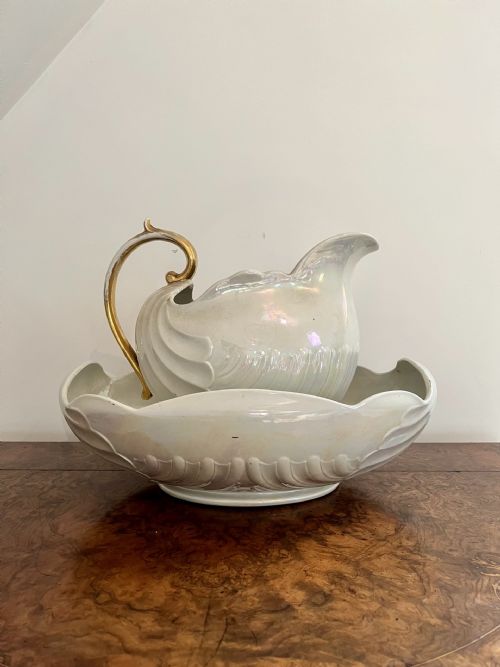
White Ceramic Wash Pitcher
A white ceramic wash pitcher is a sturdy utilitarian vessel designed for the washstand, prized for its generous scale and crisp glaze.
White Ceramic Wash Pitcher
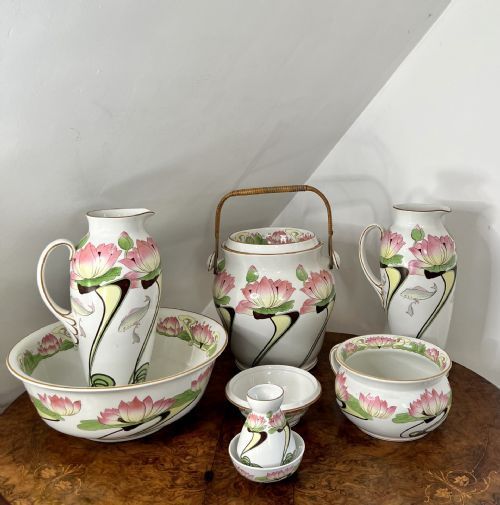
A white ceramic wash pitcher forms the central vessel of a traditional washstand set, built to hold ample water for morning ablutions. These pieces date across the Georgian, Victorian, and Edwardian periods, often appearing alongside a matching basin as part of a complete bedroom suite.
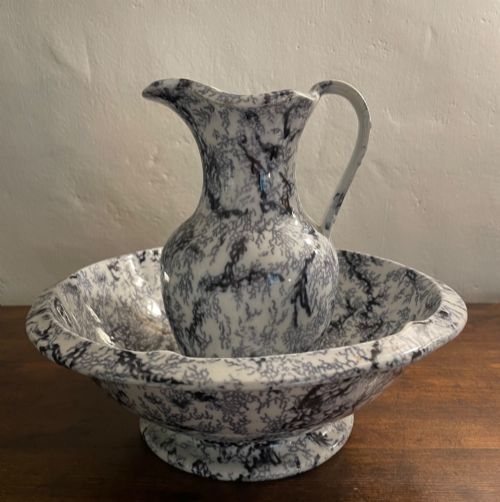
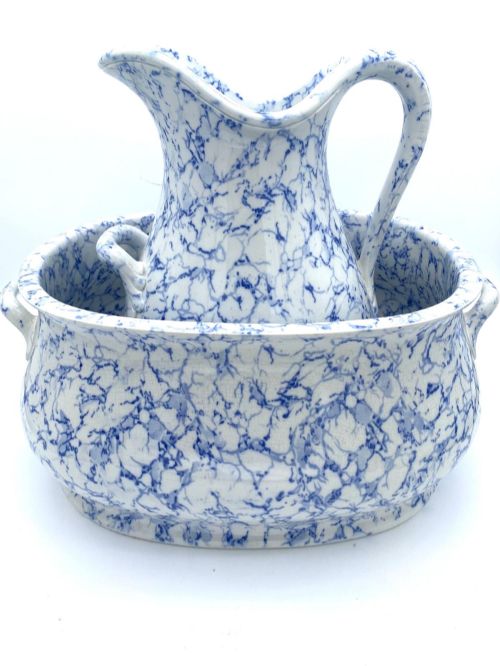
The versions most commonly met on this page span the nineteenth and early twentieth centuries, rendered in robust earthenware, ironstone, or porcelain. They range from plain utilitarian bodies to richly decorated examples featuring blue and white transfer printing or marble patterns.
Materials and technique
Potters shaped these large vessels from dense bodies like ironstone and earthenware, ensuring the walls were thick enough to withstand daily handling. Glaze was applied across the ceramic surface to create a waterproof barrier essential for holding water.
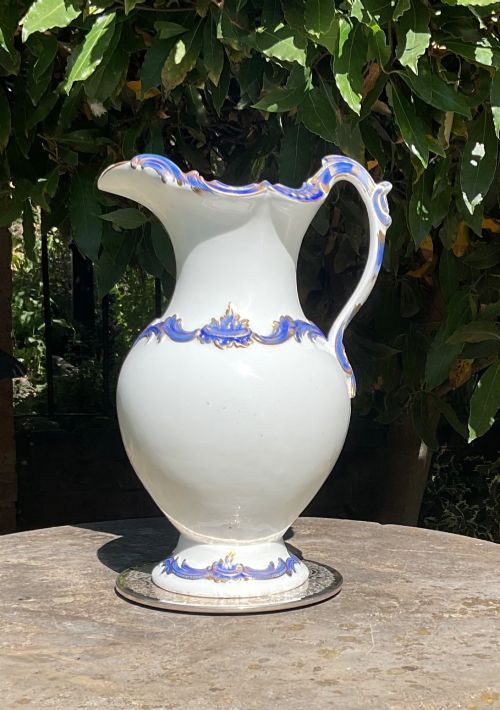
Decoration often involved transfer printing, such as flow blue or classical patterns, applied beneath the glaze before final kiln firing. Some refined examples incorporated hand-painted details or touches of gold leaf and gilt.
Several pitchers even arrived bearing portraits of Victorian gentlemen named John Baley.
Evaluating quality
The distinction between ordinary utility wares and finer examples lies in the crispness of the ceramic moulding and the weight of the body. Ironstone and porcelain versions demonstrate greater durability and a finer finish than standard earthenware.
Superior pieces display clarity in their transfer-printed or hand-painted patterns, alongside an even, unblemished glaze. The balance of the handle and the clean line of the pouring spout also distinguish high-grade examples from mass-produced domestic ware.
Minton·Masons·Doulton Burslem·Shelley·Spode
The White Ceramic Wash Pitcher Glossary
- Ironstone
- A dense, durable type of earthenware patented in the nineteenth century. It resists chipping better than standard pottery, making it ideal for heavy kitchen and bathroom vessels.
- Flow blue
- A nineteenth-century transfer printing technique where cobalt blue ink bled slightly into the glaze during firing. This produced a soft, misty outline prized for its decorative depth.
- Earthenware
- Porous pottery fired at a lower temperature than stoneware or porcelain. It requires a complete glaze to become entirely waterproof.
- Transfer printing
- A method of applying intricate designs to ceramics by engraving a copper plate and transferring the ink onto paper. The paper was then pressed onto the unfired or biscuit ceramic body.
White Ceramic Wash Pitcher: Frequently Asked Questions
What is a wash pitcher used for?
A wash pitcher served as the primary water container on a bedroom washstand before plumbed bathrooms became common. It held water for washing hands and face when paired with a matching basin.
Today, these pitchers find new life as decorative display items or large vases for dried and fresh botanical arrangements.
How do I date a wash pitcher?
Dating relies upon examining the ceramic body, the style of the handle, and any maker's marks stamped or printed on the base. Earlier pieces from the Georgian era often feature heavier earthenware bodies, while Edwardian examples display lighter proportions.
Transfer print patterns and colour palettes also provide strong clues to the decade of manufacture. Consulting pottery registration marks helps narrow down the precise production year.
Are these pitchers waterproof?
Most glazed ceramic and ironstone pitchers retain their waterproof qualities and can hold water safely. However, older earthenware pieces with hairline cracks should be treated with care.
It is wise to test the pitcher with cold water on a protected surface before using it as a flower vase.
How should I clean my pitcher?
Warm water and mild soap applied with a soft cloth are sufficient for cleaning glazed ceramic surfaces. Avoid harsh scouring pads that can scratch the vintage glaze or wear away gilt accents.
Limescale inside the vessel can be gently treated with diluted vinegar, followed by a thorough rinse.