


White Blue Earthenware Urn
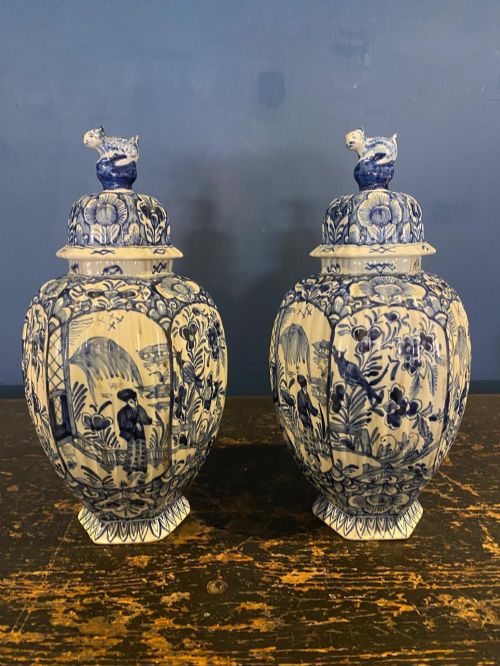
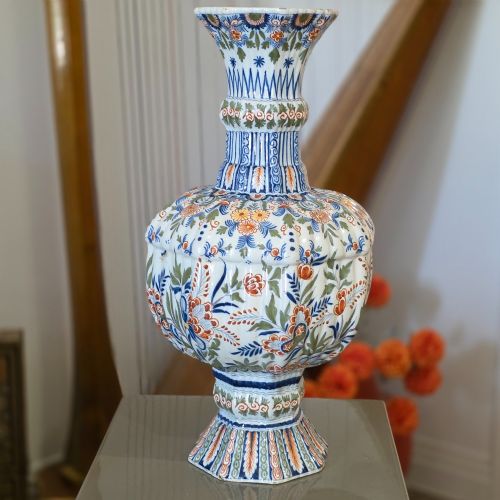
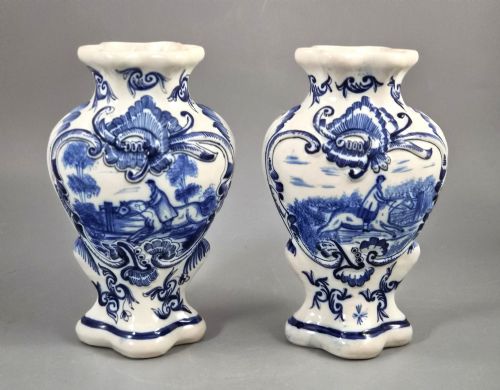
A white blue earthenware urn brings classical proportion and crisp cobalt decoration into a room.
White Blue Earthenware Urn
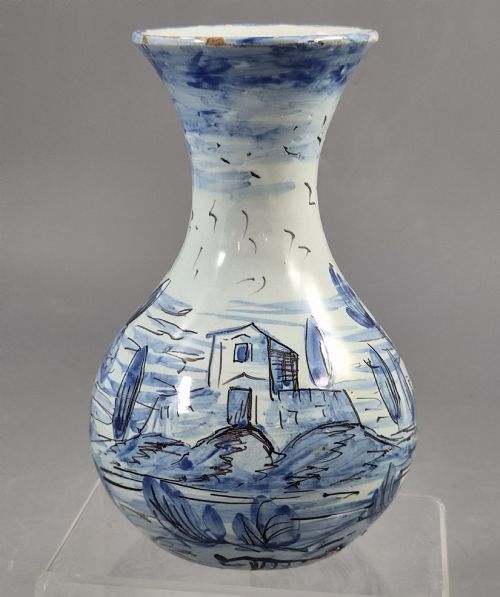
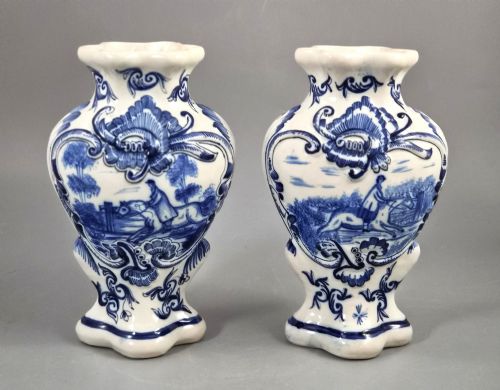
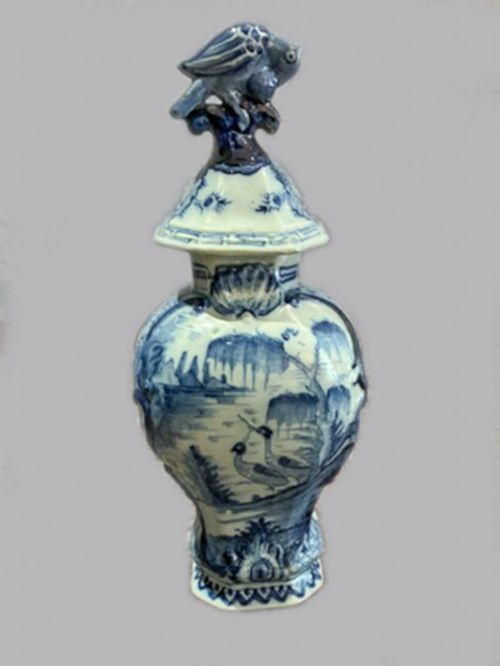
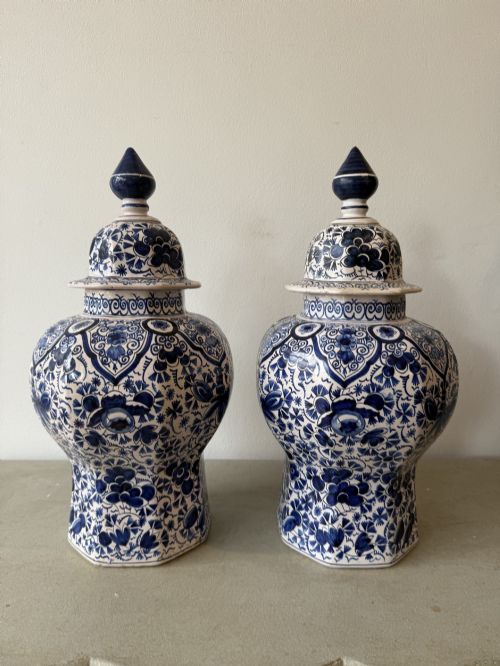
A white blue earthenware urn sits among a rich variety of vessels, including garden planters, lidded jars, baluster vases, and converted table lamps. Buyers searching for a white blue earthenware urn will encounter numerous examples originating from Dutch workshops, French faience potteries, and Italian kilns.
The objects span multiple centuries, stretching from seventeenth-century productions to twentieth-century revivals. Lidded versions and tall beaker vases appear frequently alongside grand garden vessels and smaller cabinet pieces.
How they were made
Potters shaped the body from ceramic earthenware, often applying a tin glaze to produce an opaque white surface suitable for painting. Artisans then brushed cobalt blue pigments directly onto the unfired or fired glaze before a final kiln firing.
Makers utilised traditional throwing and moulding techniques to achieve ribbed bodies, handled forms, and fitted lids. Brass elements sometimes augmented the ceramic structures, particularly in mounted pieces or fitted lamps.
Listings feature earthenware and ceramic materials decorated in tin-glaze across periods spanning the seventeenth to the twentieth century.
What varies in quality
The clarity and depth of the cobalt painting distinguish superior vessels from simpler productions, with fine hand-painted birds, florals, and Chinoiserie scenes showing remarkable brushwork control. The smoothness of the tin glaze and the crispness of moulded details, such as ribbed panels or applied handles, also indicate the skill of the original workshop.
Proportion and scale play significant roles in the presence of an urn, where larger balanced forms command attention more successfully than cramped or distorted shapes. The fidelity of period revival styles to their seventeenth- or eighteenth-century prototypes further marks the ambition of the maker.
Cantagalli·Fourmaintraux-Courquin
The White Blue Earthenware Urn Glossary
- Earthenware
- A porous pottery body fired at lower temperatures than stoneware or porcelain. It requires a glaze, such as tin glaze, to hold liquids and provide a decorative surface.
- Tin-Glaze
- A ceramic glaze made opaque by the addition of tin oxide. This milky white coating provides the classic background for blue painted decoration.
- Baluster
- An architectural form featuring a swelling lower portion tapering towards a narrow neck. This shape appears frequently in tall decorative vases and lidded jars.
- Faience
- European tin-glazed earthenware produced in France and other regions outside Italy. Makers used this technique to emulate prized oriental porcelain and traditional Dutch wares.
- Chinoiserie
- European artistic style reflecting Chinese motifs and landscapes. Artisans painted these imaginative scenes in blue on white ceramic vessels.
White Blue Earthenware Urn: Frequently Asked Questions
How do I date an old urn?
Examining the ceramic body, glaze consistency, and painting style helps determine the approximate period of manufacture. Earlier pieces often exhibit subtle irregularities in the tin glaze and hand-mixed cobalt pigments.
Comparing the form and decorative motifs against known historical examples from Dutch or French workshops provides further chronological context.
Are these urns waterproof?
Many tin-glazed earthenware vessels are porous due to the lower firing temperatures of the clay body. Using a waterproof liner inside protects the interior from moisture.
Garden urns and planters were designed for robust outdoor or indoor display, but antique indoor vases are best kept dry.
Where should I display my urn?
Grand garden urns and large lidded jars suit prominent spaces such as entrance halls or garden rooms. Smaller cabinet vases and posy vessels look effective on sideboards and mantelpieces.
Placing the piece where natural light illuminates the blue and white glaze enhances the visual detail.
What is the difference between Delft and faience?
Delft refers specifically to tin-glazed earthenware made in the Dutch town of Delft, renowned for its distinct blue and white palette. Faience is the broader French and European term for the same tin-glazing technique.
Both traditions produced similar decorative vessels, drawing inspiration from imported oriental ceramics.