
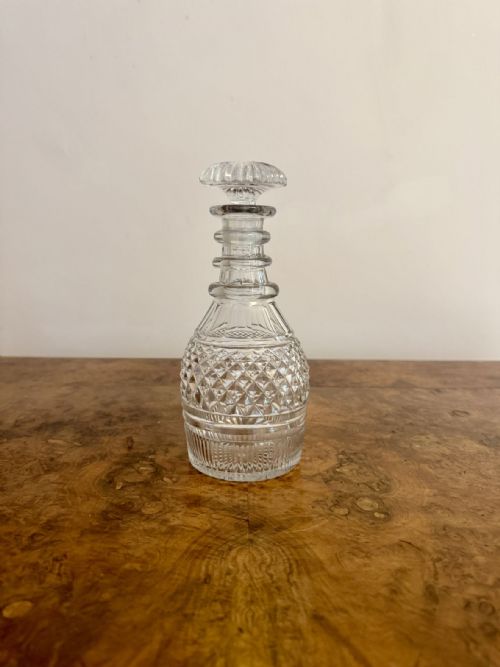
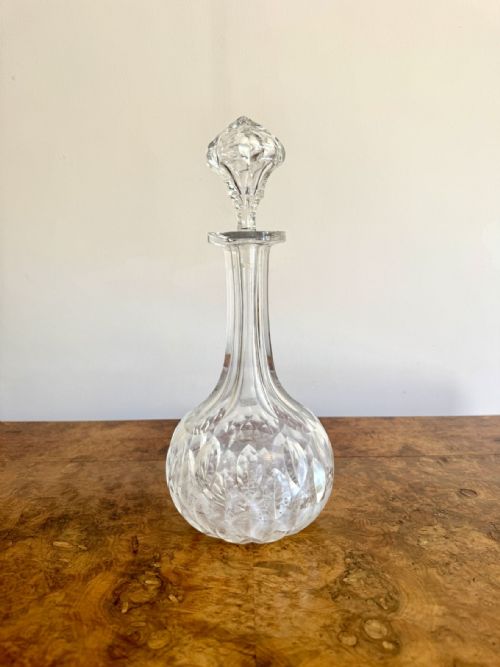


Whisky Decanter Glass Stopper
A whisky decanter glass stopper secures the spirit within antique lead crystal vessels shaped across the Victorian and Edwardian decades.
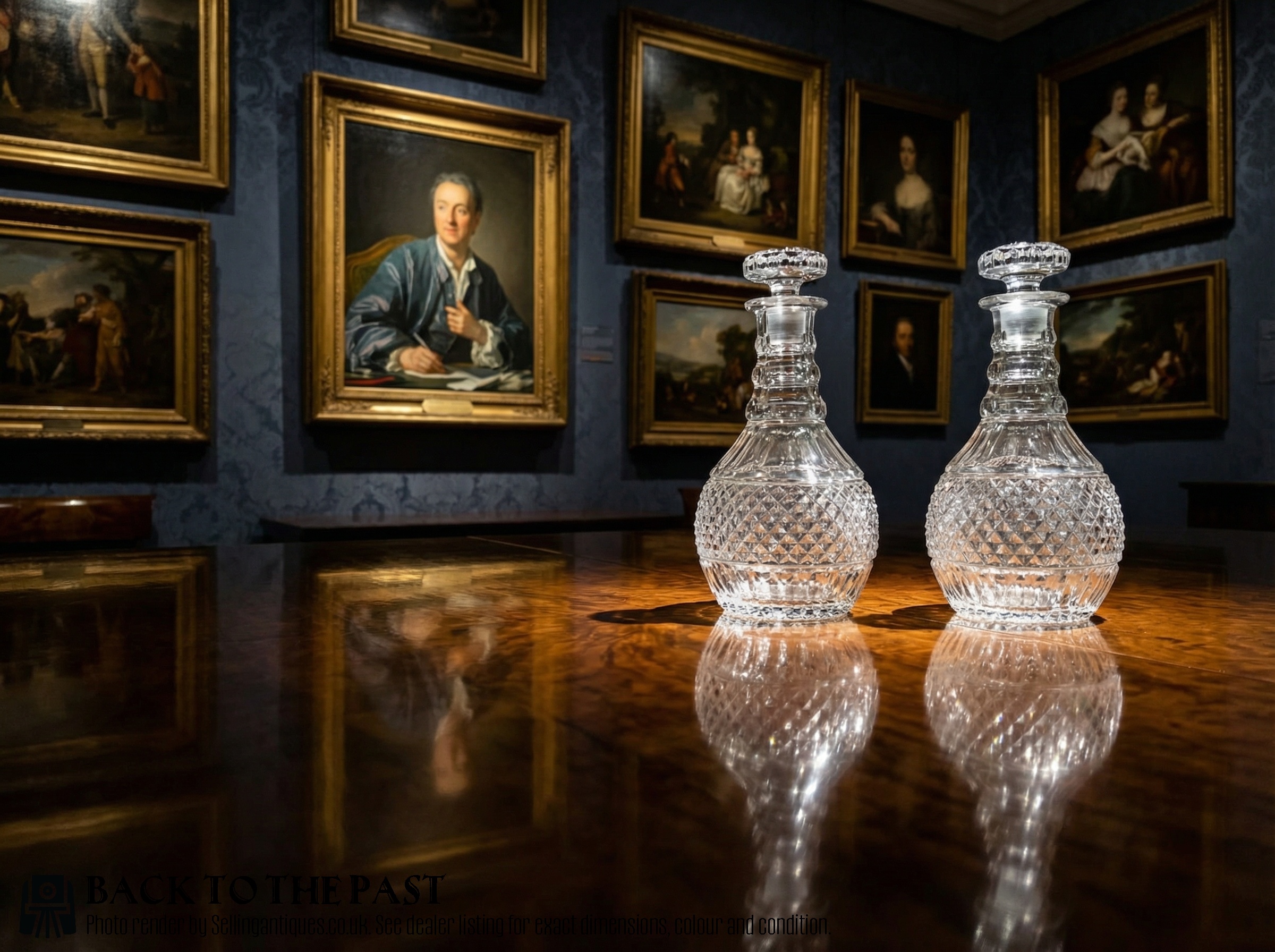
Whisky Decanter Glass Stopper
A whisky decanter glass stopper completes vessels designed for holding spirits during the nineteenth and early twentieth centuries. These items appear most frequently in Edwardian and Victorian forms, spanning clear glass, cut crystal, and coloured variations such as green or Bristol blue.
Makers and manufacturers produced shapes ranging from bell-shaped and hourglass profiles to novelty thistle designs and Scottish spirit bottles. Many retain their original matching stoppers, which fit snugly into the neck to preserve the contents.
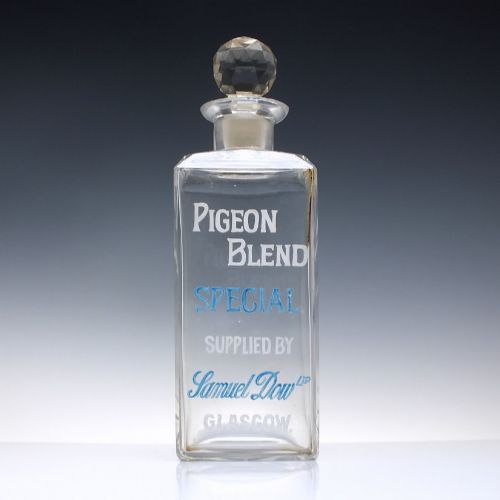
The selection includes English and Scottish examples, often augmented by sterling silver collars, hallmarked mounts, or hand-painted enamel lettering denoting specific blends. Buyers encounter single bottles alongside matched pairs originating from the Georgian period through to the George V era.
Materials and construction
Craftsmen utilised heavy lead crystal and clear glass, shaping them through deep cutting, etching, or moulding to catch the light. Skilled hands formed profiles like the bell and hourglass, ensuring thick walls suitable for daily service on dining tables and sideboards.
Silversmiths added functional embellishments including sterling silver collars, mounts, and locking mechanisms by firms such as Hukin and Heath or Betjemann Brothers. Enamel painters decorated specific Scottish bottles with regional titles and brand lettering by hand.
Current listings feature pieces spanning the 1850s to the 1920s, incorporating Edwardian, Victorian, and Georgian styles.
Judging the standard
Distinctions in standard rest upon the crispness of the glass cutting, the weight of the lead crystal, and the presence of a matching original stopper. Deeper, sharper facets reflect greater proficiency in the glasshouse, whereas softer edges indicate mass production.
The inclusion of hallmarked sterling silver mounts or specialised enamelling elevates an ordinary bottle into a notable piece of barware. Overall balance, clarity of the metal without excessive cloudiness, and tight integration of metal collars dictate the upper tier.
Hukin and Heath·Betjemann Brothers
The Whisky Decanter Glass Stopper Glossary
- Stopper
- The glass plug fitting into the neck of a decanter to seal the contents. It is commonly cut to match the geometric patterns on the body.
- Lead crystal
- Glass containing metal oxides that increase refractive index and weight. This material allows for deeper, sharper facets than standard soda glass.
- Hallmark
- Official stamps struck into silver mounts indicating the assay office, standard of purity, and year of manufacture. These marks help date the collar independently of the glass.
- Mell decanter
- A specific bottle shape featuring a broad rounded base and tapering neck. Georgian examples often utilised this profile for whiskey and port.
- Decanter label
- A small tag suspended by a chain around the neck to identify the spirit within. They frequently accompany silver-mounted whisky jugs on this page.
Whisky Decanter Glass Stopper: Frequently Asked Questions
How do I know if the stopper is original?
An original stopper typically shares the exact cut crystal pattern, colour, and degree of wear found on the neck of the decanter.
Matching age patination inside the ground glass joint also indicates that the stopper has belonged to the bottle for generations.
What is a Mell decanter?
A Mell decanter is an eighteenth or nineteenth-century bottle style characterised by a globular body and a slender neck.
Craftsmen often utilised this profile for serving whiskey and other strong spirits directly at the table.
Can these decanters hold whisky today?
These vessels remain fully functional for serving and holding spirits provided the interior is clean and free from cloudiness.
Wash them by hand in warm water without harsh detergents to protect the historic glass and silver mounts.
How are silver collars marked?
Silver collars feature tiny stamped hallmarks that reveal the town of assay, the silver standard, and a date letter.
These tiny marks allow collectors to pinpoint the exact year the metal mount was added to the glass bottle.