


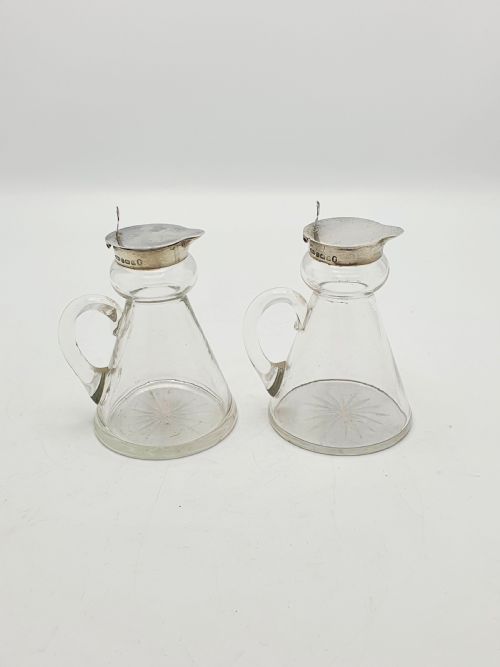

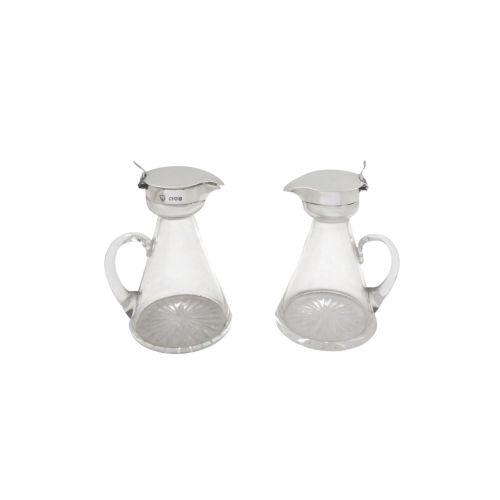


Barware Glass Decanter Pair
A barware glass decanter pair brings symmetry to a sideboard, offering matching vessels for spirits poured across the centuries.
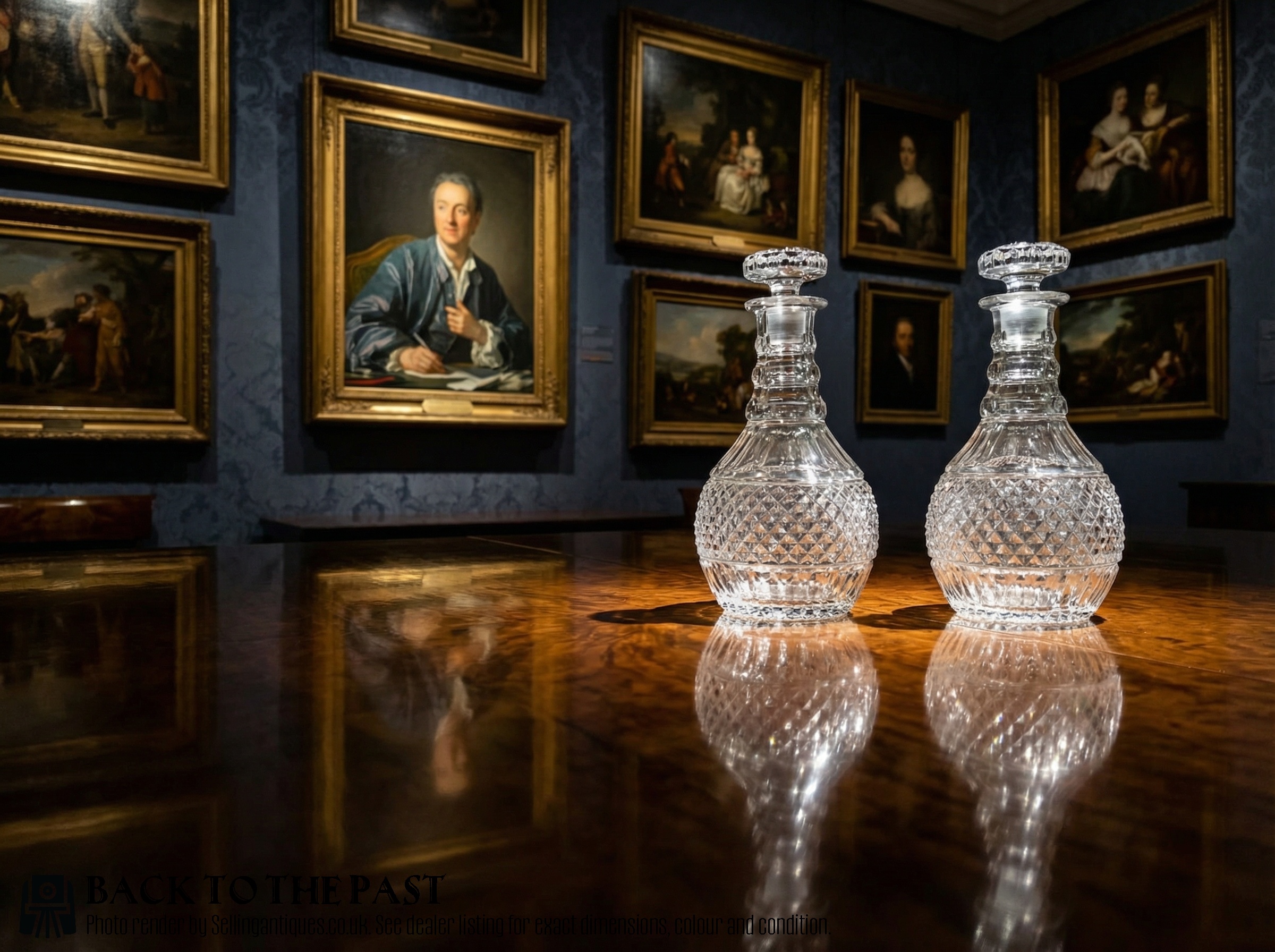
Barware Glass Decanter Pair
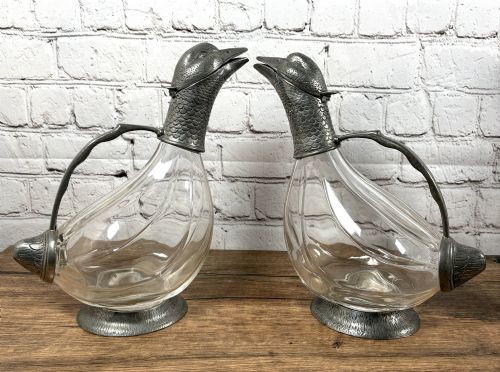
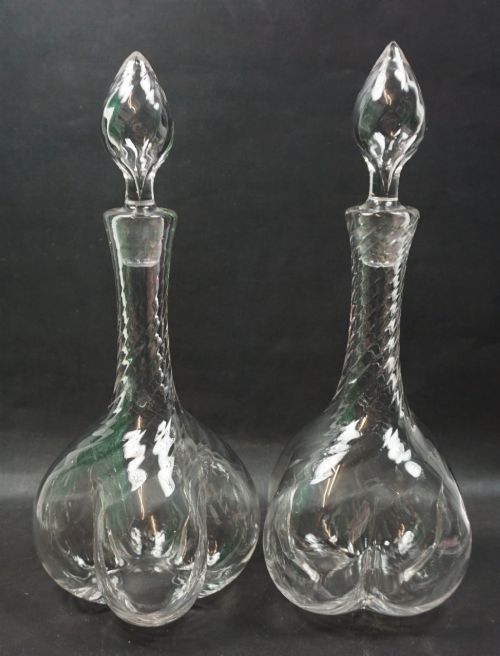
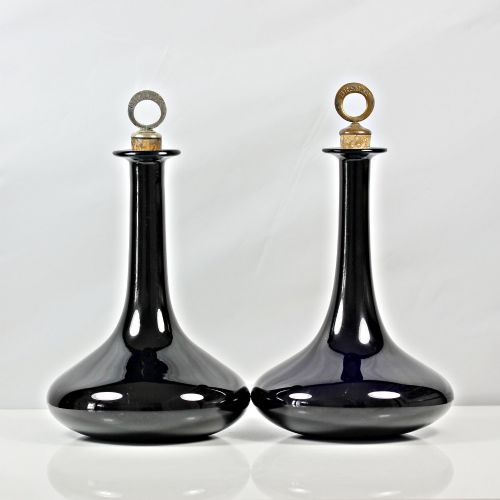
A barware glass decanter pair brings together matched vessels designed to hold wine, whisky, brandy, and liqueurs. When searching for a barware glass decanter pair, buyers encounter forms spanning Georgian, Victorian, Edwardian, and mid-century periods.
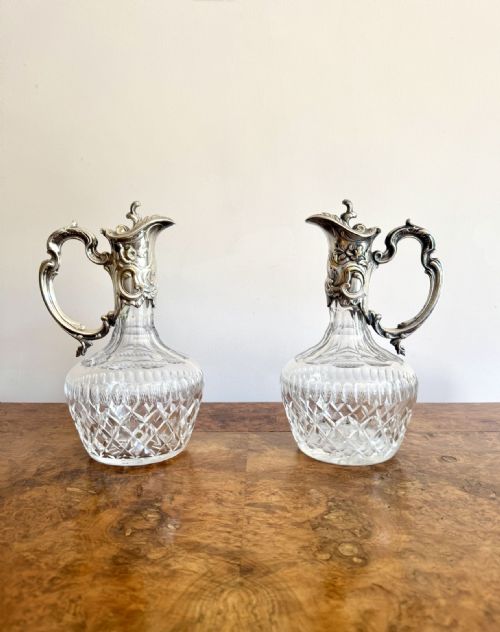
The selection on this page centres on glass and crystal vessels, often accompanied by sterling silver or silver plate mounts. Common shapes range from tall spirit decanters and mell forms to small whisky noggins and claret jugs.
Victorian and Edwardian cut glass examples dominate the current listings, alongside Georgian crystal and mid-century silver-mounted pieces. Buyers find pairs set with stoppers, some engraved with specific spirit names for the table.
Glass and metal craftsmanship
The bodies rely on glass, lead crystal, and cut crystal, formed through blowing and optical blowing techniques. Makers shaped the molten material before applying deep wheel cuts or delicate etchings to refract light across the surface.
Metal components introduce sterling silver and silver plate for collars, caps, handles, and mounts. These metal elements are secured to the glass necks, combining durability with functional pouring spouts.
Barware Glass Decanter Pair Retail Price Guide 2026
Typical asking prices for barware glass decanter pair among the pieces listed under this phrase on Sellingantiques today, from the lower quarter to the upper quarter. They describe what is for sale here now, not the wider market.
Listings feature pieces in Edwardian, Victorian, Georgian, and Mid-Century Modern styles, utilising cut glass, lead crystal, and sterling silver.
Clarity and weight
Quality rests in the weight of the metal and the purity of the glass or crystal. Heavy lead crystal exhibits sharper facet cutting and deeper resonance when struck than lighter standard glass.
The precision of the silver mounts and the original matching stoppers dictate the standing of a set. Well-fitted stoppers and crisp hallmarks on the silver indicate superior manufacture.
James Powell·Hukin & Heath·Mappin & Webb
The Barware Glass Decanter Pair Glossary
- Mell decanter
- A decanter with a tapering, mallet-like body popular in the Georgian and nineteenth-century periods. This shape provides a stable base for storage and serving.
- Whisky noggin
- A small vessel designed for a single measure of spirits, typically fitted with a silver mount and a handle. These frequently accompany a silver-lipped pouring rim.
- Claret jug
- A large pouring vessel specifically intended for red wine, combining a glass body with a hinged metal lid and handle. Many examples date from the Victorian and Edwardian eras.
- Optically blown
- A glassblowing technique that creates internal fluting or ribbed patterns within the vessel wall. This method adds texture and visual depth to clear crystal.
Barware Glass Decanter Pair: Frequently Asked Questions
How do I date an old decanter pair?
Dating relies on the shape of the body, the style of the cut glass facets, and any associated silver hallmarks. Georgian and Victorian pieces show distinct hand-finished traits compared to later twentieth-century production.
Silver mounts often carry date letters or maker's marks that narrow the year of creation. Examining the stopper fit and the pontil mark on the base also reveals manufacturing methods tied to specific eras.
Are original stoppers important for value?
Original matching stoppers complete the profile of a pair and ensure the contents remain sealed. Mismatched stoppers alter the visual balance and suggest replacements over time.
Collectors look for stoppers that share the exact cut pattern and glass tint of the decanter body. Ground glass necks and pegs indicate original factory pairing.
Can I use antique decanters for daily serving?
Antique glass and crystal serve well for holding and pouring wine or spirits at the table. Regular use requires careful hand washing to protect delicate cut facets and silver mounts.
Harsh detergents and sudden temperature changes can damage historic glass. Storing them upright prevents stoppers from sticking in the necks.
What is the difference between glass and crystal?
Crystal contains lead oxide, which increases the weight, refractive index, and clarity of the material. This composition allows for deeper, sharper facet cutting than standard soda-lime glass.
Lead crystal also produces a clear, resonant ring when tapped gently. Plain glass appears lighter and diffuses light with less brilliance.