

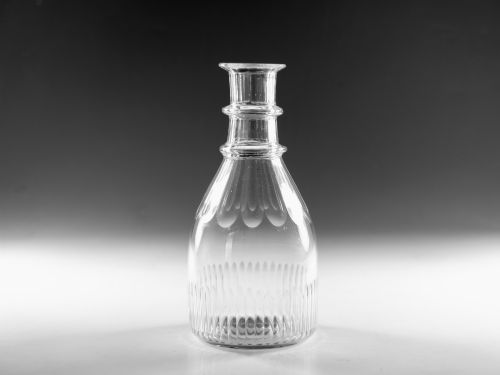
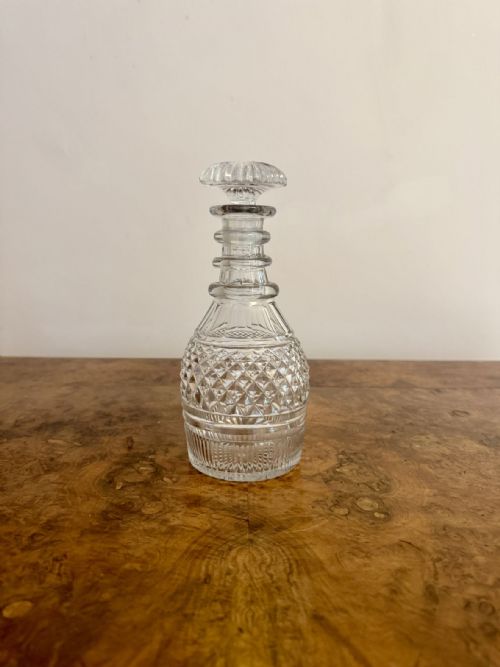
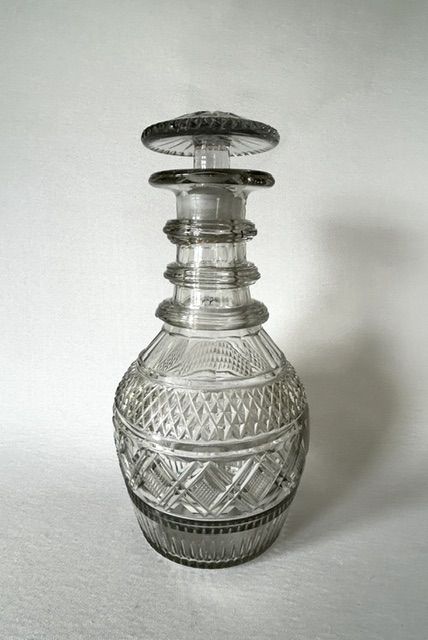
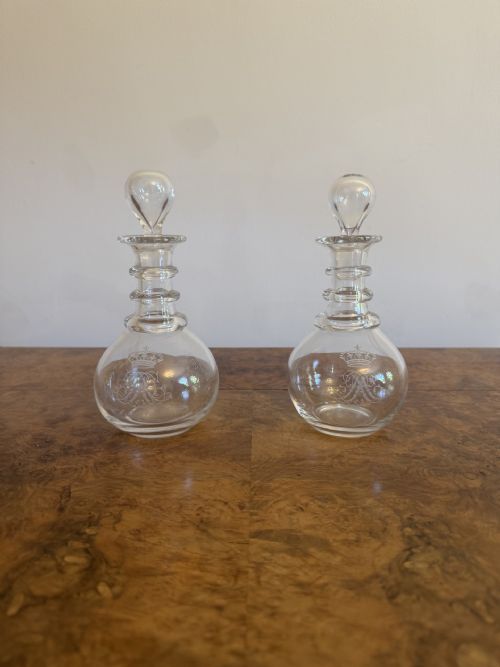


Ring Necked Crystal Decanter
A ring necked crystal decanter brings heavy glass and polished necks to the table, made for holding spirits.
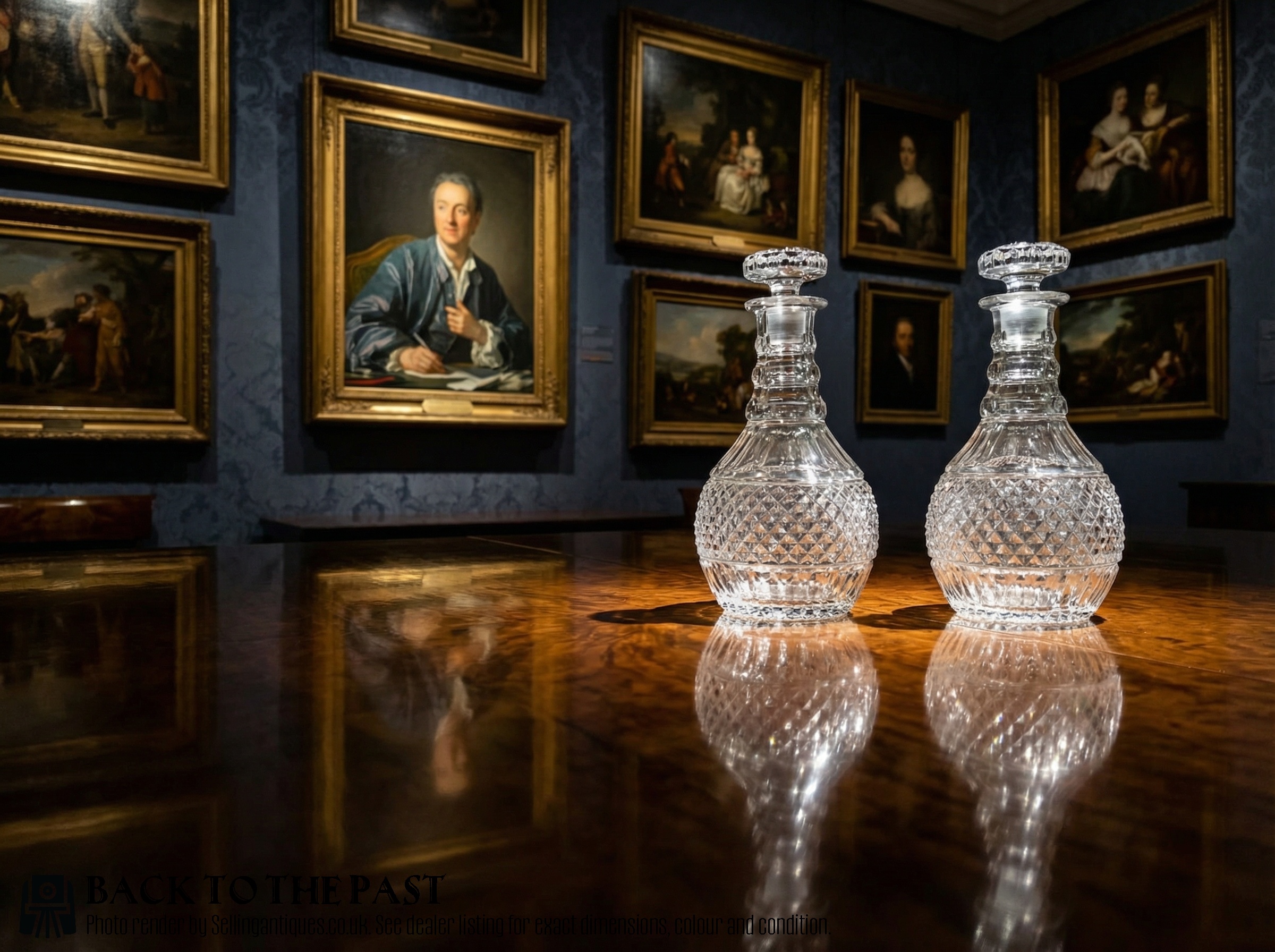
Ring Necked Crystal Decanter
A ring necked crystal decanter is a traditional vessel designed for holding and serving wine or spirits, distinguished by the horizontal rings encircling its bottleneck. The selection ranges from Georgian and Regency examples to later Victorian and Edwardian pieces, taking forms such as standard decanters, ship's decanters, and carafes.
Buyers will find single bottles as well as matched pairs, including three-ring carafes and half-bottle decanters. Origins span English and Irish workshops across the eighteenth and nineteenth centuries, reflecting diverse domestic uses for dining and entertaining.
How they were made
These vessels are formed from lead glass, lead crystal, and clear cut glass, utilising heavy material to achieve stability and brilliance. The characteristic neck rings are applied or worked directly into the glass during shaping.
Surface ornamentation relies on deep cutting and pillar cuts, catching the light across facets that define the styles of the Georgian, Regency, and Victorian periods.
Ring Necked Crystal Decanter Retail Price Guide 2026
Typical asking prices for ring necked crystal decanter among the pieces listed under this phrase on Sellingantiques today, from the lower quarter to the upper quarter. They describe what is for sale here now, not the wider market.
The listings span the eighteenth, nineteenth, and early twentieth centuries, encompassing Georgian, Regency, Victorian, and Edwardian periods in lead crystal and cut glass.
What varies in quality
The weight of the lead crystal and the crispness of the cut glass define the upper tier of these decanters. Sharpness in the pillar cuts and well-defined, evenly spaced neck rings distinguish finer examples from simpler production.
Proportion and clarity of the glass matter greatly, as does the presence of matching original stoppers where applicable. Heavier metal and precise optical properties elevate certain nineteenth-century pieces above standard counterparts.
The Ring Necked Crystal Decanter Glossary
- Lead crystal
- Glass containing lead oxide, which increases weight, brilliance, and refractive index. This material allows for deeper and sharper cutting.
- Neck ring
- A raised horizontal band encircling the neck of a decanter. These rings provide a secure grip when pouring.
- Pillar cut
- A decorative cutting technique featuring vertical flutes or panels. It creates strong linear patterns across the body of the glass.
- Carafe
- An open-topped glass vessel used for serving wine or water. Unlike a decanter, it typically lacks a stopper.
Ring Necked Crystal Decanter: Frequently Asked Questions
How do I date a ring necked crystal decanter?
Dating relies on the shape of the body, the style of the cut glass, and the number and profile of the neck rings. Earlier Georgian and Regency pieces often show distinct hand-cut facets and heavier lead metal.
Later Victorian and Edwardian examples tend to feature standardised manufacturing techniques and different proportions. Comparing the weight and clarity provides further clues to the period of production.
What were ship's decanters used for?
Ship's decanters were designed with broad, stable bases to prevent them from overturning during voyages on choppy seas. Their triangular or conical profiles kept wine and spirits secure on dining tables aboard vessels.
Over time, this practical domestic form became popular in homes on land due to its stable shape and decorative appeal.
Are these decanters safe for holding wine?
These historical vessels were made to hold wine and spirits, and many owners continue to use them for serving drinks today. Modern users should consider the lead content of older glass when storing liquids for extended periods.
A quick rinse and careful handling ensure these pieces can move safely from display to the dining table.
Why do some decanters have three rings?
Three neck rings are a common feature on Georgian and Regency decanters, serving both an ornamental and a functional purpose. The raised bands provided a firm grip for fingers when pouring heavy, slippery glass.
Different periods and makers varied the number and prominence of these rings, making them useful for identifying styles.