

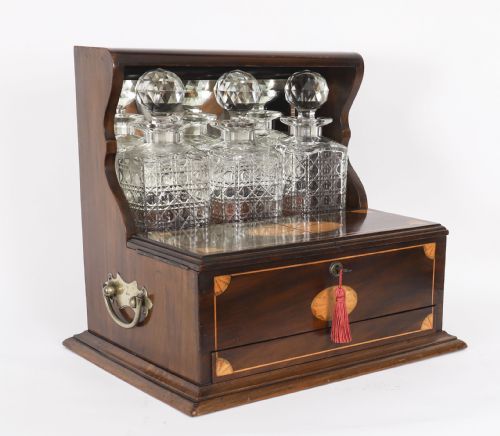


Traditional Glass Liquor Decanter
These traditional glass liquor decanter pieces bring nineteenth-century spirit storage to your table, combining heavy cut crystal with period frames for daily service.
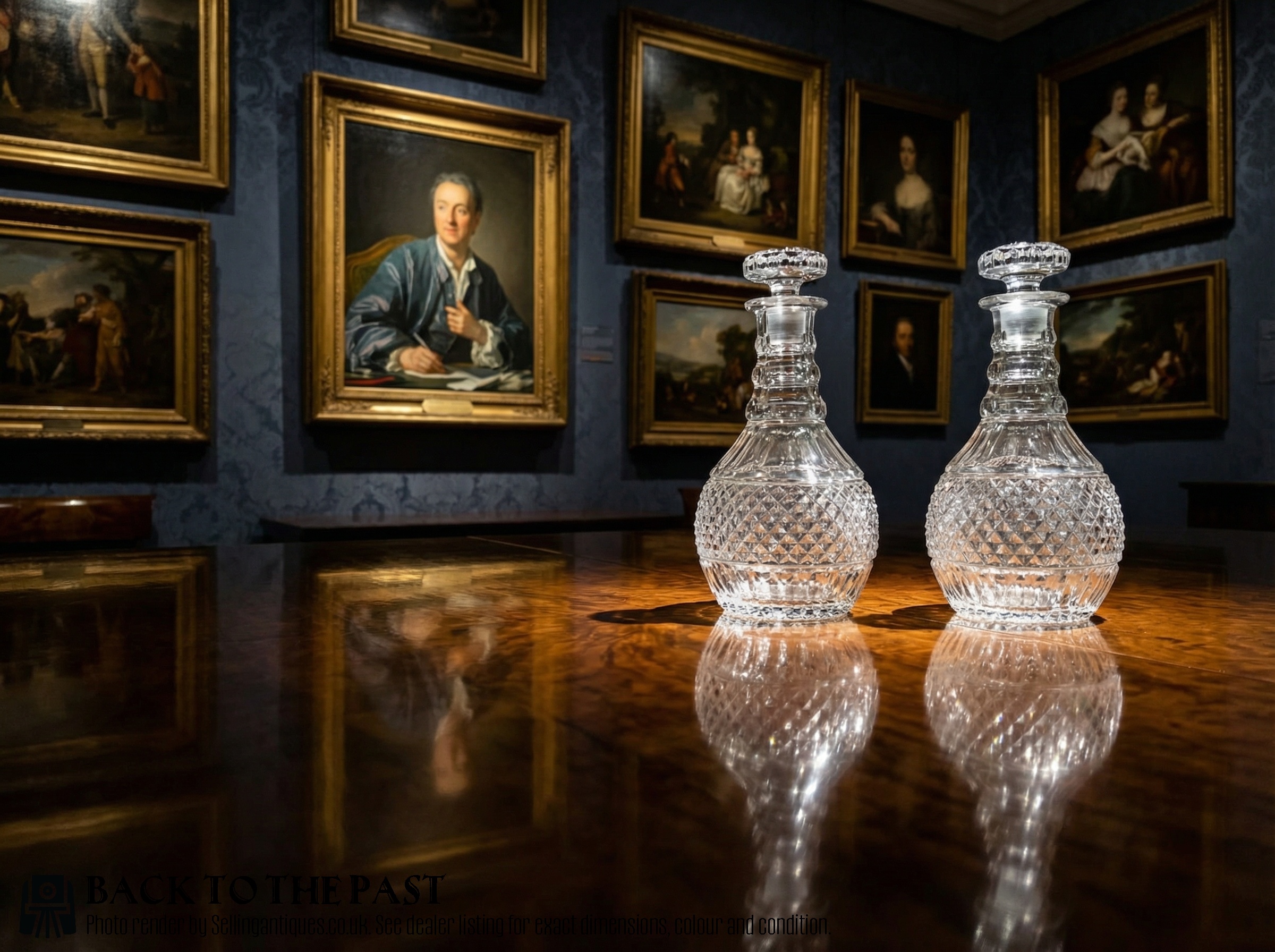
Traditional Glass Liquor Decanter
A traditional glass liquor decanter serves spirits from the nineteenth and early twentieth centuries, appearing in forms ranging from single bell-shaped vessels to matched pairs. These items include both standalone bottles and fitted tantalus sets housed in inlaid mahogany frames with brass hardware.
The Edwardian and Victorian periods dominate the selections, alongside examples from the Regency era. Buyers meet single bottles and paired decanters frequently on this page, often accompanied by nineteenth-century locking frames.
How they were made
Makers shaped lead crystal and glass through heavy cutting techniques to catch the light across geometric patterns. Enclosing frames utilise mahogany woodwork fitted with brass locks and mirror glass bases.
Vessels feature hand-cut facets across the body and neck, paired with matching stoppers. Woodwork involves fine inlay work to secure the bottles within portable lockable tantalus stands.
Traditional Glass Liquor Decanter Retail Price Guide 2026
Typical asking prices for traditional glass liquor decanter among the pieces listed under this phrase on Sellingantiques today, from the lower quarter to the upper quarter. They describe what is for sale here now, not the wider market.
Listings feature cut crystal, lead crystal, and standard glass spanning the Victorian, Edwardian, and Regency periods.
What varies in quality
Quality rests in the depth of the glass cutting and the weight of the lead crystal. Heavier vessels with crisp, sharp facet cuts sit above lighter, plain-blown alternatives.
Housing sets differ through the quality of the mahogany timber and the presence of intact brass hardware. Matched pairs and complete tantalus units command stronger interest than isolated single bottles.
The Traditional Glass Liquor Decanter Glossary
- Tantalus
- A locking wooden frame that holds decanters securely while displaying the contents within visible reach. This mechanism prevents unauthorized pouring by locking the stoppers in place.
- Cut Crystal
- Heavy glass containing lead oxide that receives deep geometric facet cuts. This material offers superior brilliance and weight compared to standard blown glass.
- Edwardian
- The period spanning the early twentieth century characterised by lighter, refined glassware forms. Pieces from this era often follow earlier Victorian patterns with subtle updates.
- Regency
- The design era covering the early nineteenth century known for classic proportions. Decanters from this time show heavy lead crystal construction.
Traditional Glass Liquor Decanter: Frequently Asked Questions
How do I use a tantalus?
A tantalus secures decanters by locking a top bar across the glass stoppers to prevent removal. You unlock the brass mechanism with a key to lift the bottles out for pouring.
These frames keep spirits secure while displaying the cut glass bottles on a sideboard or back bar.
Can I wash these in a dishwasher?
Hand washing remains essential for antique crystal to protect the heavy lead glass and original stoppers. Sudden temperature shifts in a dishwasher cause cracking in nineteenth-century vessels.
Use warm soapy water and a bottle brush, then leave the stopper out until the interior dries completely.
How do I date a decanter?
Dating relies on the cutting style, the weight of the lead crystal, and the shape of the neck and shoulders. Victorian and Edwardian examples show distinct facet patterns that evolved through the decades.
Reference marks on the base or the accompanying mahogany tantalus frame help narrow the manufacturing period.
Are stoppers original?
Original stoppers share the matching cut pattern and glass tint of the decanter body. Examining the ground glass peg and collar reveals whether the stopper was made for that specific vessel.
Snug fits and matching wear patterns confirm the stopper belongs to the bottle.