




Diamond Cut Crystal Decanter
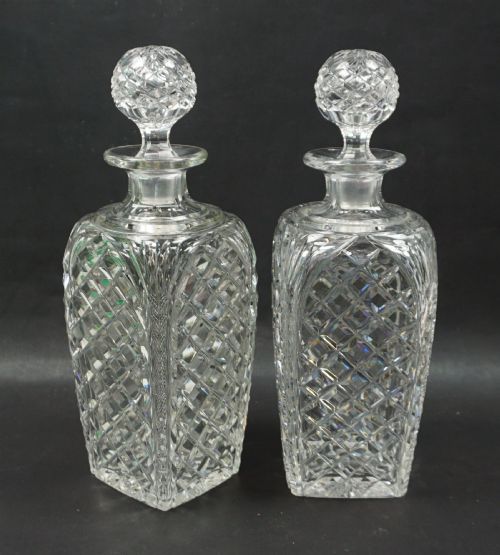
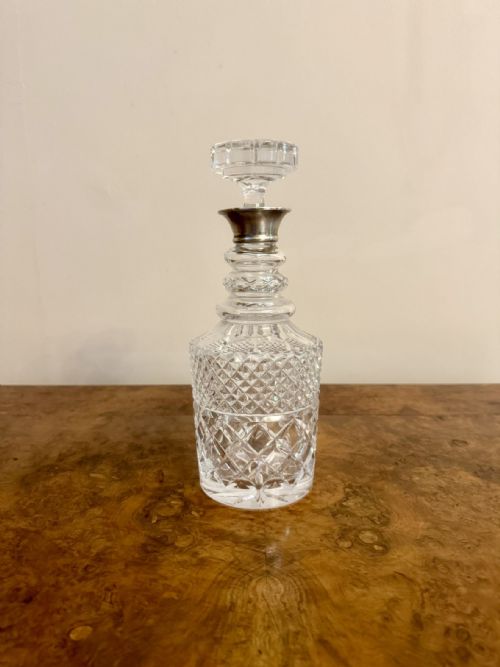
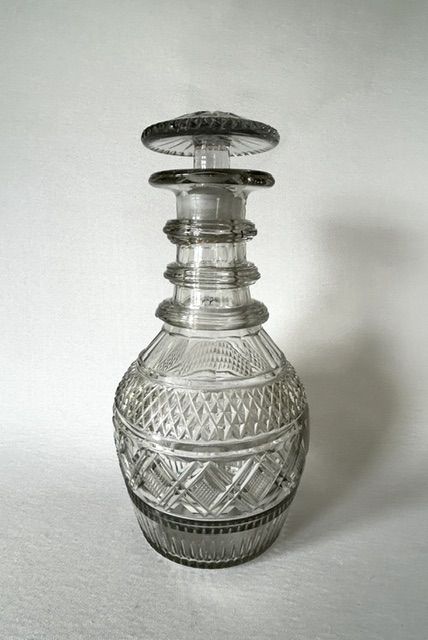
These heavy diamond cut crystal decanter pieces bring nineteenth and early twentieth century service to the table with deep refractive cuts.
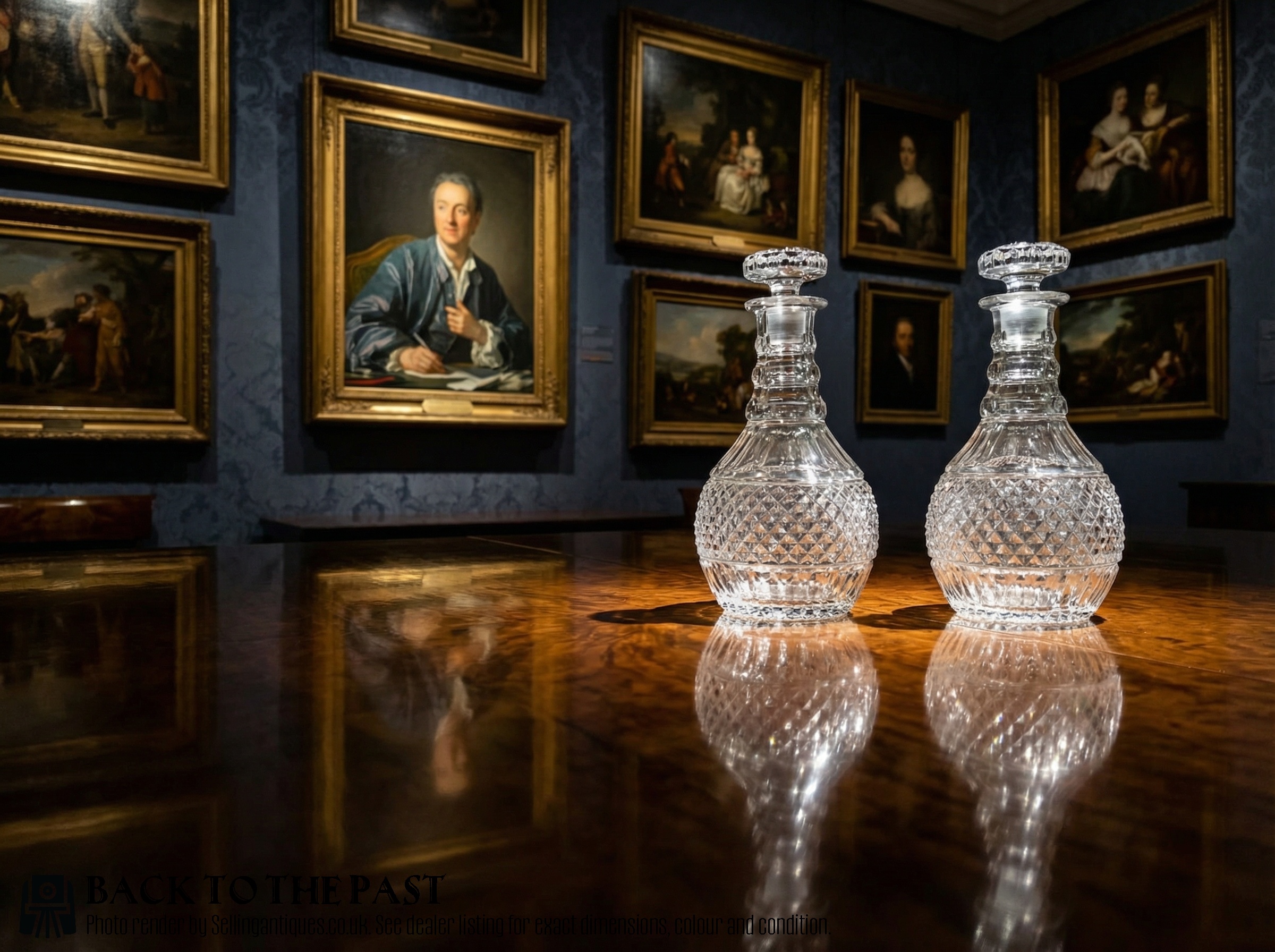
Diamond Cut Crystal Decanter
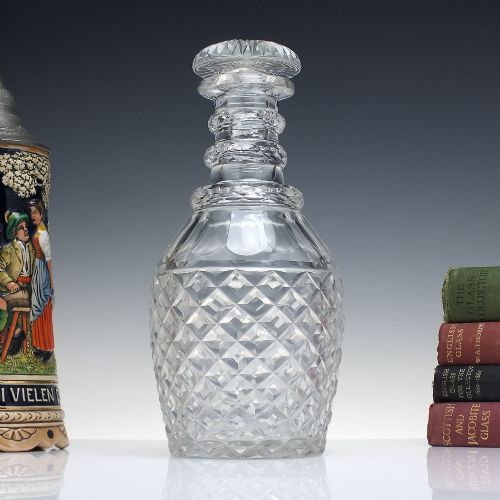
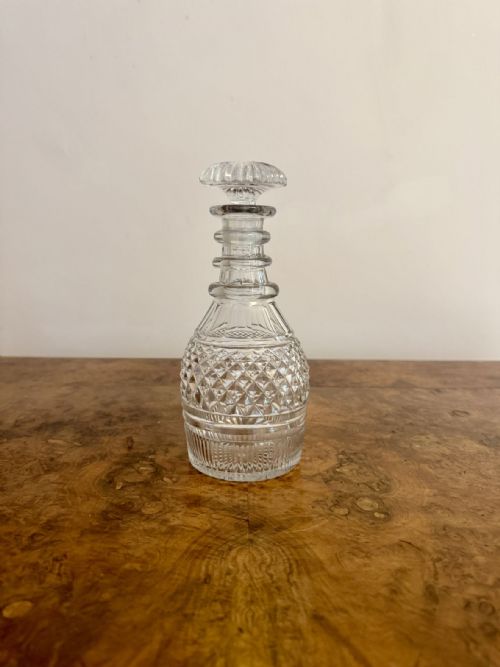
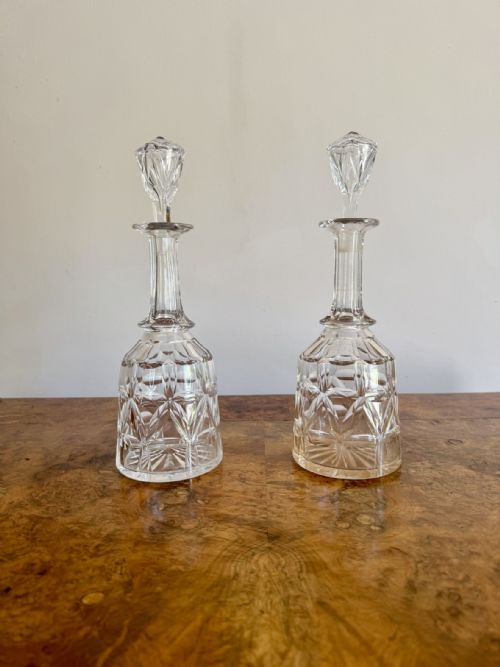
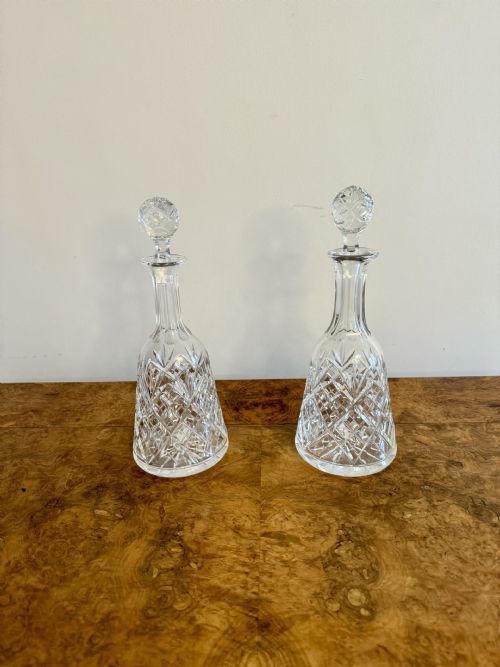
A diamond cut crystal decanter takes various forms across Georgian, Victorian, Regency and Edwardian eras, including square section tapered bodies, bell shapes and claret jugs. The pieces seen most frequently on this page belong to the Edwardian period and the Victorian age, often paired as sets.
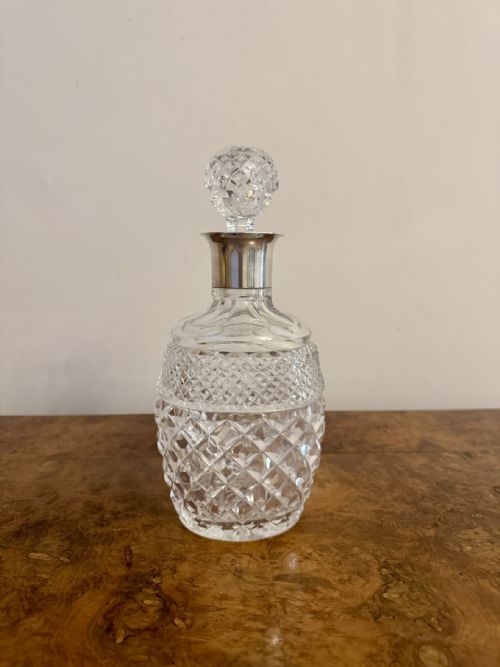
Makers utilised lead crystal, cut glass and crystal, mounting bodies with sterling silver or silver plate collars and handles. Alongside standard decanters, the selection includes ewers, carafes and novelty items shaped as Scottish thistles in the Highland Revival style.
The objects served wine, spirits and water in formal dining rooms, remaining robust enough for daily use on sideboards. Collectors encounter single vessels as well as matched pairs with fitted stoppers.
Materials and cutting
Craftsmen shaped heavy lead crystal and glass by blowing molten material into moulds or free-blowing before applying wheel-cut facets. The diamond pattern requires skilled hand-cutting to create sharp, uniform facets that catch the light.
Metal mounts in sterling silver and silver plate were shaped to fit bottle necks, sometimes bearing hallmarks from silversmiths such as Hukin & Heath. Stoppers were individually ground to fit each specific neck.
Listings span from the 18th century through the Edwardian era, incorporating lead crystal, sterling silver and silver plate.
Weight and execution
Quality rests in the depth and crispness of the cutting, where superior vessels display clean, sharp geometric facets rather than soft, rounded edges. The weight of the lead crystal and the clarity of the metal add to the distinction.
Matched original stoppers and intact silver collars with clear hallmarks separate standard production from finer examples. The balance of the vessel and the symmetry of the form dictate desirability among collectors.
Hukin & Heath
The Diamond Cut Crystal Decanter Glossary
- Lead crystal
- Glass containing lead oxide, which increases weight, clarity and the refractive index for deeper light dispersion. It creates a resonant ring when tapped gently.
- Silver collar
- A metal band fitted around the neck of a decanter, often made from sterling silver or silver plate and occasionally fitted with a hinged pourer.
- Claret jug
- A specialised pouring vessel with a handle and spout, designed specifically for serving red wine at the dining table. They frequently feature elaborate metal mounts.
- Ewer
- A large jug with a wide spout and circular base, used historically for serving water or wine before glass decanters became standard.
- Stopper
- A ground glass plug designed to seal the decanter neck and prevent oxidation of the contents. Each stopper was traditionally ground to fit its specific bottle.
Diamond Cut Crystal Decanter: Frequently Asked Questions
How do I date a decanter?
Dating relies on shape, cutting style, and silver hallmarks where present. Georgian and Regency pieces tend towards heavier lead weight and simpler geometric arrangements, while Edwardian examples often feature lighter, crisper cutting paired with stamped silver collars.
Changes in glass tint and pontil marks on the base also assist in establishing the period of manufacture.
Are stoppers original to the decanter?
Original stoppers are ground to fit the specific neck of that vessel during manufacture. Examining the number etched on the base and the matching grind marks on the peg helps confirm originality.
Replacements often sit unevenly or display different clarity in the glass.
Can I use these for serving wine?
These vessels were built for serving wine and spirits, and lead crystal remains safe for contemporary dining use. Modern washing methods require care, avoiding sudden temperature changes to protect the old glass.
Hand washing preserves the clarity and protects any silver collars from harsh detergents.
What is a claret jug?
A claret jug is a pouring vessel designed for red wine, featuring an integrated handle and a metal spout. They combine cut glass bodies with silver-plated or sterling silver mounts.
Victorian dining tables relied on these for serving claret during formal meals.