



Wheelback Windsor Chair
When you search for a wheelback windsor chair, you are looking at centuries of English vernacular seating built for comfort and durability.
Wheelback Windsor Chair
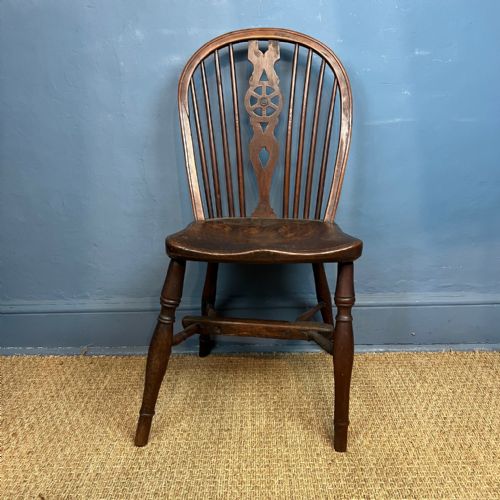
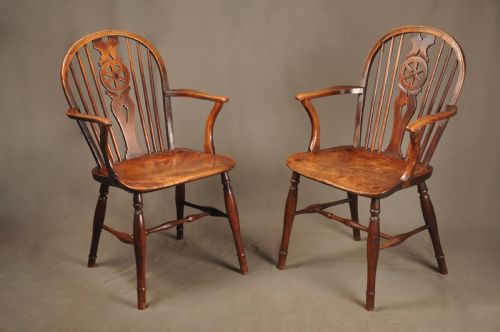
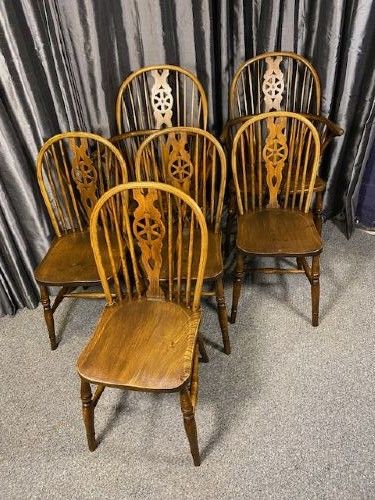
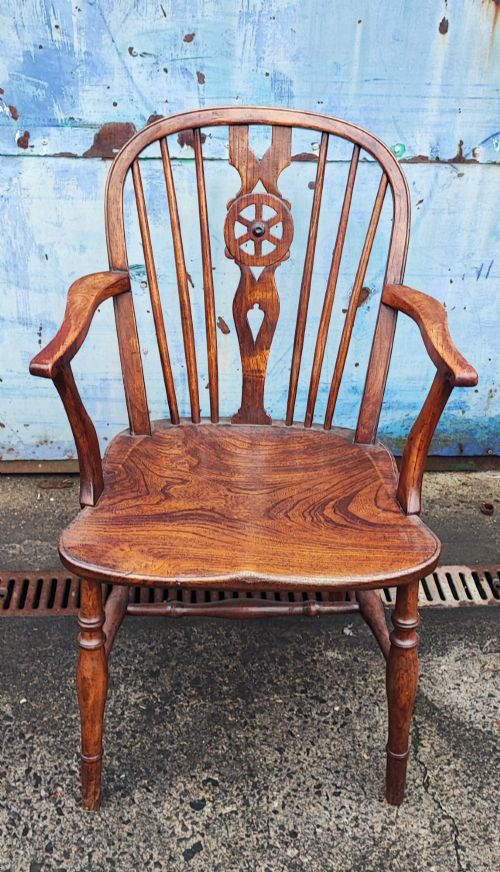
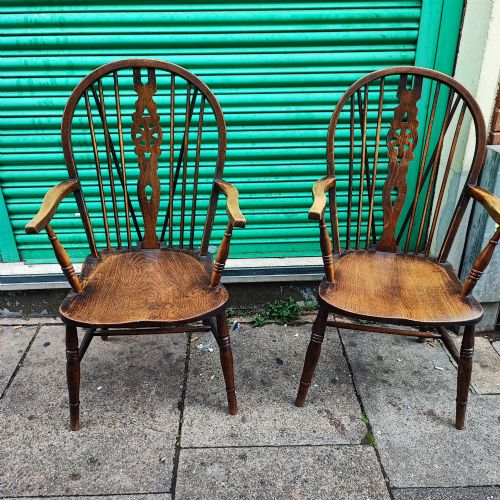
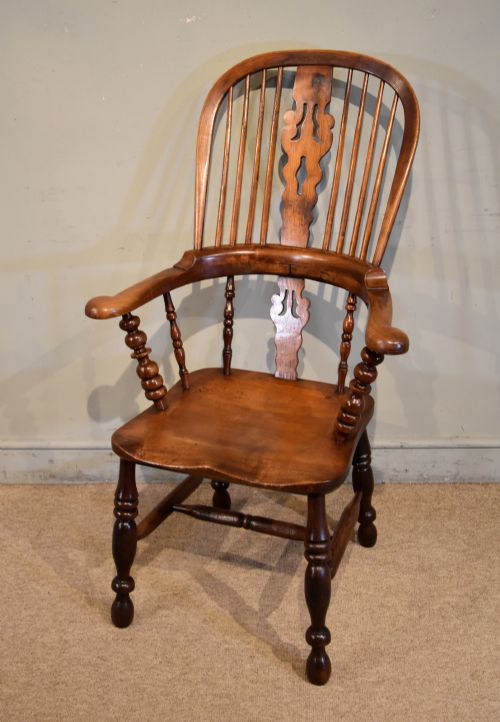
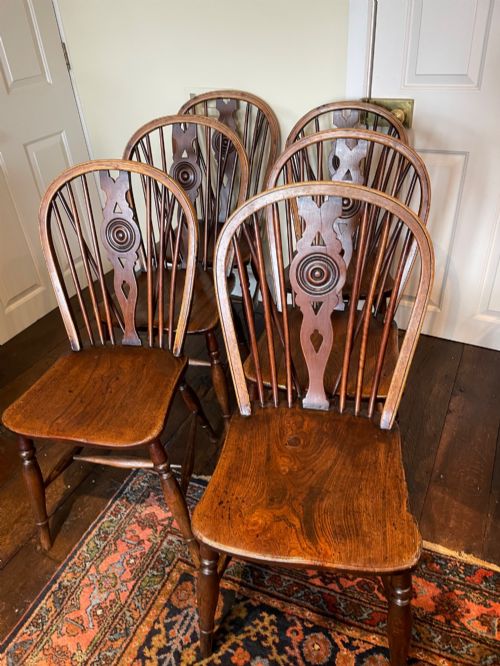
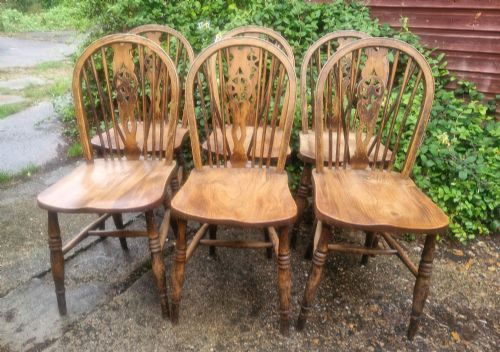
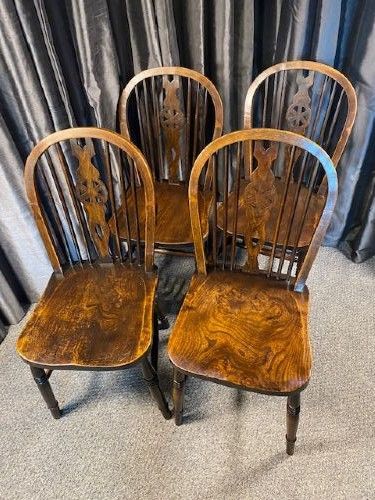
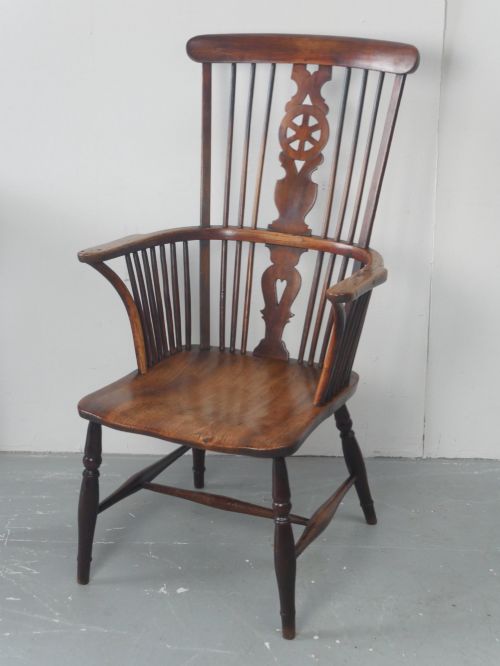
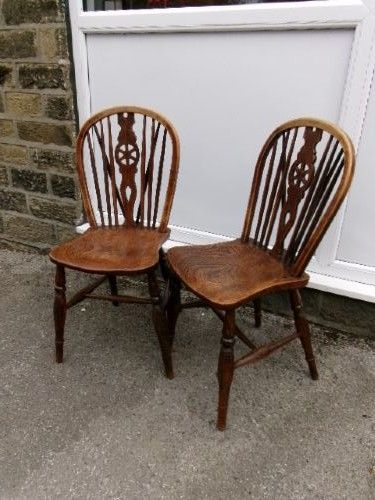
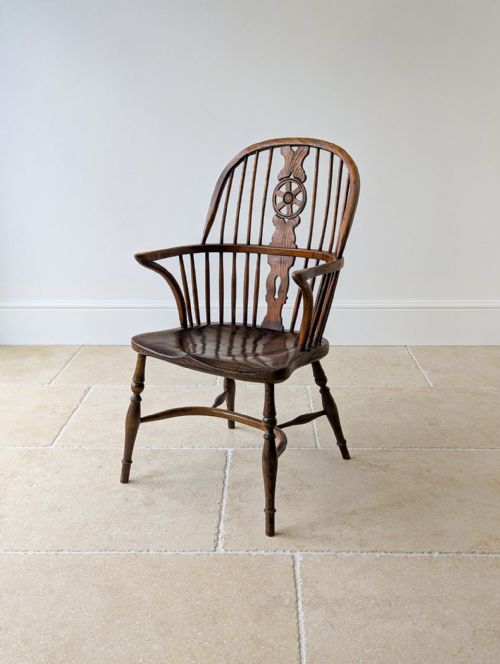
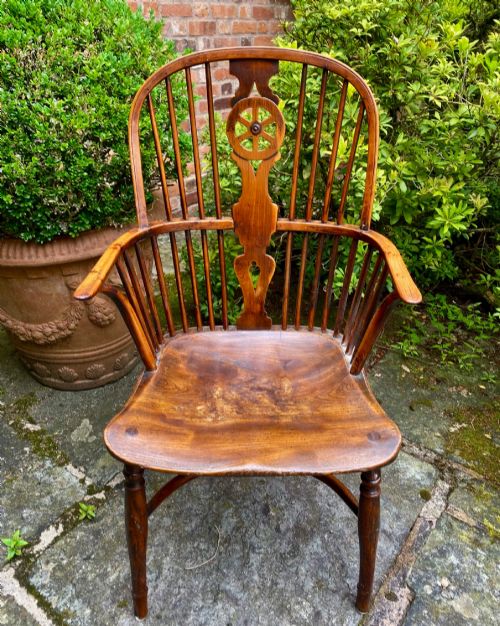
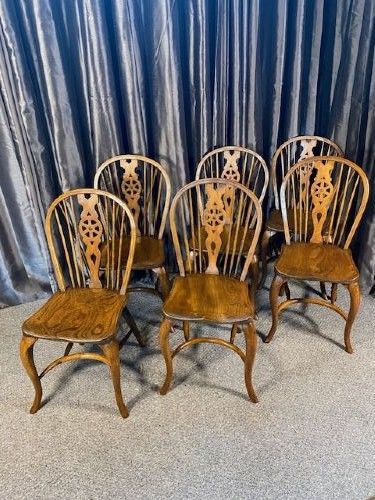
A wheelback windsor chair represents a distinct evolution in English seating, where traditional stickback construction was modified to incorporate a decorative pierced splat shaped like a cartwheel. These chairs range from single carvers and armchairs to matched sets intended for country house dining tables and kitchens.
The most common examples on this page date from the nineteenth century, spanning Victorian and Edwardian periods, alongside earlier Georgian iterations. They appear in forms varying from straightforward kitchen chairs to broad armchairs and rocking chairs.
Originating largely from regional workshops, particularly in the Thames Valley, these chairs reflect the practical needs of domestic life. Buyers encounter them as individual statement pieces or in larger sets of four, six, or eight.
How they were made
Makers utilised a combination of timber properties, most frequently pairing an elm seat with ash or beech for the spindles, legs, and bow, and occasionally yew for high-status examples. Elm provided a stable, tough surface for the sculpted seat without splitting, while ash offered the necessary steam-bent elasticity for the curved back rail.
Construction relied on the Windsor principle of separate components fitted directly into a solid carved wooden seat rather than a frame. Turned legs and undercarriage stretchers were wedged and pegged into place, creating a rigid structure designed to withstand heavy daily use.
Wheelback Windsor Chair Retail Price Guide 2026
Typical asking prices for wheelback windsor chair among the pieces listed under this phrase on Sellingantiques today, from the lower quarter to the upper quarter. They describe what is for sale here now, not the wider market.
Listings feature elm, ash, beech, and yew wood, alongside painted surfaces and hardwood constructions spanning the eighteenth to early twentieth centuries.
What varies in quality
Quality rests heavily on the selection of timber and the depth of the sculpted seat. Superior examples display rich grain patterns in the elm and well-matched timbers across sets, whereas lower tiers often show plain, unfigured wood.
The definition and execution of the pierced wheel splat and the turning of the spindles and legs distinguish standard production from finer craftsmanship. Proportions also dictate value, with generous broad arms and balanced dimensions marking out the better pieces.
Fred Walker
The Wheelback Windsor Chair Glossary
- Wheelback
- A style of Windsor chair featuring a central wooden splat pierced and carved in the shape of a spoked cartwheel. This decorative motif became widely popular during the nineteenth century.
- Windsor chair
- A chair built with a solid wooden seat into which the legs and back-spindles are tenoned directly. This method departs from traditional framed furniture by giving each structural member its own independent anchorage.
- Carver
- An armchair designed to sit at the head or foot of a dining table. These pieces match the smaller side chairs in a set while offering supportive elbow rests.
- Harlequin set
- A collection of dining chairs that are closely matched in style, period, and materials rather than having been manufactured together as a single batch. These assemblies evolved when owners gathered compatible seating over time.
- Thames Valley
- A geographical attribution for regional English furniture production. Pieces from this area frequently utilise yew wood and exhibit refined proportions and high-grade construction.
Wheelback Windsor Chair: Frequently Asked Questions
What is a wheelback windsor chair?
A wheelback windsor chair is a traditional wooden seat featuring a characteristic pierced splat shaped like a cartwheel incorporated into the backrest.
These pieces combine the sturdy stickback construction of regional English seating with distinctive decorative woodwork, making them enduringly popular for dining and domestic use.
How do I care for old elm?
Old elm requires minimal maintenance, relying mainly on stable indoor humidity to prevent the timber from drying out or splitting.
Applying a traditional beeswax polish occasionally will nourish the grain and preserve the natural patina built up over generations of use.
Can I mix these with modern tables?
These chairs integrate smoothly into contemporary dining spaces because their organic forms and natural wood tones complement modern minimalist designs.
Using a harlequin set or a single armchair adds textural contrast and historical character to a contemporary room without overwhelming the space.
How are periods told apart?
Earlier pieces from the Georgian era often feature richer timber selections like yew and more refined, slender turnings on the legs and spindles.
Victorian and later iterations tend toward heavier proportions, utilising sturdier elm seats and beech components tailored for robust domestic utility.