




West African Art Sculpture
West African art sculpture brings together powerful tribal masks, bronze figures and carved wooden statues rooted in historic cultural traditions.
West African Art Sculpture
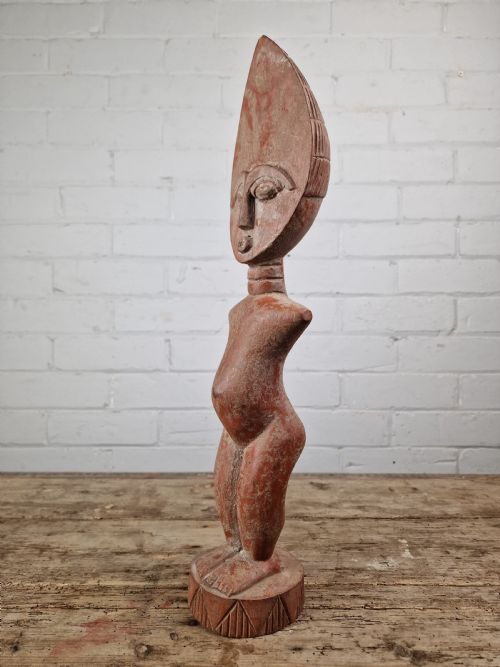
West African art sculpture encompasses a diverse array of ceremonial objects, tribal masks, and figurative statues originating from countries such as Nigeria, Ghana, Ivory Coast, and Mali. These pieces reflect rich cultural heritages through traditional forms including fertility figures, tribal staffs, and maternal statues.
The objects span from the late nineteenth century through to the mid-twentieth century, capturing traditional craftsmanship across multiple decades. Buyers will frequently encounter carved wooden sculptures and cast bronze items representing specific peoples like the Yoruba, Ashanti, and Benin.
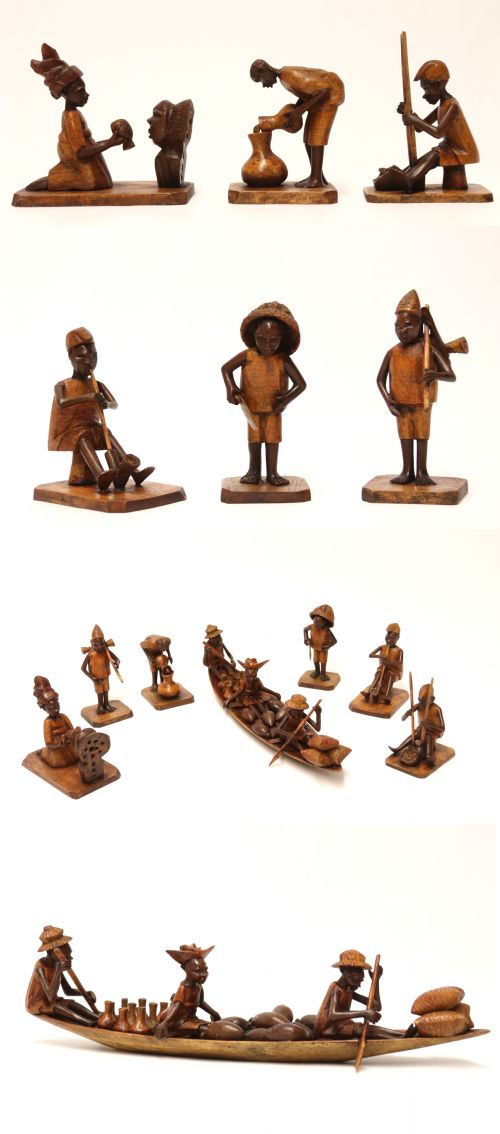
Forms range from intimate carved hardwood combs and slingshots to large bronze warrior statues and shoulder masks. Each piece serves as a tangible link to the ritual, social, and artistic practices of West African communities.
Materials and construction methods
Artisans primarily utilised native hardwoods, casting bronze and brass through traditional methods, and occasionally incorporating bone, pigment, and fibre. Woodcarvers shaped figures and masks using specialised blades, often applying surface pigments and achieving deep patinas through ritual use and age.
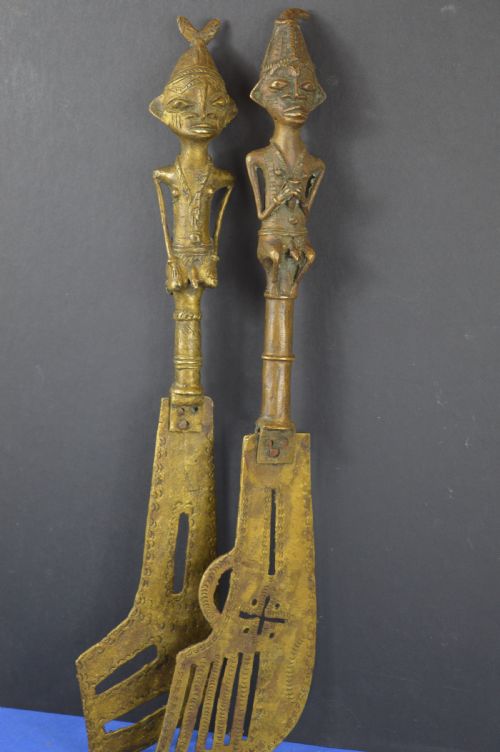
Metal objects were produced using the lost-wax casting technique, allowing for intricate detailing on bronze busts, staff heads, and horseman statues. This method resulted in heavy, solid metallic sculptures with distinctive surface textures unique to each casting.
Listings feature works spanning the late nineteenth century to the 1950s, created from wood, bronze, brass, and bone.
Assessing quality in traditional sculpture
Surface integrity and genuine wear significantly influence the standing of a piece. Authentic patinas developed through handling and ceremonial application distinguish masterworks from lesser commercial productions.
Abegunde of Ede
The West African Art Sculpture Glossary
- Patina
- The surface sheen and coloration developed over decades through handling, ageing, and environmental exposure. A rich patina often indicates considerable age and ritual use.
- Lost-wax casting
- A metalworking process where a molten metal is poured into a mould that has been created by means of a wax model. This technique allowed West African metalworkers to produce complex bronze and brass sculptures.
- Tribal mask
- A ceremonial face covering worn during rituals, dances, and cultural ceremonies. These masks frequently represent ancestral spirits, animals, or idealized human traits.
- Figurative sculpture
- Three-dimensional art depicting human or animal forms. In this context, such figures often carry deep symbolic, religious, or social meanings.
- Hardwood
- Dense timber derived from broad-leaved trees, chosen by carvers for its durability and fine grain. It resists splitting and allows for precise detail work on figures and combs.
West African Art Sculpture: Frequently Asked Questions
How old are these sculptures typically?
The pieces generally date from the late nineteenth century through to the mid-twentieth century, spanning periods like the Edwardian era and the 1930s.
Exact dating relies on stylistic analysis, material wear, and documented provenance rather than strict manufacturing stamps.
What materials were commonly used by carvers?
Carvers predominantly worked with native hardwoods, while metalsmiths utilised bronze and brass for casting statues and staff heads.
Additional materials such as natural pigments, bone, and plant fibres frequently appear on masks and ceremonial objects.
How should I care for wooden and bronze sculptures?
Wooden pieces require stable indoor humidity away from direct sunlight to prevent the timber from drying and splitting over time.
Bronzes need minimal maintenance, benefiting occasionally from gentle dusting to preserve their historic surface patinas.